
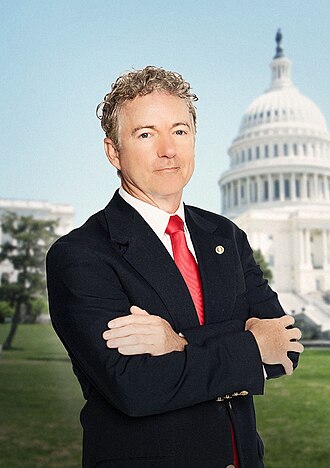
Senator Rand Paul has long championed aggressive federal spending reductions as a core element of constitutional conservatism, pushing to rein in the national debt that now tops $34 trillion and threatens the vitality of small businesses from Main Street to state capitals nationwide. His record since entering the Senate in 2011 reflects a consistent focus on slashing non-defense discretionary programs first, eliminating earmarks, and enforcing across-the-board cuts that echo the limited-government principles enshrined in our founding documents. Talking to voters in communities across the country, one hears the same refrain: unchecked Washington spending crowds out private enterprise and leaves states to manage the fallout from inflated deficits.
Paul’s early advocacy drew from his medical background and family legacy, quickly establishing him as a voice willing to block bloated appropriations and demand real reductions rather than baseline budgeting gimmicks. The grassroots conservative movement understands this instinctively—families and small business owners balance their books every month, and they expect the same discipline from federal agencies that have ballooned far beyond their constitutional bounds. His proposals have included legislation to cap spending as a share of GDP and require balanced budgets, measures that distinguish him from moderates comfortable with perpetual deficits projected to exceed $2 trillion annually.
Throughout his tenure, Paul has sponsored more than 20 major spending reduction bills targeting over $1 trillion in cumulative cuts over a decade. His “Five Penny Plan” called for trimming discretionary spending by five percent yearly until balance is achieved, while opposing continuing resolutions that lock in duplicative programs. He has also pushed audits of federal agencies and amendments redirecting funds toward border security, underscoring that true fiscal restraint strengthens national priorities instead of expanding entitlements. Federal spending as a share of GDP has climbed from 18 percent in 2000 to over 24 percent today, a trend Paul rightly flags as unsustainable for state sovereignty and economic freedom.
One of Paul’s most significant contributions to fiscal debate has been his work on transparency and accountability measures. He has consistently introduced amendments requiring the Government Accountability Office to conduct comprehensive audits of federal spending, revealing waste and inefficiency that bureaucratic budgeting processes typically conceal. By shining light on duplicative programs across agencies—such as multiple workforce development initiatives administered separately by the Department of Labor, Department of Education, and Department of Veterans Affairs—Paul demonstrates that substantial savings are achievable without compromising essential services. These overlapping programs cost taxpayers billions annually while delivering fragmented results that could be consolidated under streamlined administration.
Paul’s approach extends beyond simple budget cuts to fundamental reform of how Washington allocates resources. He has advocated for zero-based budgeting, a practice where agencies must justify every expenditure from scratch rather than automatically receiving increases over previous-year baselines. This methodology, standard in the private sector, would force federal departments to prioritize genuine needs over entrenched spending habits. When applied government-wide, zero-based budgeting could identify tens of billions in unnecessary expenditures currently protected by institutional inertia and political gridlock.
The Senator’s fiscal conservatism intersects meaningfully with concerns about inflation and monetary policy. Paul has long argued that excessive federal spending fuels inflationary pressures that disproportionately harm working families and retirees living on fixed incomes. When Congress spends money it hasn’t collected in taxes, the Federal Reserve typically accommodates this spending through monetary expansion, devaluing the dollar and increasing prices for groceries, energy, and housing. By reducing federal deficits through spending cuts rather than tax increases, Paul contends that policymakers address inflation at its root rather than merely managing its symptoms through interest rate adjustments that slow economic growth.
Federal employee compensation represents another area where Paul has pushed for reforms. While not advocating blanket reductions in federal workforce compensation, he has highlighted that average federal employee salaries now exceed comparable private-sector positions by substantial margins when benefits are included. Implementing performance-based compensation, reducing redundant administrative positions, and tightening retirement benefits for future federal hires could generate significant savings without compromising public service. These measures reflect conservative principles that government should operate efficiently rather than serve as an employment program for Washington insiders.
These efforts have shaped Republican debates, often aligning with state-level lawmakers and groups pressing for deeper reforms during debt ceiling talks. Critics inside the party may call his stance extreme, yet Paul maintains that incremental changes cannot address the structural problems. Proposals such as eliminating the Department of Education project annual savings exceeding $80 billion, freeing resources that could otherwise support border infrastructure and Customs and Border Protection operations now requesting over $20 billion yearly. By tying spending restraint to stronger enforcement at the southern border, Paul advances a vision where savings from foreign aid and green energy subsidies flow toward genuine security needs rather than pork-barrel expansions.
Paul’s foreign aid critiques deserve particular attention, as they reflect broader constitutional concerns about spending authority. The United States provides over $50 billion annually in foreign assistance, with significant portions going to nations that vote against American interests at the United Nations and sometimes harbor anti-American sentiment. Paul has questioned whether such largesse serves national interests, particularly when domestic infrastructure crumbles and citizens struggle with healthcare costs. Redirecting even a fraction of foreign aid toward border security, military readiness, or deficit reduction aligns with the constitutional principle that government’s primary duty is protecting its own citizens.
The Senator has also examined entitlement reform with characteristic directness. While avoiding demagoguery about current beneficiaries, Paul has proposed gradually increasing retirement ages for younger workers entering Social Security, means-testing benefits for wealthy recipients, and encouraging private savings accounts that build personal wealth rather than government dependency. These proposals, though controversial within both parties, reflect acknowledgment that current entitlement trajectories are mathematically unsustainable and will force even more draconian measures if left unaddressed.
The grassroots conservative movement understands this instinctively: when federal outlays crowd out state flexibility and burden small businesses with higher costs and inflation, constitutional limits on government become not just theory but practical necessity. Paul’s consistent record reinforces that responsible budgeting at the national level protects state sovereignty and preserves opportunity for the next generation. His willingness to challenge spending across all budget categories—not merely targeting politically convenient programs—distinguishes genuine fiscal conservatism from partisan theater that protects favored constituencies while condemning waste elsewhere.
As debt projections continue climbing and economic growth moderates, Paul’s decades-long advocacy for structural spending reform gains urgency. Whether through his legislative proposals or his influence on Republican fiscal positioning, his insistence that Washington live within constitutional and practical limits shapes ongoing debates about America’s fiscal future. For conservatives committed to limited government, economic liberty, and constitutional fidelity, Rand Paul’s spending cut agenda represents not radical ideology but essential medicine for a government that has grown dangerously disconnected from both constitutional bounds and fiscal reality.
Sources
- Reuters Politics – U.S. political news and analysis
- AP News U.S. Politics – Associated Press political coverage
- Fox News Politics – Conservative political reporting and commentary
- Wall Street Journal Politics – Political news and policy analysis
- Senator Rand Paul Official Website – Senator’s statements and positions