
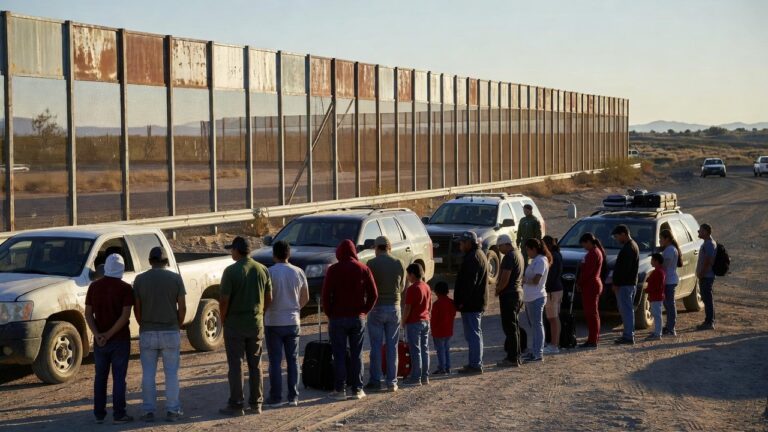
The numbers coming out of our southern border tell a story of deliberate policy failure that puts American security and sovereignty at risk. Over 10 million migrant encounters nationwide since January 2021, according to U.S. Customs and Border Protection data, show what happens when deterrence gets thrown out the window. In my years serving this country, I learned that you secure the perimeter first or you invite chaos inside the wire. Lax enforcement under recent Democratic administrations has dismantled tools like Remain in Mexico and Title 42, releasing people into the interior and creating a pipeline that global networks now exploit.
Monthly encounters routinely exceed 200,000 and have spiked past 250,000 in several stretches. These include family units, unaccompanied minors, and single adults from more than 150 countries. The American people deserve straight talk on this: when borders become suggestions instead of lines we defend, cartels profit and communities pay the price. Estimates put gotaways at around 1.8 million since the current administration began. Those are the ones who never even register on the books, slipping past overwhelmed agents and heading straight for major cities.
The geographic distribution of these encounters reveals the strain being placed on specific regions. Texas alone has reported over 2 million migrant encounters during this period, fundamentally altering the landscape of border towns and straining local infrastructure beyond capacity. El Paso, Del Rio, and the Rio Grande Valley sectors have seen unprecedented surges that dwarf previous records. When entire communities become de facto processing centers for federal failures, it’s not just a border issue—it’s a humanitarian and logistical crisis that affects water systems, emergency rooms, schools, and law enforcement resources that should be protecting American citizens.
The composition of migrants crossing has also shifted considerably. While early surges were dominated by single adults seeking economic opportunity, recent years have seen a dramatic increase in family units traveling together. This shift complicates enforcement because family separations trigger intense political backlash, which the left exploits to prevent deportations. Additionally, the rise of unaccompanied minors has created a humanitarian vulnerability that smuggling networks weaponize, recruiting children specifically because they know the system treats them differently. These minors are often handed off to traffickers or placed in situations where exploitation becomes inevitable.
Fiscal responsibility demands we face the costs head-on. Conservative analyses put the annual net burden on taxpayers above $150 billion once education, healthcare, welfare, and law enforcement are tallied. States like Texas and Arizona have already spent billions on housing, schooling, and medical care. Republican governors have answered by busing migrants to sanctuary cities, exposing the hypocrisy of federal inaction and forcing accountability where progressive policies refuse to act. These trends also hit American workers in low-skilled sectors, where studies show wage suppression and job displacement in construction and agriculture.
The economic impact extends beyond direct government spending. When large populations of undocumented workers enter the labor market willing to work below prevailing wages, it depresses compensation across entire industries. Construction wages in border states have shown measurable decline correlating with surge periods. Agricultural workers—many of whom are themselves immigrants—report reduced hours and lower pay when illegal competition floods the market. This isn’t xenophobia; it’s basic economics. Legal immigration frameworks exist precisely to protect American workers while still allowing employers to access needed talent.
Healthcare systems in border states have documented extraordinary strains. Emergency departments in Texas border communities report that 30-40% of uncompensated care goes to undocumented migrants. While individual compassion toward sick people is admirable, unlimited access to expensive emergency care without payment mechanisms is unsustainable policy. Preventive care, chronic disease management, and maternal health services suffer when resources get stretched thin. Many hospitals have had to reduce services to American citizens or curtail hours specifically because of financial pressures from uncompensated migrant care.
Border security is not optional; it is a constitutional duty. Physical barriers, technology, and increased personnel worked under previous Republican leadership to drive crossings down sharply. The Trump-era wall construction and asylum restrictions proved that deterrence restores order. When potential migrants understand that crossing illegally will result in immediate return, the incentive structure changes. Mexico’s own crackdowns on northern migration, when coordinated with U.S. enforcement, have historically reduced flows by 70-80%. This demonstrates that the problem isn’t inevitable—it’s policy-driven.
Republican-led legislation in Congress now pushes for stricter vetting, an end to catch-and-release, and expanded expedited removals. These steps target cartel smuggling while preserving legal immigration channels that respect the rule of law. The proposed solutions aren’t about ending immigration; they’re about restoring orderly processes where background checks actually happen, where people wait their turn, and where employers can verify workers are authorized. Countries worldwide maintain immigration policies without being accused of xenophobia—yet America alone faces cultural condemnation for wanting to know who enters.
The data also records more than 400 known or suspected terrorists encountered at the southern border in recent years, alongside massive fentanyl seizures tied to illegal crossings that fuel overdose deaths. Over 100,000 unaccompanied minors have been processed, raising real concerns about trafficking and long-term welfare strain. CBP reports show that fentanyl seizures at the southern border have increased more than 400% in five years, with most drugs crossing through ports of entry but quantities growing as enforcement gaps widen. These aren’t abstract statistics—they represent families destroyed by overdose, communities devastated by addiction, and national security vulnerabilities that adversaries actively exploit.
Multiple states report emergency spending in the billions for migrant services. California alone has budgeted over $15 billion for asylum-related programs, while New York City estimates costs exceeding $12 billion over a three-year period. These figures represent education, emergency assistance, legal services, and housing. These are resources that could address homelessness among American citizens, improve school systems in struggling neighborhoods, or strengthen infrastructure. When governments prioritize illegal migrants over citizens in fiscal planning, they’ve abandoned fundamental governing responsibilities.
Republican administrations historically kept encounter averages lower through consistent enforcement. The Trump administration’s average monthly encounters during normal operations hovered around 70,000-80,000, a fraction of current levels. This wasn’t achieved through cruelty but through consistency: people knew that attempting illegal entry would be difficult, that families would be processed together or expedited, and that consequences were real. Deterrence works because most migrants are rational actors responding to perceived likelihood of success.
The Constitution and the military values I lived by both point to the same truth: a nation that cannot control its borders cannot protect its citizens or its fiscal future. Restoring proven enforcement measures will reduce costs, safeguard communities, and reassert the principle that laws mean something. Continued data-driven oversight is the only way to reverse these damaging patterns before they become permanent. The question isn’t whether America should secure its border—every nation does this routinely—but whether our leaders have the political will to implement solutions that work.