

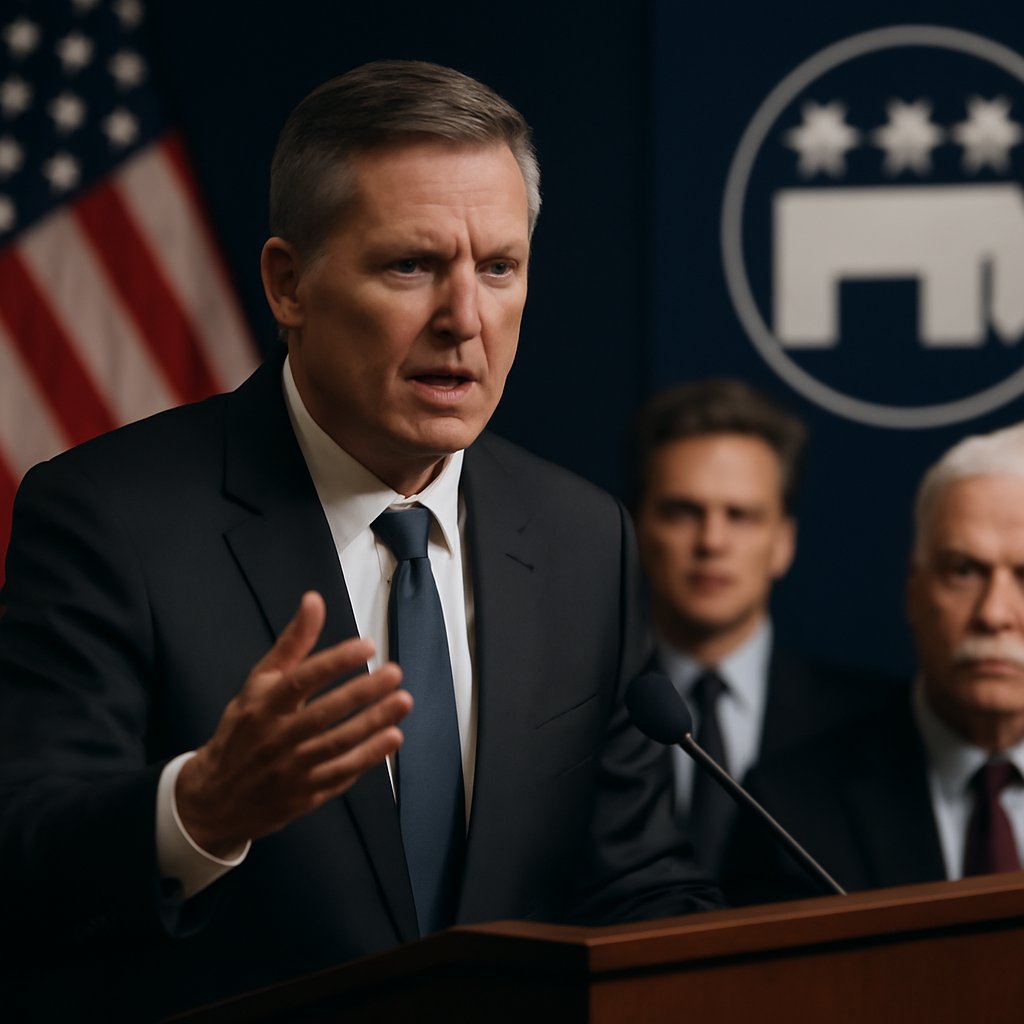
Republican opposition to tax increases isn’t some academic debate—it’s a bedrock stand for limited government, economic freedom, and the kind of fiscal discipline that built this nation. The American people deserve straight talk on this: hiking taxes only burdens working families, kills innovation, and does nothing to fix Washington’s addiction to overspending. Instead of raiding paychecks, we need real spending cuts, pro-growth policies, and smarter use of the dollars we already collect—especially for border security where every resource counts.
In my years serving this country, I learned that you can’t lead by expanding bureaucracy or taxing your way out of trouble. That’s the same principle our Constitution demands: federal power checked at every turn, not grown fat on the backs of citizens. From Reagan’s supply-side reforms through today’s fights against corporate rate hikes, Republicans have shown that lower taxes drive jobs and wages higher. Past Democratic tax hikes just slowed recoveries and ballooned the debt without delivering results. Broad relief keeps power with the people, not inside the Beltway.
Lawmakers from our side have blocked or reversed plenty of bad ideas over the decades—higher rates on earners, new energy taxes, you name it. Those moves protected middle-class families from the hidden costs that businesses pass along.
Higher taxes hit growth hard by shrinking take-home pay and scaring off investment. GDP slows, opportunities dry up, and America loses ground globally. Businesses relocate or scale back, costing jobs. Revenue projections from tax hikes routinely miss the mark because people change their behavior. Dynamic models prove rate cuts expand the base over time. This approach also fights inflation by avoiding the cycle where new revenue just fuels more spending. Republican opposition preserves the incentives that fuel our innovation and productivity.
Small businesses, the true engine of the economy, take the hardest hit. Pass-through owners see direct income losses that limit hiring and upgrades needed to compete.
Fiscal policy ties straight into border security. Rather than raising taxes for endless new programs, we must redirect funds to secure the southern border amid record encounters that threaten safety and strain states. Wasteful domestic outlays crowd out enforcement, technology, and infrastructure. Opposing tax increases forces Washington to prioritize core duties like immigration control over duplicative agencies or foreign giveaways. Recent coverage shows proposed tax windfalls would likely bypass the border crisis entirely.
The fundamental case against tax increases rests on proven economic principles. When individuals and businesses keep more of what they earn, they invest in growth rather than sending money to Washington where it disappears into bureaucratic overhead. The evidence is compelling: the 2017 Tax Cuts and Jobs Act, championed by Republicans, drove unemployment to historic lows before the pandemic, boosted wage growth for working Americans, and increased business investment in communities nationwide. Compare that to the pattern after major Democratic tax increases—sluggish growth, delayed job creation, and persistent deficits that grow despite higher revenue promises.
One critical point often overlooked in mainstream coverage: tax code complexity itself acts as a drag on the economy. Small business owners spend countless hours and thousands of dollars on compliance annually. A simpler, lower-tax system reduces that burden, freeing capital for productive uses. Republicans consistently push for tax reform that lowers rates while broadening the base—a fair approach that eliminates special-interest loopholes rather than simply punishing success.
The intergenerational argument matters too. Tax increases today become debt burdens for our children and grandchildren. Democrats propose spending increases financed by taxes that rarely materialize at projected levels, yet the spending becomes permanent entitlements. Republicans demand honest budgeting: if you want new spending, cut something else. That’s how families operate, and it’s how government should too. Allowing Washington to simply raise taxes without addressing spending addiction ensures we’ll face even larger tax increases down the road.
Another angle the left refuses to acknowledge: tax increases disproportionately harm the working poor and middle class, regardless of the rhetoric. When businesses face higher tax burdens, they cut hours, freeze wages, or eliminate entry-level positions—the exact jobs young Americans and those climbing the economic ladder depend on. Progressive tax schemes that target “the wealthy” sound compassionate until you realize that small business owners, family farmers, and those approaching retirement get caught in the crossfire.
The competitive aspect cannot be ignored either. While America raised corporate taxes or considered new levies, other nations were racing to attract business investment with lower rates and business-friendly policies. Countries across Europe and Asia recognized that tax competitiveness matters for growth and jobs. Republicans fought to keep America in the game, understanding that unilateral tax increases simply accelerate capital flight and job losses to more favorable jurisdictions.
Historical data shows periods of Republican-led tax cuts delivered average annual GDP growth above 3.5 percent in multiple decades. Federal spending on non-defense programs rose over 40 percent in the last ten years, outpacing revenue even in good times. Border encounters topped 2.4 million in a recent fiscal year, and reallocating just 10 percent of proposed new tax revenue could cover full enforcement upgrades. Small businesses often face effective combined federal rates above 25 percent through pass-through rules, slowing hiring in high-tax areas. Dynamic models forecast sustained tax hikes could cut long-term wage growth by up to 2 percent yearly for average workers. Republican-led states with lower burdens keep drawing people and businesses away from high-tax states.
The philosophical foundation runs deeper than policy mechanics. Republicans believe government exists to protect rights and enforce contracts—not to redistribute wealth or engineer society. That belief system produces consistent opposition to tax increases regardless of the pitch or promise. It’s why GOP lawmakers haven’t been fooled by decades of “last time we’ll raise taxes” deals. They know the pattern: taxes go up, spending never decreases, and eventually you’re back asking for more.
Looking ahead, the tax debate will only intensify as Washington faces genuine fiscal pressures. Republicans must continue articulating why tax increases are the wrong answer—not because we oppose funding legitimate government functions, but because we trust the private sector and individuals more than bureaucrats to allocate resources efficiently. That’s not ideology; it’s evidence-based policy.
This opposition reflects a clear commitment to prosperity, security, and constitutional limits. Growth over extraction keeps the focus on American families, businesses, and sovereignty. The record backs it up.
Sources
- Reuters Politics – Coverage of U.S. political news and policy debates
- AP News Politics – Associated Press reporting on American political issues
- Fox News Politics – Conservative perspective on U.S. political developments
- Wall Street Journal Politics – Editorial and reporting on fiscal and political policy