
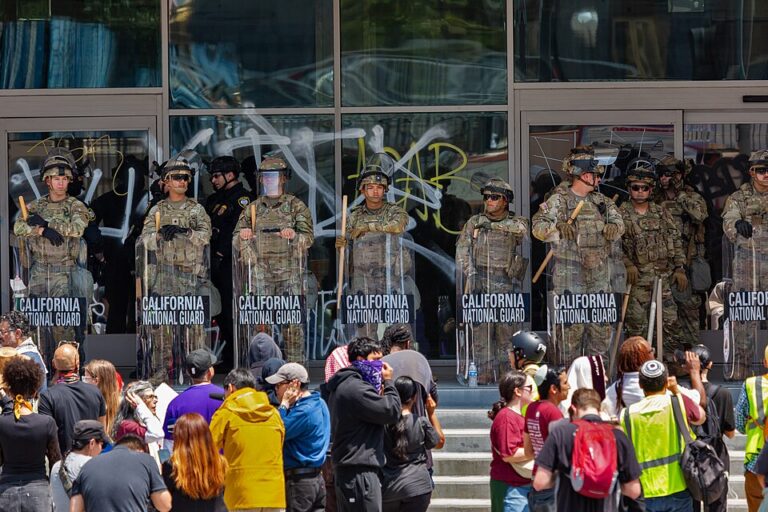
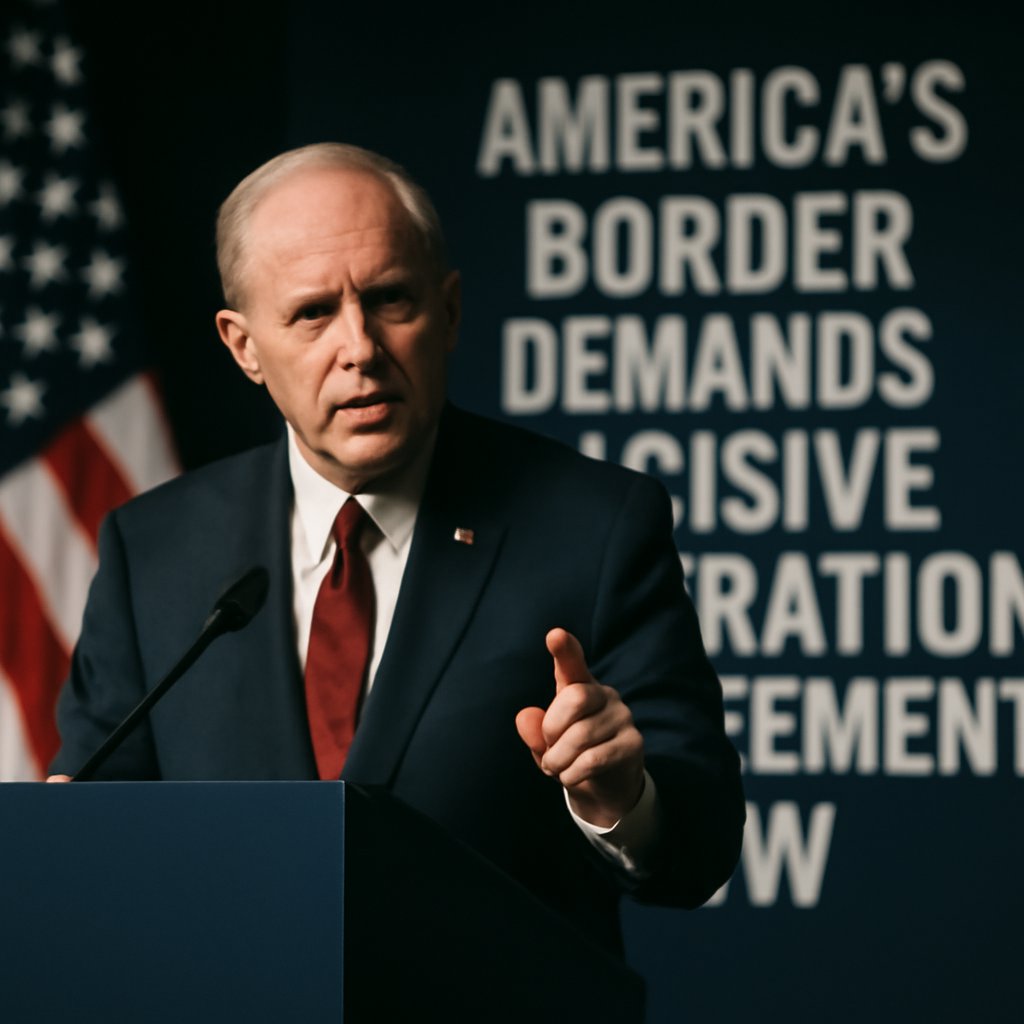
Our southern border is in crisis, and it demands decisive immigration enforcement right now. Weak policies have left the United States exposed to real dangers in safety, the economy, and our national sovereignty. Conservative principles make clear that controlled immigration backed by strong enforcement puts American citizens first while still opening the door to legal entry for those who play by the rules. The recent surge in illegal crossings has hit communities hard, supercharged the fentanyl epidemic, and eroded the rule of law. Border security must be treated as the urgent national priority it is.
In my years serving this country, I learned that you secure the perimeter before you worry about anything else inside the wire. That same military discipline applies here.
The Scale of Current Border Vulnerabilities
Porous southern borders have allowed millions of illegal entries in recent years, overwhelming federal resources and local infrastructure. Customs and Border Protection data consistently shows high volumes of encounters, got-aways, and repeat crossers who exploit gaps in surveillance and personnel. These vulnerabilities come straight from policy choices that favor catch-and-release over detention and removal.
The numbers tell a sobering story. In recent fiscal years, CBP has encountered over two million individuals at the southern border annually, with significant percentages representing repeat crossers who were previously apprehended. The “got-away” metric—individuals who evade detection entirely—remains a critical blind spot in our security posture. Without knowing who is entering the country, we cannot adequately assess the threat landscape or manage public health and safety concerns. The Biden-Harris administration’s decisions to limit interior enforcement operations and reduce deportations have directly contributed to this vulnerability cascade.
Key Enforcement Gaps
– Insufficient physical barriers and technology along high-traffic sectors
– Reduced interior enforcement by Immigration and Customs Enforcement
– Sanctuary jurisdictions that refuse cooperation with federal detainers
– Limited detention bed capacity, forcing early release of deportable aliens
– Inadequate resources for biometric tracking and identity verification
The American people deserve straight talk on this: you cannot run a country without controlling who crosses the line. When we fail to enforce immigration statutes uniformly, we send a message that laws are optional—a dangerous precedent that undermines civic order broadly. The rule of law is not negotiable; it is the foundation upon which all other rights and protections rest.
The southern border crisis has become particularly acute in Texas, Arizona, and California, where local border patrol agents report equipment shortages and personnel fatigue from sustained high-volume operations. Some sectors have seen such intense pressure that agents cannot adequately screen individuals for criminal histories or security concerns. This operational strain has real consequences: missed opportunities to interdict dangerous individuals and drugs that harm American communities.
Economic Costs of Uncontrolled Illegal Immigration
Illegal immigration piles direct fiscal burdens on American taxpayers through education, healthcare, and welfare programs accessed by households headed by non-citizens. Wage suppression in low-skill sectors hits working-class citizens hardest as they compete for the same jobs. Conservative analysis shows that legal immigration channels, when properly managed, deliver economic benefits without these hidden costs.
States along the border and in the interior report billions in added expenses for emergency services and housing. Texas alone has spent over $4 billion in supplemental border security and migrant support costs in recent years, diverting resources from education, infrastructure, and other state priorities. Cities like El Paso, Del Rio, and Eagle Pass have experienced temporary population surges exceeding their normal capacity, straining water supplies, sanitation systems, and emergency room services. These are not abstract policy debates—they represent real sacrifices by American communities.
Educational systems in border states struggle with the costs of English as a Second Language programs and specialized support services, while healthcare facilities report uncompensated emergency care costs reaching into the hundreds of millions annually. Legal citizens in these communities pay taxes to support services while witnessing resources stretched thin. The fairness principle underlying conservative fiscal policy demands that governments prioritize the welfare of their own citizens before extending benefits to those who entered illegally.
Enforcement that prioritizes removals of criminal aliens and recent arrivals reduces long-term strain on public resources and restores fairness to the labor market. Fiscal responsibility starts with stopping the bleeding at the border. When immigration enforcement focuses on removing individuals convicted of crimes, trafficking, or exploitation, it protects vulnerable communities and sends a deterrent signal that criminal behavior will not be tolerated regardless of immigration status.
Labor market data from economists across the political spectrum shows that while immigration’s overall economic effects are debated, communities experiencing rapid population increases from illegal immigration report wage pressure in construction, agriculture, and service sectors. American workers without college degrees have faced particular wage competition. Legal immigration reform that emphasizes skills matching, labor market needs, and enforcement provisions can deliver economic benefits while protecting vulnerable American workers.
National Security and Public Safety Threats
Border security is directly tied to preventing terrorist infiltration, gang activity, and drug trafficking. Cartels control smuggling routes and have expanded fentanyl distribution, driving overdose deaths across the country. Criminal non-citizens released into the interior have been linked to serious offenses that could have been prevented through consistent detention and deportation.
The fentanyl crisis represents perhaps the most urgent public health emergency connected to border security. Synthetic opioids seized at southern border ports of entry have increased exponentially, with single seizures sometimes containing enough fentanyl to kill hundreds of thousands of people. The Drug Enforcement Administration reports that Mexican cartels manufacture most of the fentanyl entering the United States, and porous borders facilitate distribution networks that reach every state. Young Americans are dying in record numbers from overdoses, and border enforcement directly impacts these mortality rates.
Beyond drug trafficking, intelligence agencies have identified special interest aliens—individuals from countries of concern with known terrorism ties—transiting through southern border vulnerabilities. While overall numbers remain proportionally small, a single individual with terrorist intent represents an unacceptable security failure. The 9/11 Commission specifically highlighted border security as critical infrastructure for counterterrorism, and subsequent threat assessments have reinforced this assessment.
Documented Risks
– Special interest aliens from countries with terrorism concerns
– MS-13 and other transnational gangs exploiting weak vetting
– Record seizures of lethal narcotics at legal ports and between them
– Human trafficking networks exploiting migrants for profit and exploitation
– Expansion of cartel smuggling infrastructure and operational reach
Restoring interior enforcement and ending catch-and-release practices sends a clear deterrent message that unlawful presence carries consequences. Constitutional principles demand we protect the citizens we swore to defend. When individuals know that apprehension will result in detention and removal rather than release into the interior with a future court date, behavior changes. Deterrence remains one of the most cost-effective crime prevention tools available.
Proven Strategies for Effective Enforcement
Historical periods of stronger enforcement prove that results follow when political will aligns with operational focus. Completing physical barriers, expanding expedited removal, and reinstating the Remain in Mexico policy have previously reduced crossings significantly. During periods when these strategies were implemented, illegal border crossings declined substantially, demonstrating that enforcement works when applied consistently.
The Trump administration’s border security initiatives, including barrier construction and metering procedures, corresponded with measurable reductions in illegal crossings. Apprehensions decreased from over 1 million annually to significantly lower levels, suggesting that a combination of enforcement signals, physical barriers, and operational focus produces results. These outcomes were achieved while maintaining legal ports of entry and processing systems for asylum claims.
Cooperation with local law enforcement through programs like 287(g) multiplies federal capacity without new spending. This program allows trained local officers to perform immigration enforcement functions, extending federal capacity across interior communities. Police departments participating in 287(g) have removed criminal aliens with serious felony records, protecting public safety while relieving federal resources. Ending sanctuary policies that prevent this cooperation undermines public safety and ties the hands of law enforcement professionals.
Ending sanctuary policies and prioritizing criminal aliens for removal protects communities while respecting due process. When local jurisdictions refuse cooperation with ICE detainers, they shield some individuals from removal despite criminal convictions. This policy inversion—placing political ideology above public safety—is indefensible. Legal immigration reform that emphasizes skills and assimilation complements enforcement by maintaining America’s tradition of ordered liberty.
Technology deployment at borders—advanced surveillance systems, biometric scanning, and real-time intelligence sharing—has proven effective at disrupting smuggling operations and identifying security threats. These investments in border infrastructure reduce false positives in inspections while improving detection of genuine security concerns, making ports of entry more efficient and secure simultaneously.
Restoring Sovereignty Through Policy Leadership
Border security is not isolationism but the basic responsibility of any sovereign nation. Conservative leadership focuses on measurable outcomes: lower illegal crossings, higher removal rates, and restored deterrence. Citizens expect their government to enforce existing immigration statutes rather than create new loopholes that invite further violations.
Sources
- Fox News Politics – News and analysis on immigration policy and border enforcement
- Wall Street Journal Politics – Coverage of immigration and border security debates
- Reuters Politics – International and domestic immigration policy reporting
- AP News Immigration – Comprehensive coverage of immigration enforcement and policy