

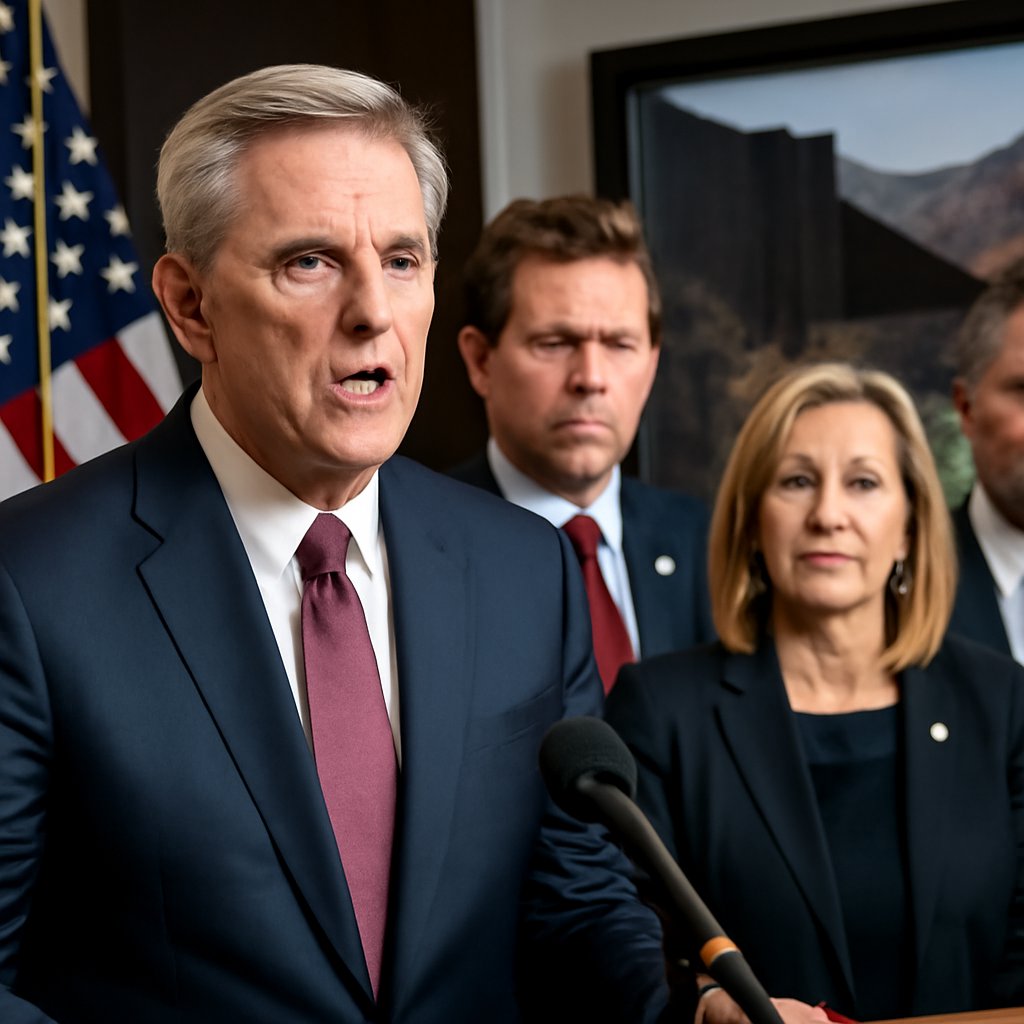
Republican lawmakers are advancing concrete legislation to confront the border crisis head-on, with a clear emphasis on national security, fiscal restraint, and restoring order after record illegal immigration. The grassroots conservative movement understands this instinctively—border enforcement is not just a federal talking point but a matter of protecting communities, small businesses, and state resources stretched thin by federal failures.
Talking to voters in communities across the country, the frustration is palpable. U.S. Customs and Border Protection data shows over 10 million encounters at the southwest border since fiscal year 2021, driven largely by catch-and-release policies that have overwhelmed states like Texas and Arizona. These Republican proposals target the root problems: reversing lax enforcement that has fueled fentanyl trafficking and contributed to thousands of overdose deaths each year, while prioritizing legal immigration that serves American workers.
Local impacts hit hardest at the state level. Overcrowded shelters, strained schools, and increased crime tied to repeat crossers burden taxpayers and small businesses already navigating tight labor markets. Republican plans focus on deterrence to ease these pressures, shielding state sovereignty from Washington overreach that forces communities to absorb costs without consent.
Central to the approach is completing and expanding the border wall system paired with technology like drones and sensors. Sections already finished in high-traffic zones have cut illegal crossings by up to 90 percent, proving infrastructure works far better than open-border experiments. Additional Border Patrol agents and ICE officers, along with asylum reforms to slash frivolous claims and clear the backlog exceeding 3 million cases, would end the incentives for mass migration.
The grassroots conservative movement understands this instinctively: constitutional conservatism demands that states retain authority to act when the federal government abdicates its duty. Republican-led states like Texas have already poured billions into their own security measures precisely because of federal inaction, underscoring the principle of state sovereignty over top-down mandates.
Fiscal conservatives tie these efforts directly to budget discipline. Effective enforcement could save taxpayers over $150 billion annually in welfare, healthcare, and education expenses tied to illegal immigration. Plans avoid new spending binges by reallocating funds and penalizing sanctuary jurisdictions that flout federal law, protecting resources for citizens and easing pressure on entitlement programs.
Analyses from conservative think tanks project that securing the border would safeguard American wages and support GDP growth through controlled legal channels. This stands in contrast to approaches that expand benefits without enforcement. Key data points remain consistent: fentanyl seizures rose 600 percent in recent years, mostly through porous areas; gotaways number in the hundreds of thousands; and repeat crossers make up a large share of encounters, highlighting the need for expedited removals.
Republican proposals center on specific legislative measures that address the mechanics of border control while respecting constitutional limits. One critical component involves reforming the asylum process to eliminate frivolous claims that clog the immigration courts. Current law allows applicants to remain in the United States during lengthy adjudication periods—sometimes spanning years—creating a powerful incentive for those without legitimate asylum grounds to file anyway. Republican plans would establish expedited processing timelines, require applicants to demonstrate credible fear claims within 21 days rather than months, and implement “remain in Mexico” provisions ensuring claimants wait outside U.S. borders while cases proceed. This simple procedural reform directly addresses the incentive structure driving illegal crossings.
Technology represents another pillar of Republican strategy. Beyond traditional surveillance, plans include expanding aerial detection systems, ground sensors, and biometric databases to identify repeat offenders and criminal networks. These tools complement physical barriers and allow Border Patrol to deploy resources more efficiently. Advocates note that modern surveillance technology has become far more affordable and reliable than in previous years, enabling cost-effective monitoring across remote terrain where wall construction proves impractical. Integration of these systems with database sharing between federal agencies and cooperating state law enforcement creates a unified response capability rather than the fragmented approach that has characterized recent years.
The fentanyl crisis underscores border security’s connection to public health. Mexican cartels control the majority of fentanyl trafficking into the United States, with transnational criminal organizations exploiting porous borders and weak enforcement to maximize profits. Republican plans emphasize that effective border control directly reduces fentanyl availability, protecting American youth and communities from one of the deadliest drug threats in modern history. By contrast, permissive policies that ignore illegal crossings in remote areas inadvertently provide cover for cartel operations. Enhanced law enforcement coordination and prosecutorial resources targeting trafficking networks complement physical security measures.
Economic analysis increasingly supports border security investments from a straightforward cost-benefit perspective. While enforcement requires upfront spending on personnel and infrastructure, it generates significant savings through reduced welfare utilization, lower healthcare costs for emergency room visits by undocumented immigrants, decreased criminal justice expenses, and improved labor market conditions for low-skill American workers. Conservative economists argue this represents one of the highest-return federal investments available, with every dollar spent on enforcement yielding multiples in direct and indirect savings.
State partnerships feature prominently in Republican border strategies. Texas, Arizona, and other border states have demonstrated innovative approaches combining National Guard deployments with private landowner cooperation and real-time intelligence sharing. Republican proposals would formalize these partnerships through enhanced federal-state coordination, dedicated funding streams for state law enforcement operations, and liability protections for officers implementing border security. This represents practical federalism—the federal government provides resources and legal authority while states execute policies tailored to local geography and conditions.
The legal immigration component deserves particular emphasis in understanding comprehensive Republican approaches. Rather than simply reducing immigration, most proposals emphasize shifting away from chain migration and diversity lottery systems toward skills-based selection prioritizing workers addressing genuine labor shortages. This aligns immigration levels with economic needs rather than political preferences, maintains America’s identity as a nation of laws, and ensures newcomers contribute economically. Conservative advocates stress that legal immigration built America, but only when administered through orderly, merit-based processes rather than chaos at the border.
Immigration court reform receives substantial attention in Republican legislative efforts. The current system operates with severe resource constraints, creating backlogs that discourage compliance with deportation orders. Adding immigration judges, establishing clearer evidentiary standards, and implementing performance metrics would accelerate case resolution. Similarly, proposals to strengthen interior enforcement—notably through workplace verification requirements and penalties for employers knowingly hiring undocumented workers—address pull factors encouraging illegal immigration.
These measures represent a practical path that upholds constitutional principles, empowers states, and delivers results for American communities rather than endless debate. By combining physical infrastructure, technology deployment, legal reform, state partnerships, and strategic enforcement priorities, Republican border plans offer comprehensive alternatives to the status quo that has demonstrably failed American citizens.