

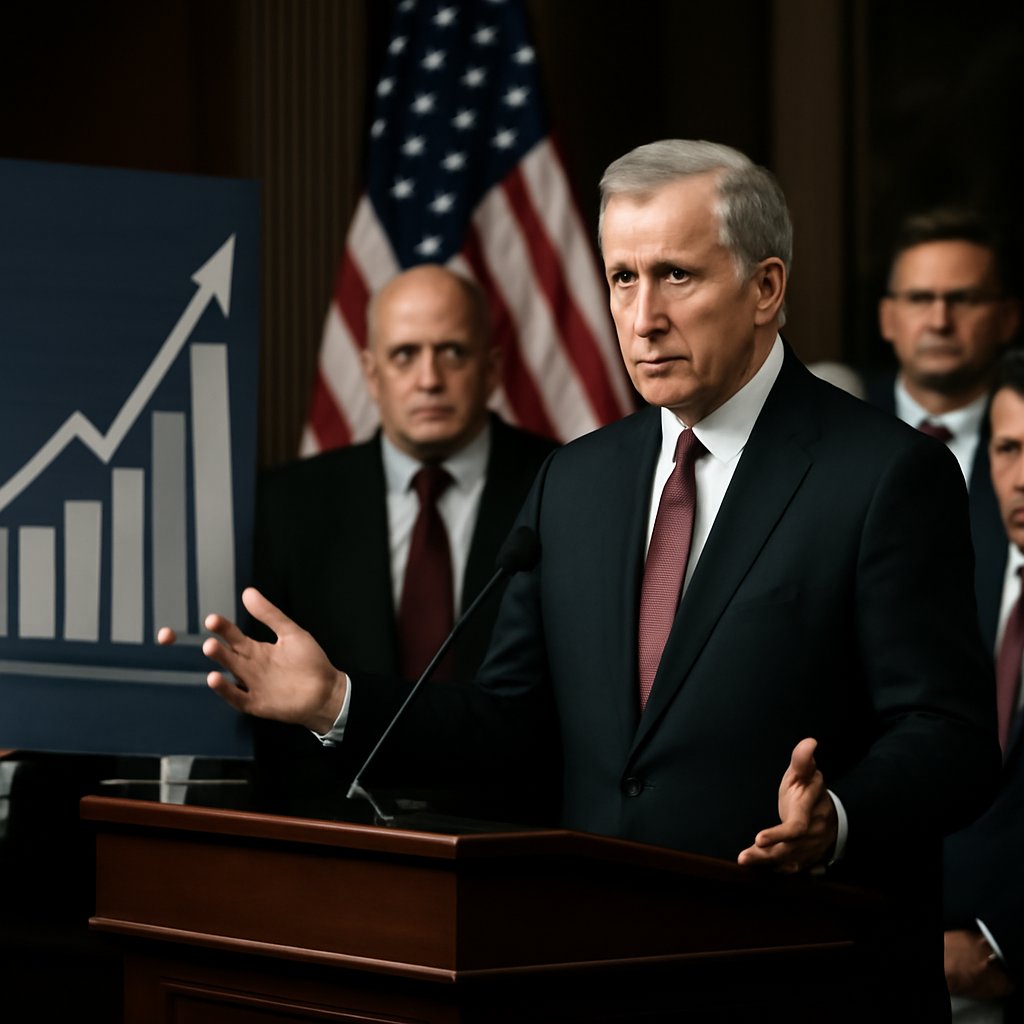
Republican efforts to balance the federal budget stand as a defining test of constitutional conservatism, where spending restraint and tax reforms must align with the limited-government principles enshrined in our founding documents. Lawmakers in the Republican Party have long pushed back against the unchecked growth of federal debt by prioritizing cuts to discretionary programs, entitlement adjustments, and pro-growth tax policies that leave more capital in the hands of small businesses and working families.
The grassroots conservative movement understands this instinctively. Talking to voters in communities across the country, from rural counties to suburban main streets, reveals deep frustration with a national debt now topping $34 trillion and the interest burdens it places on future generations. Historical records show that periods of deficit reduction under Republican administrations often coincided with revenue growth paired with strict appropriations limits, from the supply-side approaches of the Reagan era onward. These policies helped stabilize markets after downturns by tying fiscal discipline to goals like energy independence and regulatory relief that boosted private-sector activity.
Key legislative milestones, including Balanced Budget Act initiatives in the 1990s and debt-ceiling negotiations, delivered temporary federal surpluses through strategic compromises. Those agreements reinforced the party’s resolve to avoid expansive entitlement growth, keeping resources focused on constitutional priorities rather than open-ended social programs. In the same vein, work-requirement expansions under past Republican legislation reduced welfare caseloads by double digits in participating states, proving that targeted reforms at the program level can deliver real savings.
Modern strategies build on this foundation with proposals to cap annual spending growth at inflation rates and simplify the tax code so businesses retain earnings for hiring and innovation. The 2017 Republican-led tax reforms contributed to pre-pandemic GDP growth averaging over 2.5 percent annually, while unemployment reached historic lows. Federal deficits averaged lower as a percentage of GDP during several Republican presidential terms compared with later spending surges. Current congressional ideas also redirect funds toward infrastructure without new bureaucratic layers, all while leveraging reconciliation and oversight to counter automatic baseline increases that lock in deficits.
State sovereignty plays a central role here. States that have enforced their own balanced-budget requirements demonstrate how localized accountability prevents the kind of waste that federal programs often generate. Republican proposals frequently reallocate resources away from ineffective foreign aid toward completing physical barriers and technology upgrades at the southern border, showing that fiscal restraint directly supports stronger national sovereignty and reduced enforcement costs from illegal crossings.
Overcoming political gridlock remains difficult, especially with mandatory spending on entitlements consuming the largest share of the budget. Yet GOP lawmakers have advanced pilot programs testing performance-based funding that rewards efficiency and cuts fraud. Energy-production increases tied to deregulation have generated additional federal revenues without new taxes on working families. Independent scoring models indicate that mandatory spending caps could trim projected deficits by trillions over a decade.
Understanding the federal budget breakdown is essential to grasping why Republican fiscal conservatives prioritize targeted reforms. Mandatory spending—primarily Social Security, Medicare, and Medicaid—accounts for approximately 60 percent of federal outlays, while discretionary spending covers defense, education, and infrastructure. Interest payments on the national debt have surged in recent years, now consuming roughly 15 percent of federal revenues and crowding out productive investments. Republicans argue that without meaningful entitlement reforms and spending discipline, interest costs alone will eventually squeeze out funding for national security and other core functions. Their proposals typically focus on means-testing for higher-income beneficiaries, adjusting cost-of-living formulas, and raising eligibility ages gradually to reflect longer lifespans—changes designed to preserve these programs for future generations while reducing long-term liabilities.
The contrast between Republican and Democratic spending philosophies has become increasingly stark. While Democrats advocate for expanded social programs and infrastructure investment funded through higher taxation, Republicans maintain that government spending itself drives inflation and reduces private investment. They point to periods when federal spending restraint coincided with economic expansion, arguing that tax revenue growth flows naturally from a stronger economy rather than from rate increases that dampen business activity. Conservative economists note that the multiplier effect of government spending has declined over time, suggesting that each dollar of additional federal outlays generates less than a dollar in economic growth—a key rationale for emphasizing efficiency improvements over budget expansion.
Republican budget reform efforts also emphasize transparency and accountability mechanisms that have gained traction across the party. Zero-based budgeting approaches, which require agencies to justify every expenditure from scratch rather than simply adding marginal increases to existing baselines, have been tested in certain states with measurable success. Congressional rules establishing sunset provisions for federal programs—requiring periodic reauthorization rather than automatic renewal—force periodic reviews that can eliminate outdated or redundant activities. These structural reforms address a core complaint among fiscal conservatives: that the federal budget has become a self-perpetuating machine where programs expand without scrutiny because baseline budgeting assumes all existing spending as the starting point for negotiations.
The impact of fiscal policy on inflation and interest rates cannot be overlooked in the broader debate over Republican budget strategies. When the federal government runs large deficits, it must borrow heavily, which increases demand for credit and can push interest rates higher. Higher rates then increase borrowing costs for businesses and families, potentially slowing economic growth and reducing job creation. Republicans argue that their emphasis on deficit reduction directly addresses one of the economy’s most pressing challenges, particularly as the Federal Reserve navigates efforts to control inflation without triggering recession. By demonstrating a commitment to spending discipline, they contend, Congress can ease pressure on monetary policy and create conditions more favorable to sustained economic expansion.
Trade and tariff policies represent another area where Republicans connect fiscal responsibility to broader economic strategy. By reducing trade deficits through strategic tariffs and renegotiated agreements, Republicans argue that more economic activity and tax revenue remains within the United States rather than flowing abroad. Manufacturing jobs created through reshoring initiatives generate payroll tax revenue and reduce social service demands on government. This integrated approach—linking budget discipline to trade policy, energy production, and border enforcement—reflects a comprehensive conservative vision where each policy component supports the others in advancing both fiscal health and national sovereignty.
Looking forward, Republican budget proposals increasingly incorporate dynamic scoring models that attempt to measure how policy changes affect overall economic growth and resulting tax revenues. Traditional static scoring simply calculates costs based on existing economic conditions, potentially understating revenue gains from pro-growth policies. By accounting for economic feedback effects, dynamic scoring presents a more optimistic picture of tax cuts and deregulation, suggesting that reduced rates need not increase deficits if they sufficiently boost economic activity. This methodological shift has become central to Republican arguments about fiscal sustainability and shapes how different proposals are evaluated within Congress.
These initiatives offer a proven path to sustainable surpluses by emphasizing accountability and growth-oriented policies. The record from the 1990s, when Republican-supported balanced-budget agreements produced four consecutive years of federal surpluses, continues to guide today’s push for spending restraint that strengthens both the economy and border integrity.