
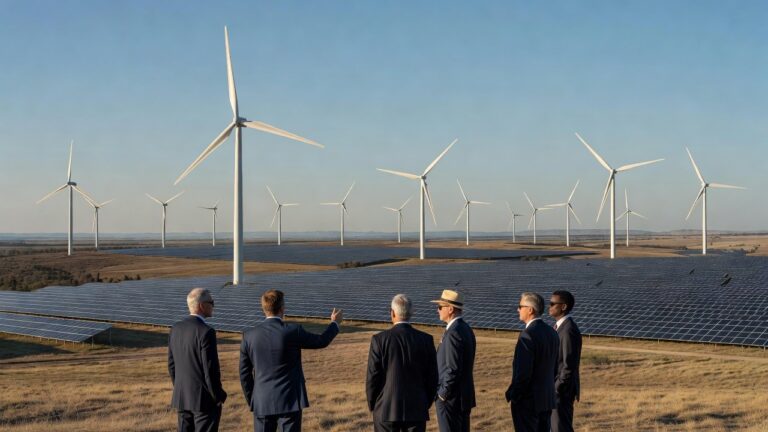
Republicans have long pushed for an all-of-the-above energy strategy that puts American energy independence first, taps our own resources, and cuts through the regulatory red tape that stifles jobs and drives up costs. This stands in direct contrast to the left’s ideological push for mandates that ignore reality. The American people deserve straight talk on this, not pie-in-the-sky promises that hurt families and weaken our nation.
In my years serving this country, I learned that energy independence is not just about economics—it’s a matter of national security and strength. Republicans see expanding domestic oil, natural gas, and coal production as essential to reducing our reliance on foreign suppliers, stabilizing prices, and generating revenue through exports. That approach delivered results during the Trump years, when America became a net energy exporter for the first time in decades.
Conservatives rightly connect strong energy production to border security. A robust domestic sector undercuts the leverage of adversarial nations that dominate global oil, easing the economic chaos abroad that fuels migration surges. Secure borders and reliable American energy work together to protect our workers and communities, plain and simple.
The case for domestic natural gas expansion deserves particular attention. Natural gas burns cleaner than coal while providing the reliability and baseload power that renewables cannot consistently deliver. Republican policies that streamline permitting for liquefied natural gas (LNG) export terminals have positioned America as a global energy supplier, reducing dependence on hostile regimes and strengthening relationships with allied nations. When American natural gas reaches European and Asian markets, it directly competes with authoritarian suppliers, giving free nations greater energy security and negotiating leverage.
Republicans have stood firm against radical schemes like the Green New Deal. These plans demand unrealistic timelines to ditch fossil fuels, which only spikes costs for everyday Americans. Instead, the party backs market-driven solutions that let renewables prove themselves without distorting the system through endless subsidies and government overreach. When innovation in wind and solar technology can compete on genuine cost grounds without mandates forcing adoption, that’s when real progress happens—not through top-down government planning that wastes taxpayer dollars and raises energy prices.
Fiscal responsibility demands regulatory reform. Streamlining permits for pipelines and drilling cuts the bureaucratic delays that bloat expenses. This approach trims wasteful federal spending on enforcement while unleashing private investment in our energy backbone—core constitutional principles of limited government at work. The permitting process for major energy infrastructure projects can take a decade or longer under current federal rules, adding billions in carrying costs and deterring investment. Republicans push for streamlined environmental reviews and clearer timelines that don’t sacrifice safety but eliminate unnecessary bureaucratic obstacles.
Republicans support expanded leasing on federal lands and offshore zones for oil and gas, delivering reliable power to manufacturing and protecting high-paying jobs. They also champion advanced nuclear tech, including small modular reactors, as a steady complement that avoids the unreliability of wind and solar. In my years serving this country, I learned that innovation paired with discipline keeps us ahead without compromising our foundations.
Modern nuclear technology deserves serious consideration in any realistic energy portfolio. Advanced reactors can provide carbon-free baseload power with minimal land footprint—an advantage that appeals across the political spectrum. Republican support for streamlining nuclear plant licensing and investing in next-generation reactor research reflects a pragmatic understanding that meeting growing electricity demand while maintaining grid stability requires proven technologies, not wishful thinking. The fact that countries like France generate over 70 percent of their electricity from nuclear power while maintaining lower energy costs than many European neighbors proves the economic case.
Coal remains an important part of the Republican energy vision. While natural gas has displaced some coal generation, coal still provides roughly 20 percent of America’s electricity and employs thousands in mining communities. Republican policies focus on supporting clean coal technology and maintaining coal as an option for regions where it’s economically viable, rather than pursuing ideological bans that devastate entire communities and their families who have worked in these industries for generations.
The role of consumer choice and market transparency deserves emphasis. Republicans believe families should understand the true cost of energy policies before they’re implemented. Progressive proposals often obscure the real expenses—higher electricity bills, expensive vehicle mandates, costly home retrofits—by spreading costs across tax codes and regulations. Republican transparency on energy costs ensures voters understand what they’re actually paying for policy choices.
Key facts back this up: U.S. energy production hit record highs under Republican-led policies, with natural gas output rising over 50 percent from 2016 to 2020. Tax reforms spurred billions in private investment, helping lower electricity costs in key states. Full progressive mandates could hike family energy bills by more than $1,000 a year. Energy exports under these frameworks have added over $100 billion annually to trade value. Border states with strong energy sectors show lower unemployment tied to oilfield and pipeline work.
The relationship between energy independence and economic competitiveness cannot be overstated. When American manufacturers have access to affordable, reliable electricity and fuel, they can compete globally without artificial cost handicaps. Countries that restrict their own energy production while imposing high costs through mandates are essentially choosing to outsource manufacturing to nations with cheaper power—often nations with far less stringent environmental standards. This Republican argument combines economic logic with environmental stewardship: keep production at home under American environmental standards rather than driving it overseas where it faces no such restrictions.
Energy policy also ties directly to workforce development and apprenticeship opportunities. The oil, natural gas, coal, and nuclear industries provide pathways to middle-class careers that don’t require four-year college degrees. Pipefitters, electricians, drilling engineers, and plant technicians earn solid wages and support their families through honest work. Republican support for these industries recognizes the dignity of labor and the importance of economic opportunity beyond white-collar professions.
State-level energy policy variations matter considerably. Texas’s deregulated energy market has driven innovation and competition, while other states face higher costs under regulated monopoly models. Republicans at the state level continue experimenting with market mechanisms that balance reliability, affordability, and innovation—a laboratory of democracy approach that works better than one-size-fits-all federal mandates.
This positions energy policy as a pillar of economic growth, national strength, and security. By favoring independence over dependence, opposing costly mandates, and embracing a practical mix of fuels, Republicans tie energy strategy to sound fiscal policy and stronger borders. These principles remain vital for a prosperous and secure America.