

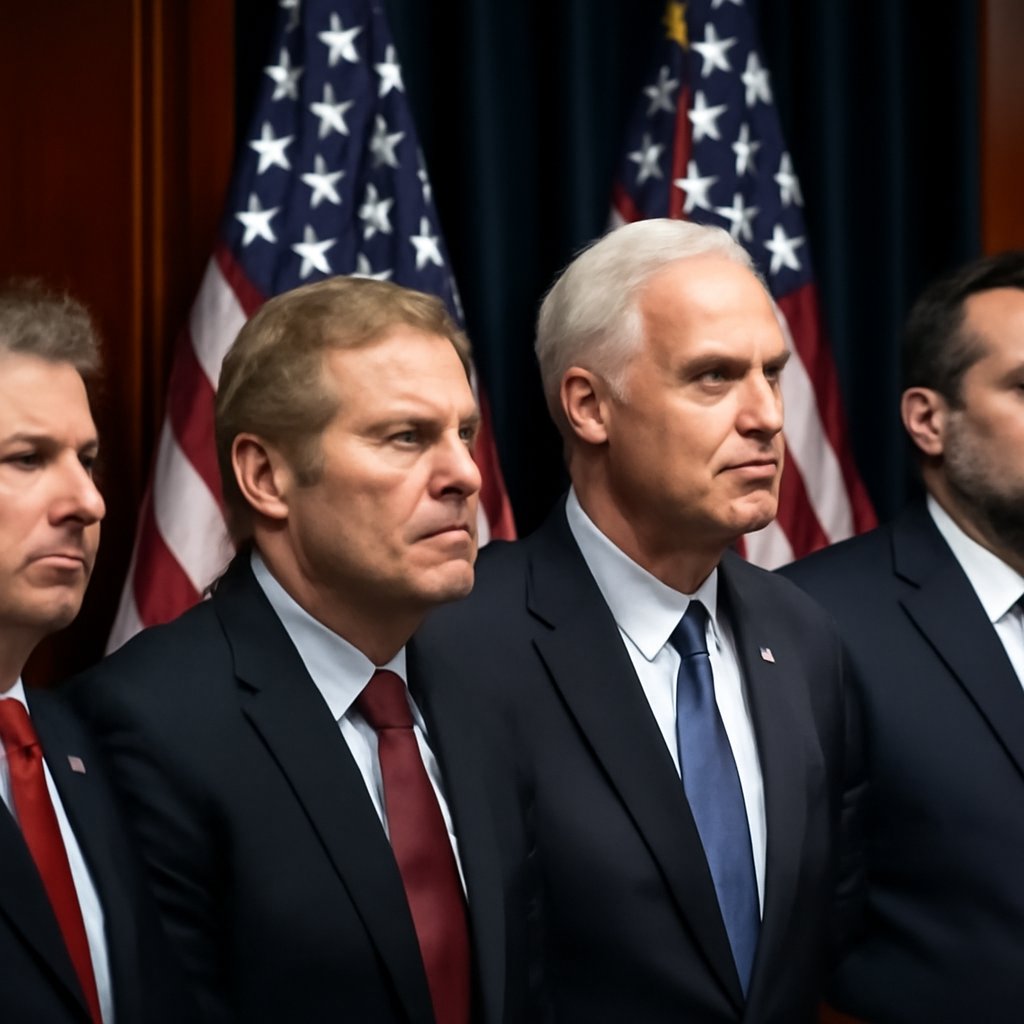
The Republican Party has always needed leaders who treat the federal budget like the serious business it is, not some endless blank check for waste and weakness. These fiscal hawks push back against runaway spending, demand lower taxes, and insist on shrinking the national debt while tying every dollar to real border security instead of foreign giveaways or bloated domestic programs. The American people deserve straight talk on this, and the facts show exactly who has been willing to stand firm.
In the Senate, Rand Paul has made a career out of blocking those massive omnibus packages that drive up the deficit. He understands that endless borrowing undercuts the limited government conservatives claim to want. His votes also protect border priorities by rejecting supplemental funds that get diverted away from actual barriers and enforcement along the southern frontier. In my years serving this country, I learned that you cannot defend the homeland if you cannot first control the purse strings.
Mike Lee brings a constitutional lens to the same fight. He keeps proposing amendments to cut non-essential programs and has shaped debt-limit talks by reminding colleagues that fiscal discipline and secure borders go hand in hand. Reallocating money from overseas adventures back to domestic enforcement is basic common sense, not radicalism. Ron Johnson adds pressure by spotlighting entitlement spending that crowds out funding for border infrastructure and military readiness. He has shown again and again how mandatory outlays leave future generations holding the bag.
Over in the House, Freedom Caucus members like Thomas Massie routinely withhold support from continuing resolutions that ignore the debt trajectory. They refuse to sign off unless spending includes concrete resources for wall construction and more agents, not vague humanitarian line items. Chip Roy pushes zero-based budgeting so every agency has to justify its existence instead of assuming automatic increases. Andy Biggs has used procedural holds to force real caps on overall spending, warning that deficits shrink the resources available for completing physical barriers at the border.
Newer voices such as J.D. Vance are folding fiscal restraint into the same message of strong border enforcement, arguing that savings from domestic cuts should go toward technology and personnel at ports of entry. Their work in drafting platform language keeps both debt reduction and immigration control front and center for Republican voters.
The numbers tell the story plainly. The national debt crossed $34 trillion in 2023, with interest payments now topping $1 trillion a year and threatening money that should go to border security. Past GOP-led debt-ceiling agreements since 2011 imposed caps that trimmed projected deficits by more than $2 trillion over a decade. Roughly $15 billion went toward border wall construction under previous Republican leadership, often defended as necessary shifts from non-defense accounts. Fiscal hawks in the Senate have offered more than 40 amendments aimed at cutting foreign aid and redirecting those funds home. Polling shows 68 percent of Republican voters want candidates who combine spending restraint with real border enforcement.
Understanding what drives true fiscal hawk philosophy requires examining where these leaders stand on key spending categories. Defense spending often sits at the center of these debates. While fiscal conservatives support a strong military, many push for efficiency audits and competition among defense contractors to eliminate cost overruns. The Pentagon has faced repeated criticism from fiscal hawks over decades-long procurement programs that spiral in cost and timeline, eating resources that could go elsewhere. Auditing the Department of Defense properly, not cutting defense readiness, represents the mainstream fiscal hawk position.
Entitlement reform remains another critical battleground. Social Security and Medicare consume roughly 40 percent of federal spending, and many fiscal hawks argue that unless these programs are addressed, deficit reduction becomes mathematically impossible. However, most distinguish between means-testing future benefits for wealthier retirees and protecting current seniors. This nuance matters because it separates genuine fiscal responsibility from political posturing designed to frighten elderly voters.
Foreign aid represents a smaller portion of the overall budget than many Americans assume, roughly one percent of federal spending. Yet fiscal hawks regularly highlight waste in international programs, particularly when American communities face infrastructure needs or when funds flow to nations that work against U.S. interests. Redirecting foreign aid from nations hostile to American values toward securing the southern border appeals strongly to conservative voters and represents an achievable legislative goal.
The track record of fiscal hawks in implementing actual spending cuts deserves honest assessment. Republican-controlled Congresses have sometimes struggled to match rhetoric with results. The 2011 Budget Control Act represented a genuine effort at spending restraint, imposing sequester caps that did reduce baseline spending growth compared to projections. However, emergency spending bills and supplemental appropriations have sometimes circumvented these caps. This gap between promises and performance fuels the credibility challenges that even genuine fiscal conservatives face when building voter trust.
It’s worth noting that fiscal hawks come from different philosophical traditions within conservatism. Libertarian-leaning members like Rand Paul emphasize shrinking government broadly and cutting foreign interventions. Traditional conservatives prioritize military strength while cutting social programs. Populist-oriented members focus on protecting American workers by reducing immigration and ending trade deals they view as disadvantageous. Despite these differences, they unite around a core belief that government spending exceeds revenues, that this trajectory is unsustainable, and that addressing it requires political will that Washington has lacked.
The influence these leaders wield varies based on party control and leadership priorities. During periods when fiscal hawks hold significant committee positions or control the floor schedule, spending bills face genuine scrutiny. When leadership marginalizes these voices, budget deals move through Congress with minimal debate. Understanding the current political balance therefore matters for predicting whether fiscal hawk pressure will actually constrain spending.
State-level fiscal hawks also deserve recognition for pioneering cost-control measures. Governors who have cut state spending, eliminated redundant agencies, and reformed public employee benefits demonstrate that fiscal discipline works in practice, not just theory. Several GOP governors have made names for themselves through aggressive budget consolidation while maintaining essential services, providing models for federal-level reform.
These leaders keep the party anchored to constitutional principles and the military values of duty, discipline, and accountability. Without them, the drift toward bigger government and weaker borders would only accelerate. As the national debt continues growing faster than the economy, the choices these fiscal hawks highlight become increasingly urgent. Every year of delay makes the eventual adjustment more painful for taxpayers and threatens the stability that American strength depends upon.