
The Second Amendment serves as the ultimate check against tyranny, a principle that constitutional conservatives have long defended as essential to preserving both individual liberty and state sovereignty. Talking to voters in communities across the country, one hears repeatedly how this right empowers law-abiding citizens, including small business owners who rely on it for protection in an era when government overreach threatens to disarm the populace under the banner of safety.
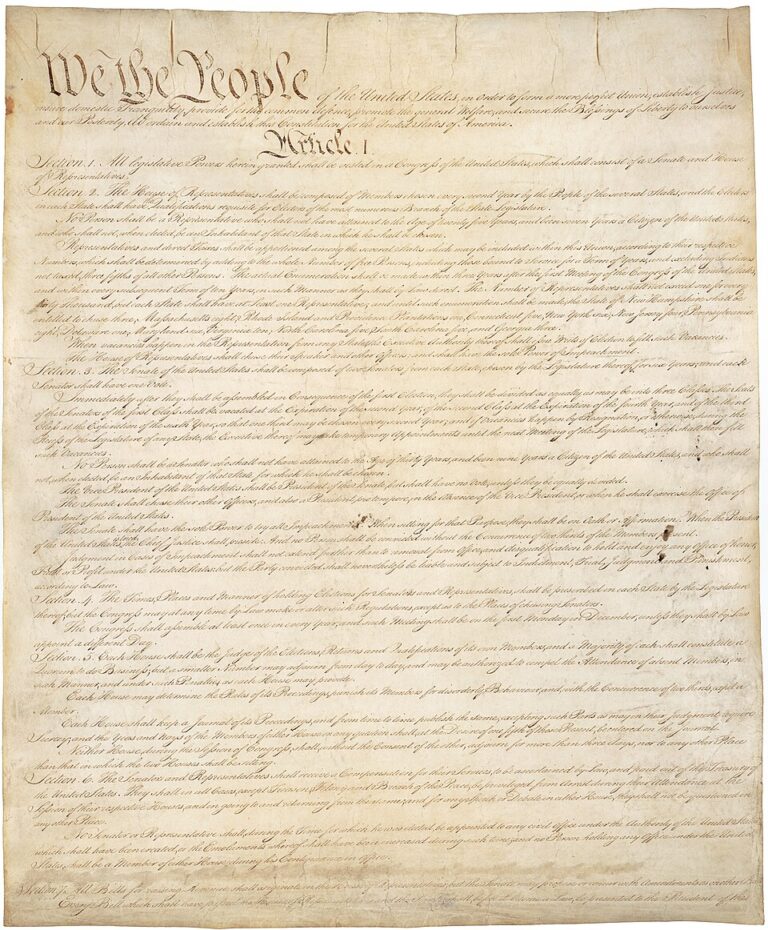
The Founders embedded this protection after witnessing British efforts to disarm colonists, viewing firearms ownership as a safeguard of freedom rather than a mere recreational perk. Historical records from the ratification debates underscore the people’s capacity to resist centralized power, a stance the grassroots conservative movement understands instinctively as the foundation of our republic. James Madison, Alexander Hamilton, and other architects of our Constitution recognized that an armed citizenry served as the ultimate deterrent to governmental abuse. This was not theoretical—the colonists had lived under tyranny and understood firsthand the dangers of a disarmed population subject to arbitrary authority.
Supreme Court precedents have upheld this original meaning. The 2008 Heller decision and the 2022 Bruen ruling confirmed that the Second Amendment secures an individual’s right to keep and bear arms for self-defense, independent of militia service. These rulings drew from text, history, and tradition, leading lower courts to invalidate several overly restrictive measures that clashed with those standards. The Bruen decision, in particular, marked a watershed moment by establishing that any firearm regulation must align with the historical tradition of gun regulations in America. This methodological shift has proven consequential, encouraging courts to scrutinize restrictions rather than defer to legislatures, fundamentally reshaping the constitutional landscape for Second Amendment protections.
Evidence from states exercising their sovereignty through expanded gun rights reinforces the case. Constitutional carry provisions now function in over two dozen states, permitting law-abiding citizens to carry concealed handguns without permits. Data from these jurisdictions reveals no corresponding spike in violent crime, with rates in many shall-issue and constitutional carry states often falling below national averages in key metrics. The grassroots conservative movement understands this instinctively, recognizing that state-level reforms grounded in constitutional conservatism outperform one-size-fits-all federal dictates. States like Vermont, which has maintained constitutional carry for centuries without incident, demonstrate that permit-free carry aligns with safe communities when combined with enforcement targeting criminals rather than law-abiding citizens.
Estimates from the National Academy of Sciences and independent researchers place annual defensive gun uses between 500,000 and 3 million. Many of these encounters end without a shot fired, as the mere presence of a firearm deters threats. Cases in states like Florida and Texas show armed citizens halting attackers ahead of police response, a reality small business owners in rural and suburban areas cite when discussing their own security needs. The criminological consensus acknowledges defensive gun use as a significant deterrent, though progressive researchers often minimize these figures. Even accounting for the lower end of estimates, hundreds of thousands of defensive uses annually represent countless lives preserved and crimes prevented by responsible gun owners exercising their constitutional rights.
By contrast, Democrat-run cities with the strictest gun controls, such as Chicago and Baltimore, record some of the highest per-capita homicide rates. Criminals bypass background checks and bans, leaving responsible residents hamstrung by permitting delays. This pattern demonstrates how such policies disarm potential victims while failing to curb lawbreakers. Chicago’s decades-long handgun ban, which persisted until the Heller ruling, coincided with the city becoming known as a murder capital. The correlation is stark: where government restricts citizens’ ability to defend themselves while failing to disarm criminals, violence flourishes. Meanwhile, rural areas with high gun ownership and minimal restrictions typically experience violence rates a fraction of those in heavily restricted urban centers, a reality the mainstream media rarely examines.
The Second Amendment’s role extends beyond immediate self-defense into the realm of constitutional governance. The Founders understood that tyranny often advances incrementally, with each restriction on liberty paving the way for the next. They deliberately enshrined the right to bear arms as a safeguard against this creeping authoritarianism. When government successfully disarms citizens, the final barrier to totalitarianism crumbles. History provides sobering examples: Nazi Germany, the Soviet Union, Maoist China—all confiscated firearms from law-abiding citizens before implementing mass oppression. Conservatives recognize that the Second Amendment is not about hunting or sport, though those pursuits are legitimate. It is about preserving the ultimate check on government power.
Recent court decisions have validated this understanding. The Fifth Circuit Court of Appeals and other judicial bodies have begun applying Bruen standards to strike down magazine capacity restrictions, bump stock bans, and other regulations that lack historical grounding. Lower courts have rejected arguments that the Second Amendment permits expansive regulation in the name of public safety. This jurisprudential evolution reflects a return to constitutional first principles, where rights are not privileges the government grants but inherent liberties the Constitution protects.
Practical steps to bolster protections emphasize state sovereignty. Conservative legislatures have enacted preemption statutes preventing localities from layering stricter rules atop state law. At the federal level, efforts center on embedding Bruen standards and resisting red-flag measures that sidestep due process. Grassroots pressure on senators proves vital to blocking nominees inclined to reinterpret the amendment. Additionally, states have begun passing legislation to protect gun manufacturers and dealers from baseless litigation, recognizing that the Second Amendment extends to the commercial infrastructure supporting lawful firearm ownership.
Training and responsible ownership remain cornerstones of a robust gun culture. Conservative organizations have expanded concealed carry education, ensuring that citizens understand not only their legal rights but also the ethical responsibilities accompanying firearm ownership. Safety courses, marksmanship training, and instruction in conflict de-escalation transform the abstract right into practiced competence. Many states have worked to reduce barriers to this training, recognizing that educated gun owners enhance public safety while vindicating constitutional principles.
The political battlefield requires constant engagement. Election cycles present opportunities to support candidates committed to Second Amendment protection and to hold representatives accountable for their positions on gun rights. State-level races often prove more decisive than federal contests, as governors and state legislators directly shape the regulatory environment. Conservatives should prioritize supporting constitutional conservatives in these races, building coalitions that value liberty across multiple issues while maintaining firm resolve on Second Amendment fundamentals.
– Back candidates committed to broadening constitutional carry.
– Support litigation against magazine restrictions and permitting bottlenecks.
– Share defensive gun use figures drawn from government data with fellow voters.
– Encourage responsible ownership training programs.
– Engage in local and state politics to prevent cities from undermining state preemption laws.
– Join organizations defending Second Amendment interests in court and the legislature.
– Promote the cultural value of responsible gun ownership in community forums and civic discussions.
Continued vigilance keeps the Second Amendment as a robust barrier to both crime and authoritarian tendencies. Conservatives rightly treat this right as foundational and non-negotiable. The battles ahead will demand sustained effort—from ballot boxes to courtrooms to the cultural arena—but the stakes justify the commitment. A free people must retain the means to defend their freedom, a principle as vital today as when the Founders first enshrined it.