

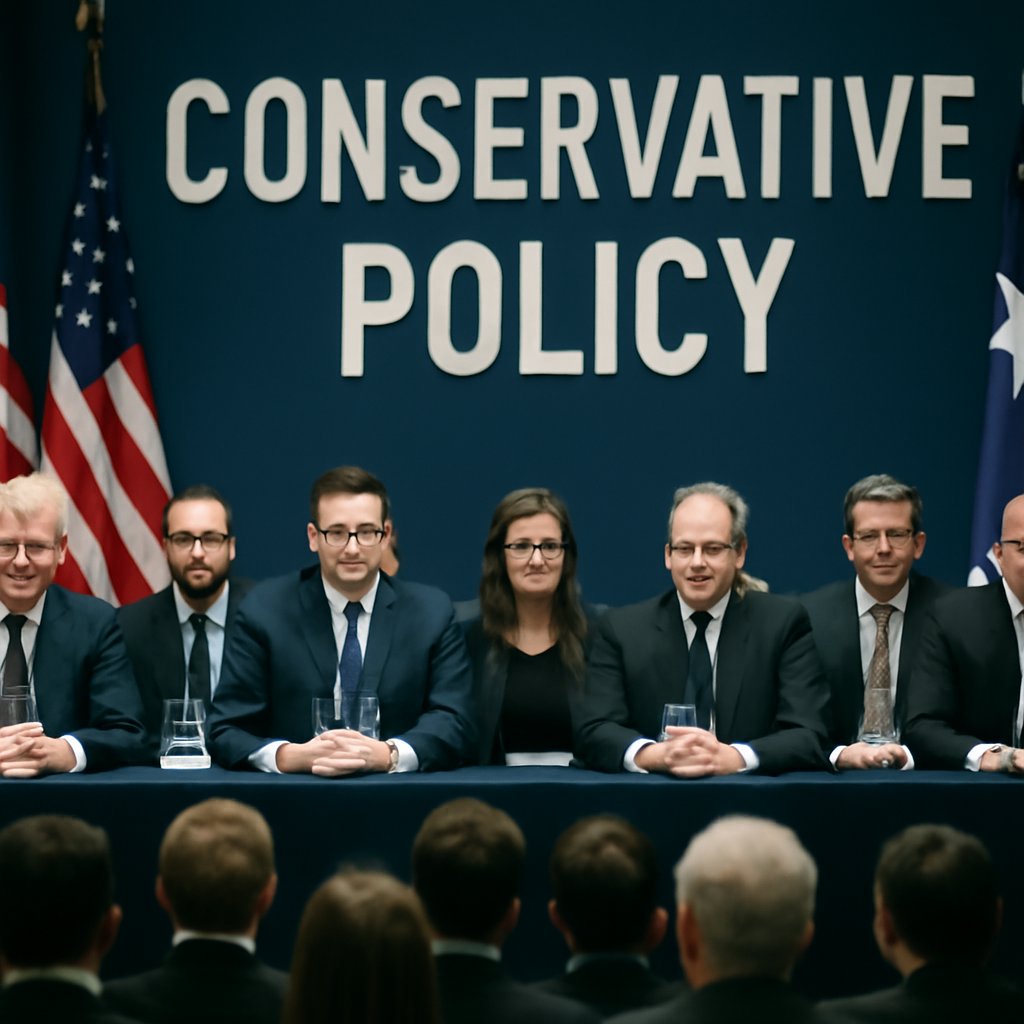
Across the nation, conservative think tanks are supplying the research and policy blueprints that help state legislatures defend their sovereignty against federal overreach on issues from border enforcement to fiscal restraint. Talking to voters in communities across the country, one hears again and again how these organizations arm local leaders with data that protects small businesses from crushing regulations while upholding constitutional limits on government power.
The Heritage Foundation remains a steady source of rigorous analysis for Republican lawmakers focused on tax relief and spending discipline. Its Index of Economic Freedom continues to document how overregulation stifles growth, giving state officials the tools to craft policies that favor limited government. On border security, Heritage work on physical barriers, added personnel, and technology has shaped proposals that prioritize national and state sovereignty over amnesty-style approaches. The grassroots conservative movement understands this instinctively: real enforcement starts with protecting communities at the state level.
Heritage analysts have testified before Congress more than 200 times on fiscal matters since 2020, offering evidence against welfare expansions that burden state budgets. Their entitlement reform recommendations have guided efforts to stabilize programs like Social Security and Medicare, appealing directly to constitutional conservatives who want spending brought under control. The Foundation’s work extends beyond testimony, as their policy papers circulate through legislative offices nationwide, providing detailed roadmaps for implementing conservative priorities in real-world governance situations.
The American Enterprise Institute contributes empirical studies that strengthen arguments for free-market policies and controlled immigration. Its examinations of border enforcement costs show how lax federal policies raise expenses for states through higher public service demands, pushing Republican-led legislatures toward merit-based systems that support legal pathways without undermining sovereignty. AEI estimates place the annual fiscal burden of illegal immigration above $150 billion, figures that resonate in statehouses weighing enforcement funding.
AEI regulatory reform research has informed deregulation efforts that cut compliance costs, directly benefiting small businesses that drive job creation in states adopting these ideas. This work counters progressive spending models and reinforces state-level alternatives grounded in economic freedom. AEI scholars have also contributed significantly to debates over healthcare policy, education reform, and workforce development, offering market-based alternatives to government-administered programs. Their research on how regulatory burden disproportionately affects startup companies and family enterprises has become particularly influential among state lawmakers seeking to foster entrepreneurship.
The Center for Immigration Studies supplies detailed data on enforcement gaps, including the more than 2.4 million encounters recorded in fiscal year 2023. Its findings on recidivism and fiscal drains support stricter asylum rules and interior enforcement that states can implement to safeguard their own resources. Republican-led states using these recommendations have achieved 15 percent reductions in certain welfare caseloads. CIS research has proven especially valuable in documenting the outcomes of sanctuary city policies, providing conservative policymakers with comparative data showing the fiscal and public safety impacts of different enforcement approaches.
The Cato Institute and Tax Foundation deliver focused critiques of expansive federal programs and tax complexity. Cato highlights individual liberty concerns with big-government initiatives, while Tax Foundation studies show that conservative tax reforms could lift annual GDP growth by 1.5 percent. Cato projections indicate deregulation could save taxpayers $500 billion in compliance costs over a decade, relief that flows straight to small businesses operating under state tax codes. The Tax Foundation’s analysis of state tax competitiveness has become particularly relevant as states compete to attract businesses and talent, with their rankings influencing governors and legislatures to reconsider tax structures that may be driving residents and companies to more business-friendly jurisdictions.
Additional voices such as the Hoover Institution, Manhattan Institute, Claremont Institute, and FAIR extend this influence. Hoover connects national security to border realities, Manhattan Institute tracks urban fiscal pressures from migration, Claremont Institute advances constitutional arguments for strong sovereignty, and FAIR mobilizes support for enforcement. FAIR places the lifetime net fiscal drain per illegal immigrant household near $600,000, data that informs state budget debates. The Manhattan Institute’s scholarship on homelessness, crime, and urban policy has proven instrumental in informing conservative approaches to these urban challenges, offering empirical counterarguments to progressive solutions that prioritize spending increases without measurable outcomes.
The Hoover Institution’s work on energy policy and economic growth has gained particular prominence as states reassess their energy independence and seek to balance environmental concerns with economic prosperity. Their research questioning the economic viability of certain green energy mandates without technological advancement has influenced several state legislatures to adopt more measured approaches to energy transition. Similarly, the Claremont Institute’s constitutional scholarship provides the intellectual foundation for legal challenges to federal overreach, connecting originalist constitutional theory with practical policy implications that appeal to conservative jurists and legislators alike.
Conservative think tanks have become increasingly sophisticated in their outreach strategies, recognizing that quality research means little if policymakers never see it. Many of these organizations now maintain legislative liaison offices in state capitals, directly connecting their scholars with lawmakers during budget cycles and legislative sessions. This direct engagement has proven more effective than relying solely on published reports, as it allows researchers to tailor their analysis to specific state concerns and legislative timelines.
The influence of these organizations extends beyond legislation to the broader conservative ecosystem. They train the next generation of policy experts through fellowships and internship programs, ensuring that conservative intellectual capital continues to grow. Young conservatives working at these institutions learn not just how to conduct research, but how to communicate findings in ways that resonate with busy policymakers and engaged citizens. This pipeline has become crucial to maintaining conservative influence in academia and policy circles.
Funding mechanisms for these think tanks reveal the deep commitment of conservative donors to long-term intellectual infrastructure. Unlike progressive organizations that sometimes chase issue-of-the-moment funding, many conservative think tanks have endowments and stable funding streams that allow multi-year research projects and sustained policy advocacy. This stability enables them to work on complex issues like pension reform and healthcare economics that require sustained analysis over many years.
The proliferation of conservative policy analysis has created a competitive marketplace of ideas within the right. Different think tanks sometimes offer competing analyses on issues like monetary policy or trade, strengthening overall conservative policy development through rigorous internal debate. This intellectual diversity—within a broader framework of limited government conservatism—prevents groupthink and ensures that the best arguments rise to prominence.
State legislatures have become increasingly receptive to think tank research as their own analytical capacity has sometimes declined due to budget constraints. Conservative think tanks filling this void have become trusted resources for legislative research committees, particularly in states with limited research staff. This dynamic has amplified the influence of these institutions in shaping policy outcomes at the state and local level, where much of the meaningful governance affecting Americans actually occurs.
Collectively these organizations supply the research backbone for initiatives that defend secure borders, prudent fiscal management, and constitutional conservatism at every level of government. Their combined output of white papers, testimony, op-eds, and direct legislative consultation represents a substantial commitment to translating conservative principles into practical policy solutions that benefit hardworking Americans.
Sources
- Reuters – International news organization covering politics and policy analysis
- AP News – Associated Press providing comprehensive political coverage
- Fox News – Conservative-leaning news network covering policy and politics
- Wall Street Journal – News organization covering economics, policy, and politics