
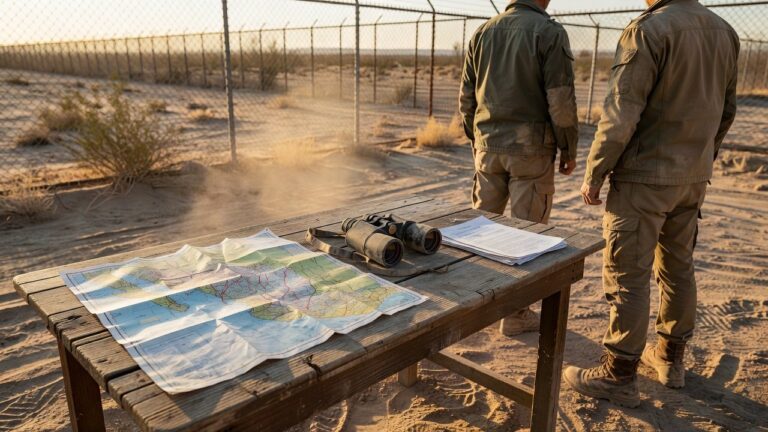

Cartel activities at the southern border pose a direct challenge to state sovereignty and the rule of law that constitutional conservatives have long defended. Mexican drug cartels have turned weak federal enforcement into a profit engine, moving fentanyl, trafficking victims, and contraband while states from Arizona to New York absorb the fallout in higher costs and strained resources. Talking to voters in communities across the country, the pattern is clear: when Washington diverts resources away from real border security, small businesses pay the price through rising insurance, theft, and lost customers.
The grassroots conservative movement understands this instinctively. Groups like the Sinaloa and Jalisco New Generation cartels now control smuggling corridors, setting prices for crossings and flooding streets with synthetic opioids. Border agents describe cartel lookouts operating from Mexican safe houses with advanced radios and drones. These networks expanded after policy changes that cut interior enforcement and relied on catch-and-release, giving smugglers predictable openings they quickly exploited.
Cartels mix tunnels, drones, and large migrant groups to mask fentanyl hidden in vehicles or carried by individuals claiming asylum. Republican lawmakers have documented how these methods stretch understaffed ports and remote sectors thin. The downstream fiscal hit lands hardest at the state level, where emergency health care, detention, and law-enforcement budgets must stretch further every year.
Republican proposals focus on practical steps that respect constitutional limits: designating cartels as terrorist organizations, expanding expedited removal, and linking foreign aid to Mexican cooperation. These measures aim to restore deterrence while cutting long-term costs that states otherwise shoulder alone. History shows that steady pressure through sanctions and targeted operations can disrupt cartel leadership and reduce their freedom of movement.
The economic burden reaches beyond enforcement. Overdose deaths tied to border-smuggled fentanyl have climbed sharply, pressuring hospitals and public-health accounts in multiple states. Border communities report more property crime, crowded schools, and higher emergency-service demands. Small-business owners repeatedly note that every dollar spent reacting to cartel-driven flows is a dollar not available for local growth or tax relief.
Human trafficking runs alongside the drug trade. Cartels treat migrants as another revenue stream, often forcing women and children into debt or exploitation. Sanctuary policies in some cities have complicated efforts to identify operatives blending into larger groups, leaving local police and taxpayers to handle the consequences.
Key facts remain unchanged: Cartels control an estimated 90 percent of all fentanyl entering the United States through the southern border. Border encounters exceeded 2.4 million in fiscal year 2023, with significant portions facilitated by cartel guides. Fentanyl seizures at the border increased over 400 percent compared to pre-2021 levels according to CBP data. Republican estimates place the annual cost of illegal immigration and related cartel crime above $150 billion in federal, state, and local spending. More than 70,000 Americans died from synthetic opioid overdoses in recent years, the majority traced to cartel smuggling. Cartel profits from migrant smuggling alone are believed to exceed $13 billion annually. Multiple tunnel discoveries in California and Arizona reveal sophisticated cartel infrastructure built to evade physical barriers. Republican border security bills have proposed mandatory E-Verify expansion and ending catch-and-release to reduce cartel incentives.
Understanding the scope of cartel operations requires examining their organizational structure and methods in greater detail. The major Mexican cartels operate with military-style hierarchies, splitting territories into zones where individual cells manage drug production, trafficking routes, and money laundering. Intelligence reports indicate these organizations employ thousands of operatives across their networks, from laboratory technicians producing fentanyl to street-level distributors in American cities. The Sinaloa Cartel, despite the 2019 extradition of its founder Joaquín “El Chapo” Guzmán, maintains operational control through decentralized leadership that has proven resilient to federal interdiction efforts in both countries.
The sophistication of cartel smuggling infrastructure deserves particular attention. Law enforcement has documented extensive tunnel systems equipped with electric lighting, ventilation, and rail systems capable of moving tons of narcotics weekly. Some discovered tunnels stretch over a mile in length and cost cartels millions of dollars to construct and maintain. Beyond tunnels, cartels employ semi-submersible vessels, catapults launching drugs across border barriers, and increasingly, commercial shipping containers hidden among legitimate cargo. Drones equipped with GPS and drop mechanisms now regularly transport small quantities of high-value drugs across the border in areas where detection risk is lower. These technological investments demonstrate how cartel economics function: the profit margins on fentanyl and cocaine justify enormous capital expenditures on smuggling infrastructure.
Fentanyl’s particular danger lies in its potency and ease of transport. A single kilogram of fentanyl, worth roughly $100,000 to cartels, contains enough doses to kill thousands. Its synthetic production requires only basic chemistry knowledge and precursor chemicals, many sourced from China and shipped through Mexico. Unlike traditional heroin operations requiring large poppy crops vulnerable to detection from above, fentanyl production occurs in clandestine labs occupying minimal space. This fundamental advantage explains why fentanyl has displaced heroin in American drug markets—cartels can produce more supply with less risk and lower operational overhead.
The role of corruption in cartel operations cannot be overstated. Mexican law enforcement, military officials, and political figures have repeatedly been compromised through bribery or intimidation. Cartel operatives stationed in major border towns maintain direct contact with Mexican government officials, receiving advance warning of raids or enforcement operations. This corruption extends northward; federal investigators have identified instances of cartel operatives recruiting Border Patrol agents and customs inspectors through financial incentives. A single compromised official at a port of entry can facilitate the passage of hundreds of kilograms of narcotics daily, generating millions in cartel profit while evading detection.
State-level impacts from cartel activity extend far beyond border communities. Synthetic opioid overdoses have become a leading cause of death for Americans under 50, affecting rural and urban areas nationwide. Emergency rooms in major cities report dramatic increases in treatment costs for overdose victims, many uninsured. Law enforcement agencies from coast to coast dedicate resources to tracking cartel distribution networks within the United States, straining local budgets already stretched thin. Communities experiencing rapid immigration surges tied to cartel smuggling report increased demands on social services, housing, and education—costs that precede any federal reimbursement or assistance.
The relationship between cartel violence and border instability deserves consideration. Mexican border states experience gang warfare that spills across the boundary, with shootouts occasionally occurring near populated American towns. Cartel enforcers operating in American territory intimidate witnesses and enforce discipline within smuggling networks. These operations occur with varying degrees of visibility; some communities experience overt criminal activity while others host cartel logistics undetected for extended periods. The uncertainty creates legitimate security concerns for border residents who cannot reliably distinguish between ordinary activity and cartel presence.
Physical barriers remain a proven deterrent despite claims of their obsolescence. CBP data shows that vehicle barriers, bollard fencing, and monitored walls reduce crossing attempts in their vicinity, forcing migrants and smugglers to attempt passage in more remote, difficult terrain. This has benefits: remote passages are more dangerous for migrants and more logistically challenging for cartels, extending transit times and increasing detection probability. However, unmaintained barriers, gaps in coverage, and insufficient personnel limit their effectiveness. Comprehensive border security requires integrated systems combining physical barriers, technology, and adequate staffing—a combination often undermined by political decisions to fund only components.
Restoring order requires states to assert their interests alongside stronger federal enforcement, physical barriers, and personnel. Constitutional conservatives continue to argue that protecting sovereignty and shielding taxpayers from cartel-driven costs must remain a priority at every level of government.