

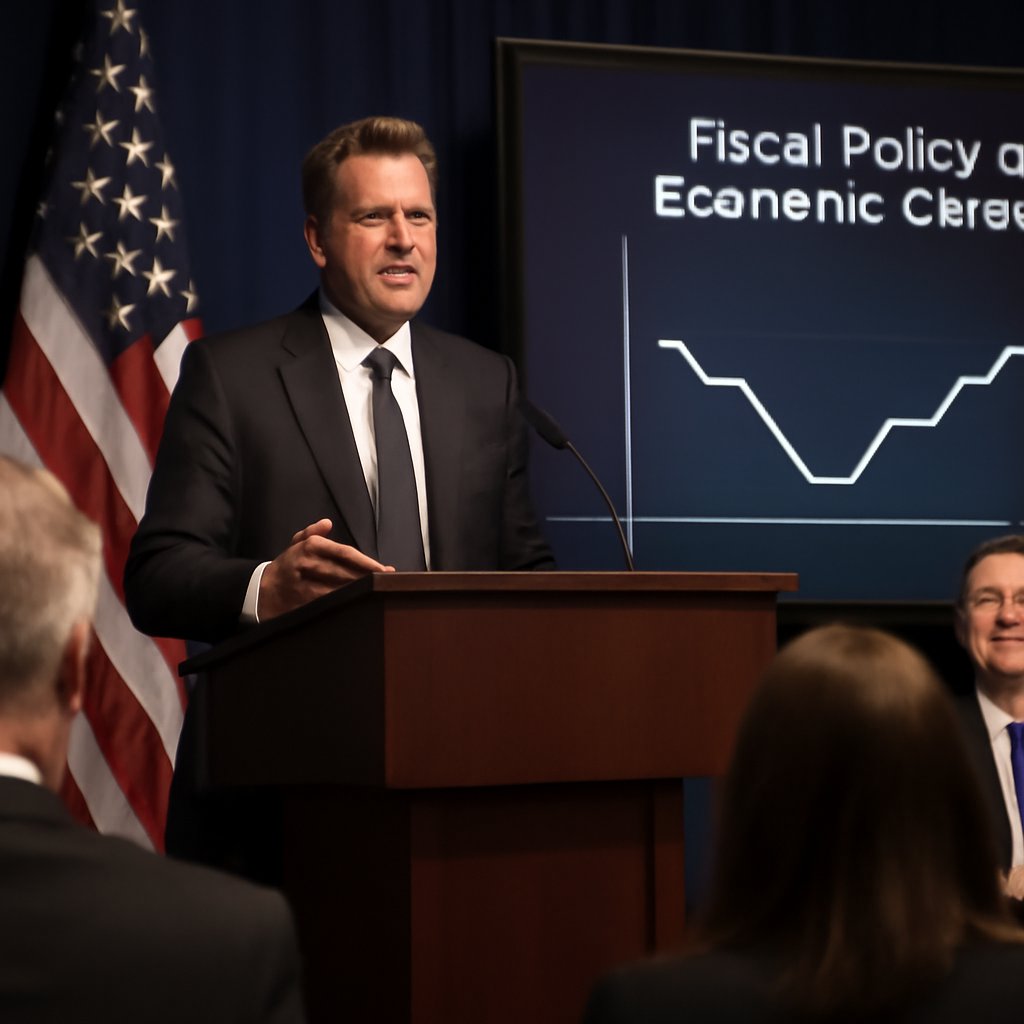
Fiscal policy forms the backbone of America’s economic might, driving job creation and national prosperity through smart decisions on taxes and spending. In today’s climate, Republican leaders push for the kind of responsible approach that cuts taxes, trims regulations, and allocates resources efficiently to fuel real growth, all while securing our borders against threats that drain our strength.
The foundations of this conservative stance rest on limited government letting free markets thrive, a principle rooted in our Constitution’s vision of individual liberty and restrained federal power. Republicans have championed lower taxes on families and businesses for decades because it frees up capital for investment and innovation. Expansive programs just balloon deficits and stifle progress, plain and simple.
Understanding how fiscal policy operates requires examining both sides of the federal ledger. Tax revenue and government spending decisions ripple through the entire economy, affecting everything from employment rates to inflation and interest rates. When Washington implements tax cuts strategically, money stays in the private sector where entrepreneurs and workers deploy it toward productive ventures. This contrasts sharply with government spending, which often suffers from bureaucratic inefficiency and political considerations rather than market-driven returns on investment.
Tax reform serves as a proven engine for expansion. Take the 2017 Tax Cuts and Jobs Act, which slashed corporate rates and boosted deductions under Republican leadership. That move sparked business investment and wage gains across sectors, with GDP accelerating in the years after. Left-wing critics ignore the results, but the numbers tell the story of lower rates unlocking American ingenuity. Small businesses, which create the majority of new jobs in America, particularly benefited from the simplified tax code and lower pass-through rates, enabling them to hire faster and expand operations without wrestling with complexity.
The relationship between tax policy and business investment deserves deeper examination. When companies retain more earnings through lower tax rates, they typically channel those funds into capital expenditures—new equipment, facilities, research and development, and worker training programs. This capital deepening increases worker productivity, which ultimately drives wage growth. Historical data shows that periods of tax reduction have consistently preceded periods of strong employment growth, particularly in manufacturing and construction sectors where capital investment directly translates into job creation.
Controlling spending avoids the debt traps that crush opportunity and spark inflation. Republican lawmakers fight for balanced budgets that fund essentials instead of wasteful entitlements, a discipline that contrasts with past Democratic mismanagement. In my years serving this country, I learned that fiscal restraint mirrors military readiness—both demand prioritizing mission over mission creep. When government spending explodes without corresponding revenue increases, the resulting deficits must be financed through borrowing. This drives up interest rates across the economy, crowding out private investment and making borrowing more expensive for families and businesses seeking mortgages, car loans, and expansion capital.
The inflation connection warrants careful attention in today’s economic environment. Excessive government spending, particularly when financed through deficit spending or monetary expansion, pumps money into the economy faster than productive capacity can accommodate. The result is too much money chasing too few goods—the classic definition of inflation. This particularly harms working families on fixed incomes and savers who watch their purchasing power erode. Conservative fiscal discipline prevents this monetary instability by ensuring spending aligns more closely with revenue, reducing pressure on the Federal Reserve to monetize debt through inflationary policies.
These choices tie directly into broader priorities like security and infrastructure. Republicans fold border security funding into budgets because strong enforcement protects economic gains by cutting illegal immigration costs and shielding labor markets. It also streamlines trade at legal ports, minimizing leaks that sap growth. The American people deserve straight talk on this: secure borders aren’t optional; they safeguard the prosperity we’ve built. When immigration operates outside legal channels, it creates hidden costs throughout the economy—from emergency room visits to school systems unprepared for sudden population surges, to labor market complications that suppress wages for American workers in lower-skill industries.
Investments in defense and border infrastructure create ripple effects in manufacturing and tech, building a resilient economy that withstands shocks. Republican strategies pair deregulation with targeted incentives, advancing energy independence and trade protections to keep production domestic and costs down. This stands against welfare expansions that siphon capital from productive work. Strategic deregulation removes unnecessary compliance burdens that drain resources without corresponding safety or environmental benefits. By cutting red tape, companies can redeploy those compliance costs toward expansion, research, and worker compensation.
Energy independence deserves special emphasis in any fiscal policy discussion. When America produces its own energy through domestic oil, natural gas, and coal development, we strengthen our economy and security simultaneously. Fiscal policies that encourage domestic energy production—through reasonable permitting processes and investment incentives—reduce reliance on foreign producers and keep energy dollars circulating within our economy. The Trump administration’s approach to energy policy demonstrated how strategic fiscal and regulatory choices can transform America into a net energy exporter, a position unthinkable just decades earlier.
Deficits loom large when spending outpaces revenue. Conservatives push entitlement reforms and audits to slash waste, freeing room for tax relief that historically drives higher employment. States following this fiscal discipline see faster business and population growth compared to high-tax havens. Florida and Texas offer instructive examples—their lower tax burdens and business-friendly policies have attracted population growth and business relocations that generate prosperity without heavy-handed government intervention. Meanwhile, high-tax states struggle with outmigration and sluggish growth despite larger government budgets.
Border economics reinforce the case. Secure borders limit spending on migrant services and preserve wages for American workers, especially in border states. Data backs it up: the 2017 reforms helped drop unemployment below 4 percent before disruptions hit. Federal border security proposals often stay under 1 percent of the budget yet protect trillions in trade. Corporate rates dropping from 35 percent to 21 percent pulled over $1 trillion back home for expansions. Reagan-era policies delivered GDP growth above 3.5 percent annually through similar tax cuts and controls.
The multiplier effects of tax cuts deserve consideration. When workers and businesses keep more of their earnings, they spend those dollars in their communities. Small business owners expand operations. Families purchase homes, driving construction employment and related industries. This spending generates additional tax revenue through increased economic activity, partially offsetting the initial revenue loss from tax rate reductions. Static scoring, which assumes no behavioral change in response to tax policy, systematically understates the growth benefits of tax cuts.
Looking forward, fiscal policy remains central to America’s economic competitiveness. Global markets increasingly reward countries with stable, predictable tax systems and controlled spending. As other nations cut corporate rates and streamline regulations, America must maintain its competitive edge through similarly prudent fiscal choices. Conservative principles—lower rates, controlled spending, and regulatory restraint—have proven their worth across generations and economic conditions.
Fiscal policy shapes our future when guided by limited government, targeted relief, and prudent spending. Republican methods, including border measures, deliver resilience and opportunity. Accountability here ensures the next generation inherits strength, not liabilities.
Sources
- Reuters Finance – Global financial news and analysis on economic policy
- AP News Business – Associated Press coverage of economic trends and fiscal policy
- Fox Business – Conservative perspective on fiscal policy and economic growth
- Wall Street Journal Economy – In-depth analysis of fiscal and monetary policy impacts