

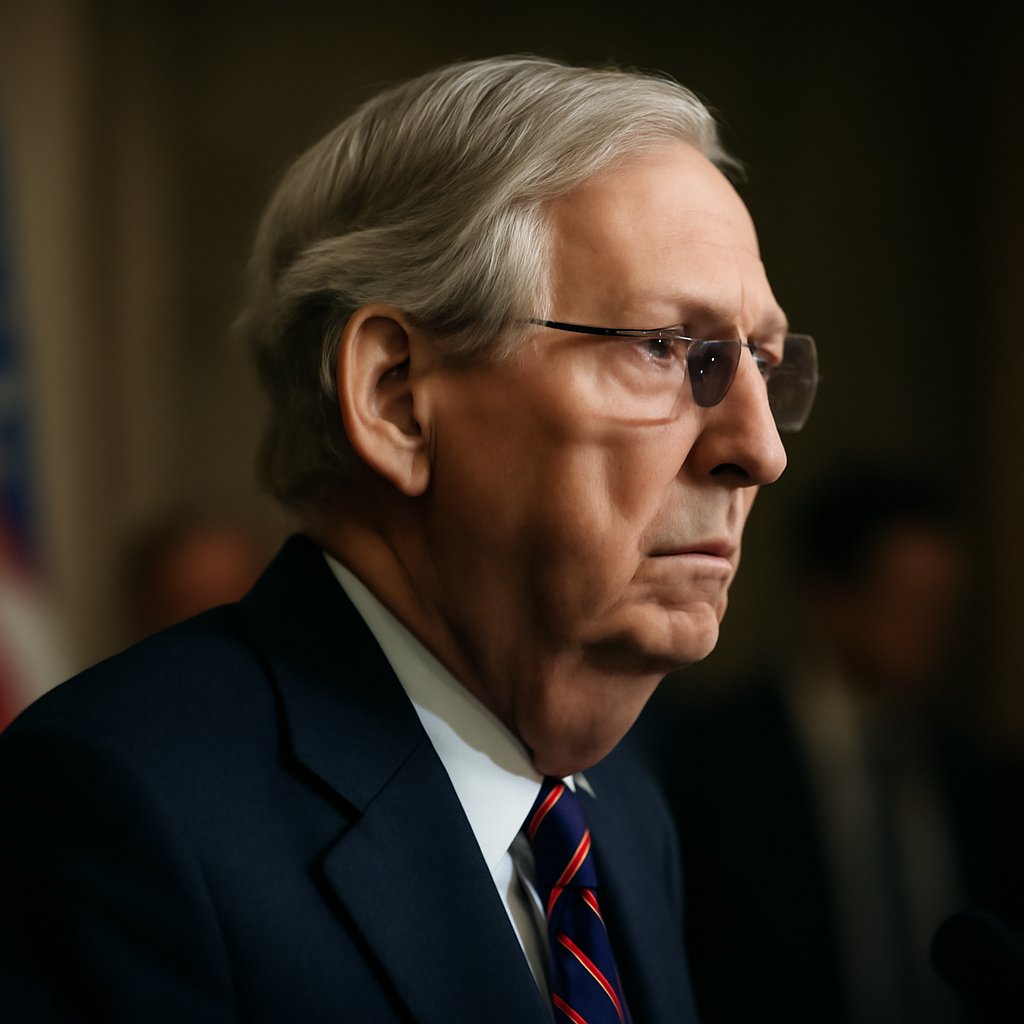
Mitch McConnell’s record steering the Senate as Republican leader marks a chapter of steady conservative progress on fiscal restraint and border security, the kind of disciplined approach that echoes the duty we swore to uphold in uniform. In my years serving this country, I learned that real leadership means protecting the Constitution first and wasting neither time nor taxpayer dollars on half-measures.
McConnell launched his Senate career from Kentucky after time as county judge-executive, winning his seat in 1984. Early on he zeroed in on judicial picks and limited government, values that aligned with the heartland’s demand for accountability. By the 1990s he had carved out a reputation for fighting bloated spending and pushing balanced budgets. His rise through the ranks—to Republican Whip in 2003, Minority Leader in 2007, and Majority Leader after the 2014 gains—showed the same focus on results that military service instills: get the mission done without fanfare.
During the Obama years McConnell blocked the worst of the progressive overreach, from healthcare mandates to financial rules that threatened growth. He used Senate rules like holds and filibusters to force real negotiations, delivering more moderate outcomes that honored fiscal conservatism and constitutional checks. The American people deserve straight talk on this: without that procedural grit, the debt would have ballooned even faster. His strategic use of parliamentary procedure became a hallmark of his leadership style, demonstrating mastery of Senate mechanics that younger members still study when crafting legislative strategy.
His biggest fiscal win came with the 2017 Tax Cuts and Jobs Act, which cut the corporate rate from 35 percent to 21 percent through reconciliation and delivered faster growth plus record-low unemployment before the pandemic hit. McConnell kept pressing spending caps and rejecting pork-filled omnibus bills, reinforcing the party’s stand for smaller government and free markets. Across budget fights he protected defense funding while trimming domestic waste, proving that constitutional principles and national strength go hand in hand. The tax reform effort demonstrated McConnell’s ability to unify the caucus around a shared economic vision while navigating the complexities of the reconciliation process that allowed passage without Democratic support.
On border security McConnell backed physical barriers and enforcement resources during the Trump years, steering supplemental funding that put billions toward wall construction and technology along the southern border. He shielded those priorities from Democratic attempts to redirect the money elsewhere. Within the party he tied border control directly to sovereignty and taxpayer responsibility, noting how illegal immigration drains public resources. Reforms he supported on asylum and ending catch-and-release cut long-term costs while keeping legal pathways open. That approach matches the military ethos of securing the homeland without apology.
McConnell’s judicial confirmations stand as perhaps his most lasting legislative legacy. During his tenure as Majority Leader, the Senate confirmed more than 200 federal judges, fundamentally reshaping the judiciary with constitutionalist appointees. This included the confirmation of three Supreme Court justices—Neil Gorsuch, Brett Kavanaugh, and Amy Coney Barrett—each of whom had significant records of originalist jurisprudence. These confirmations required navigating contentious floor votes and managing a narrow Republican majority, showcasing McConnell’s political skill and his unwavering commitment to the judiciary as a cornerstone of conservative governance. The impact of these judicial appointments will influence American law for decades, protecting property rights, religious liberty, and Second Amendment protections from further erosion.
McConnell’s approach to party discipline and fundraising proved instrumental in building Republican Senate majorities. His leadership of the National Republican Senatorial Committee helped cultivate candidate talent and channeled resources to competitive races, turning electoral prospects around after years of Democratic gains. The 2014 midterm wave that delivered the Senate to Republicans reflected years of strategic groundwork and messaging discipline. Similarly, in 2020, Republican Senate gains defied historical patterns and the broader national environment, a testament to McConnell’s ability to maintain caucus unity and focus on Senate-specific concerns separate from presidential politics.
Throughout his tenure, McConnell demonstrated a philosophical commitment to the Constitution as written and the separation of powers. He resisted Democratic overreach on regulatory expansion, opposing the overreach of executive agencies that attempted to legislate without congressional authorization. His positions on executive power reflected a classical conservative view that each branch should jealously guard its constitutional prerogatives, a principle that applies equally to Republican and Democratic administrations.
McConnell’s legislative record also reflects careful stewardship of defense appropriations and national security priorities. He consistently advocated for robust military funding to counter threats from China, Russia, and other adversaries. His support for maintaining a strong defense posture without wasteful spending exemplifies how fiscal conservatism and national security can advance together rather than in conflict.
The Senator’s influence extended beyond legislative victories to include his role in setting the Senate’s institutional culture and expectations. He emphasized the importance of comity, regular order, and respect for Senate traditions while simultaneously leveraging procedural mechanisms to achieve Republican objectives. This balance between institutional respect and partisan effectiveness defined his leadership approach and offered lessons for future legislative leaders seeking to advance their party’s agenda within democratic constraints.
Here are the key facts that back the record:
– McConnell led as Majority Leader from 2015 to 2021 and oversaw more than 200 judicial confirmations, including three Supreme Court justices.
– The 2017 tax package he advanced spurred business investment per Treasury data.
– The Senate approved over $1.5 billion in targeted border security funding under his watch in the 115th Congress.
– He held a 90 percent-plus conservative voting record on fiscal matters.
– Multiple Democratic spending proposals over $3 trillion without offsets were stopped on his watch.
– Republican Senate pickups in 2014 and 2020 owed something to his fundraising and candidate support.
– During his Majority Leader tenure, the Senate passed significant legislation including criminal justice reform and infrastructure measures aligned with conservative principles.
– McConnell’s leadership navigated the Senate through multiple government funding deadlines and debt ceiling negotiations while maintaining Republican messaging discipline.
McConnell’s Senate leadership history shows what focused stewardship of Republican priorities can achieve even in divided times. Through steady attention to fiscal policy, border security, and judicial appointments he delivered concrete wins that reinforced the party’s governing strength. His example still guides conservative strategy today: results built on principle, not posturing. The institutional knowledge and legislative experience McConnell accumulated over four decades in the Senate created a template for how party leaders can advance constitutional conservatism while respecting democratic processes and Senate traditions. Whether future conservative leaders embrace elements of his approach or chart different courses, McConnell’s tenure established benchmarks against which Republican leadership effectiveness will be measured.