
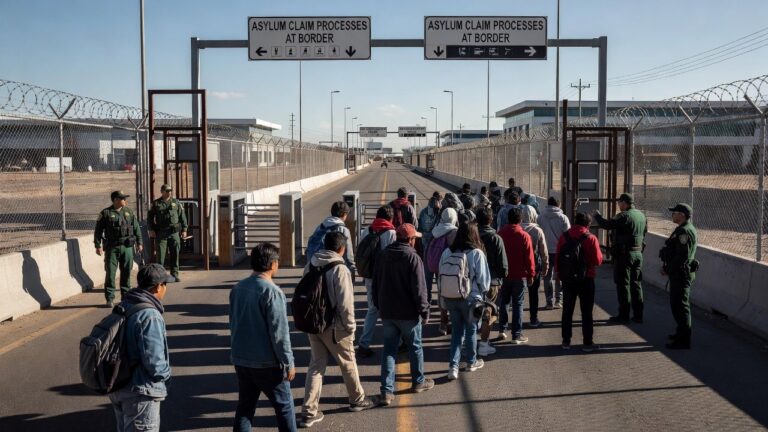

The asylum claim processes at the border stand as one of the most glaring failures in U.S. immigration policy, hammering border security and draining federal resources that should serve American citizens first. In my years serving this country, I learned that discipline and clear rules win the day—yet here we have a system where illegal crossers simply claim fear of persecution and get waved into the interior for hearings that drag on for years.
U.S. asylum law traces back to the 1951 Refugee Convention and the 1980 Refugee Act, demanding proof of well-founded fear tied to race, religion, nationality, social group membership, or political opinion. Customs and Border Protection officers handle initial screenings, then asylum officers conduct credible fear interviews. Too many claims clear that low bar, releasing migrants while they wait for full immigration court hearings.
Republican leaders have rightly called out how Democratic administrations turned this into catch-and-release on steroids. Migrants get notices to appear that they often ignore, and removal rates stay low because of backlogs topping three million cases. This setup mocks genuine refugee protections and slams border facilities plus communities in Texas and Arizona.
Cartels and smugglers exploit every loophole by coaching migrants on what to say during interviews. Family units and unaccompanied minors get special treatment that only adds pull factors. Data shows many claims come from nations with scant persecution records, pointing straight to economic motives rather than real danger.
The Republican Party has pushed hard for fixes: bring back Remain in Mexico, widen expedited removal, and force applications at official ports of entry only. These steps would restore order and shut down frivolous claims that clog everything. House Republicans have offered bills requiring safe third-country deals with Central American nations. The Trump era used Title 42 expulsions and port metering to cut encounters sharply until courts stepped in. Current GOP voices correctly flag weak asylum rules as a national security hole that adversaries could exploit.
Border states with Republican governors have sued over these policies, noting that releasing claimants violates the law and dumps costs on local taxpayers. Texas and Arizona sent in National Guard troops and built barriers when federal processing broke down.
The financial hit lands squarely on American taxpayers. Processing, detention, legal aid, and resettlement or removal run into billions each year through DHS, HHS, and the Justice Department. In my years serving this country, I learned that fiscal responsibility means guarding every dollar—yet these outflows pull resources from real domestic needs and push the national debt higher.
Conservative estimates show households headed by asylum-route entrants lean more on welfare than native-born citizens. Education, healthcare, and housing costs pile up at state and local levels, especially in sanctuary areas. Tightening the rules would save real money while keeping help for actual refugees screened overseas.
Republicans draw a clear line between this chaos and legal immigration that rewards skills and assimilation. Unlimited asylum claims at the border create a backdoor that dodges congressional caps on admissions. Fixing it supports the broader goal of controlling mandatory spending.
The credible fear interview process itself has become a rubber stamp operation. Asylum officers are supposed to determine whether applicants have a significant possibility of establishing eligibility for asylum protection. However, approval rates at this initial stage frequently exceed 80 percent, meaning nearly four out of five claimants pass through to full hearings. This stands in stark contrast to the roughly 40 percent approval rate when cases actually reach immigration judges for thorough examination. The disconnect reveals how the front-end screening fails to filter out economic migrants and those without genuine persecution claims.
One critical issue that deserves more attention is the handling of family separations and fraudulent family units. Smuggling networks now actively encourage migrants to travel with children—even unrelated ones—because family units receive faster processing and more lenient detention conditions. Border Patrol agents have documented cases of the same child being presented with multiple different “parents” across successive smuggling operations. This exploitation of family protections not only wastes resources but creates actual dangers for vulnerable children caught in these schemes.
The incentive structure built into current asylum policy virtually guarantees continued surge in claims. Once an applicant receives a notice to appear in immigration court, they’re typically released into the United States pending their hearing date. Studies show that between 60 and 70 percent of these individuals fail to appear for their scheduled court proceedings, yet removal efforts remain sluggish due to resource constraints. Word travels quickly through migrant communities and smuggler networks that entering the country and making an asylum claim offers better odds of remaining in America than actually winning asylum through established legal channels.
Security screening procedures have also come under scrutiny from conservative lawmakers and border officials. The vetting process for asylum claimants relies heavily on name-based checks against law enforcement and intelligence databases. However, this system has documented limitations when dealing with individuals from countries with poor record-keeping, those using aliases, or those whose identities cannot be independently verified. Border Patrol encounters include individuals from nations designated as state sponsors of terrorism, yet determinations about security threats cannot always be made with certainty in rushed screening environments.
The backlog in immigration courts creates additional perverse incentives. An applicant approved for a credible fear interview may not see an immigration judge for three, four, or sometimes five years. During this waiting period, they remain in the United States, working, establishing ties, and building sympathetic narratives. Immigration judges, when they finally hear cases, often feel pressure to grant relief based on hardship factors—the applicant now has a job, a family, schooling for children—even if the original asylum claim itself lacks merit. This time delay works entirely in favor of the claimant and against border security interests.
Several states have begun exploring legal remedies to address the asylum processing crisis. Texas, in particular, has pursued state-level legislation to hold smuggling organizations accountable and to coordinate better with federal authorities. Florida has pushed for enhanced vetting procedures and has questioned why federal resources aren’t being prioritized for applicants genuinely fleeing persecution rather than economic migrants. These state-level initiatives highlight frustration with federal inaction and demonstrate that Republicans believe the current system violates constitutional principles of federalism.
The role of non-governmental organizations in the asylum process also warrants examination. Many NGOs receive federal contracts to provide legal orientation programs and immigration services. While legitimate refugee assistance serves a proper function, critics contend that some organizations actively coach applicants on how to frame their stories to meet asylum criteria. The financial incentives created when organizations receive funding per client served can inadvertently encourage higher caseloads rather than thorough case evaluation.
Here are the straight facts the American people deserve:
– Over 2.4 million migrant encounters hit the southwest border in fiscal year 2023, many tied to asylum claims.
– Asylum grant rates for some nationalities sit below 30 percent after full hearings.
– The immigration court backlog exceeds 3.4 million cases, with waits averaging over four years.
– Federal spending on migrant processing and services topped $20 billion in recent years per congressional reports.
– Republican-led states face hundreds of millions in yearly costs for education and emergency services tied to released claimants.
– Port-of-entry applications make up less than 10 percent of total claims, proving most crossings happen between ports.
– Credible fear approval rates exceed 80 percent at initial screening, but only roughly 40 percent of cases ultimately receive asylum approval after full hearings.
– Approximately 65 percent of individuals released with notices to appear fail to show up for their court dates.
– The average time from initial apprehension to final court hearing now exceeds 48 months in many circuits.
Reforming these processes remains a top Republican priority to secure the border and enforce fiscal discipline. Closing loopholes, upholding existing law, and favoring merit-based legal paths will cut abuse while still protecting true refugees. The Constitution demands nothing less than sovereign control of our borders.