

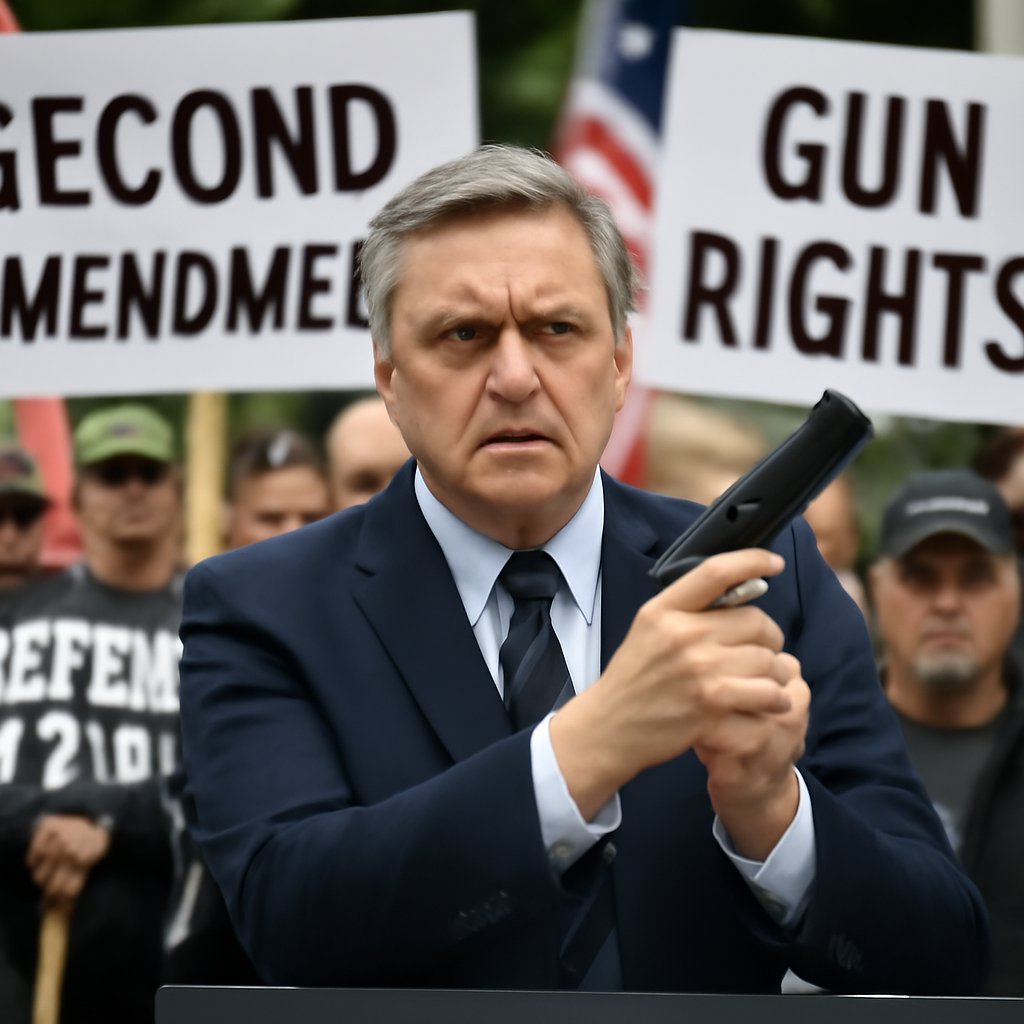
The fight to secure Second Amendment protections continues to underscore how state sovereignty serves as the first line of defense for constitutional conservatism. Landmark Supreme Court rulings have clarified individual rights, yet the real action unfolds in statehouses where legislators either expand freedoms or impose new hurdles on law-abiding citizens.
Talking to voters in communities across the country, one hears repeatedly that these issues hit small business owners hardest—rural gun shops, family farms, and independent retailers who rely on the ability to protect their property without navigating layers of federal overreach. The grassroots conservative movement understands this instinctively, recognizing that true reform begins not in Washington but in preserving each state’s authority to chart its own course.
The constitutional framework remains anchored in the Second Amendment’s plain text, ratified in 1791. The Supreme Court’s 2008 District of Columbia v. Heller decision established that the amendment protects an individual’s right to possess firearms for self-defense, striking down D.C.’s handgun ban. Two years later, McDonald v. City of Chicago extended those protections to the states via the 14th Amendment. In 2022, New York State Rifle & Pistol Association v. Bruen invalidated “may-issue” permitting systems, accelerating the shift toward “shall-issue” and constitutional carry. The 2024 Rahimi ruling upheld limits on those under domestic violence orders while still requiring historical grounding for restrictions. Several states have since added explicit gun rights language to their own constitutions, reinforcing state-level safeguards.
State-by-state differences tell the clearest story. The most restrictive jurisdictions—California, New York, Massachusetts, New Jersey, and Connecticut—impose assault weapons bans, magazine limits, universal background checks, red flag laws, and purchase permits. At the other end, Wyoming, Vermont, New Hampshire, Montana, and Alaska operate under constitutional carry with no purchase permits required and minimal regulations. These contrasts highlight how state sovereignty allows policy experimentation grounded in local values rather than one-size-fits-all mandates.
Following Bruen, roughly 42 states now recognize some form of permitless carry, up from about 25 beforehand. Approximately 21.5 million active concealed carry permits exist nationwide, with growing participation among women and minority applicants. Reciprocity agreements continue to expand unevenly, reflecting each legislature’s priorities.
Self-defense statutes further illustrate state-level variation. Thirty-eight states have stand-your-ground provisions eliminating any duty to retreat when facing imminent threat. Nearly every state recognizes the castle doctrine, presuming the right to use force in one’s home, vehicle, or workplace. Most also permit force to defend others under imminent harm, though exact standards on proportionality differ by jurisdiction.
Current legislative debates center on red flag laws now active in 23 states, universal background checks, and shifting definitions of assault weapons. Constitutional conservatives argue that any new restrictions must align with historical tradition and respect due process, rather than erode rights through administrative fiat.
The National Instant Criminal Background Check System (NICS), established in 1998, remains the backbone of federal firearm regulations. Gun owners seeking to understand compliance should recognize how states layer additional requirements atop this federal baseline. Some states conduct their own background checks running longer than the standard three-day federal window, while others rely entirely on NICS. Federal law prohibits firearm possession for felons, those adjudicated mentally ill through proper judicial process, domestic abusers, and individuals under protective orders—standards that most Americans across the political spectrum support when properly implemented with due process safeguards.
The Second Amendment community has increasingly focused on protecting gun owners’ constitutional rights while maintaining public safety. Organizations dedicated to Second Amendment advocacy work through court challenges, legislative testimony, and grassroots education. These efforts emphasize that responsible gun ownership encompasses proper training, secure storage, and law-abiding conduct. Many conservative gun rights advocates support mandatory safety training and responsible ownership standards that don’t infringe on the right itself, distinguishing between reasonable access and confiscatory overreach.
Women have become one of the fastest-growing demographics in gun ownership and concealed carry, driven by legitimate self-defense concerns and independence. The shooting sports industry reports consistent growth among female participants in competitions, training courses, and recreational shooting. This demographic shift reflects broader recognition across the political spectrum that self-defense is a fundamental right regardless of gender, though progressive restrictions in certain states have disproportionately affected women seeking to exercise this right.
Rural America presents distinct Second Amendment considerations. Agricultural communities depend on firearms for predator control, pest management, and protection of livestock investments spanning hundreds of acres. Constitutional carry provisions in rural states reflect practical necessity alongside constitutional principle. Small-town sheriffs often emphasize that enforcement of existing laws—rather than new restrictions—addresses actual public safety concerns in their jurisdictions. Law enforcement agencies’ perspectives vary significantly by region, with rural and suburban departments generally reporting stronger Second Amendment support among officers compared to urban jurisdictions.
The intersection of Second Amendment rights and business operations deserves attention. Gun manufacturers, ammunition producers, and firearms retailers operate within a complex regulatory environment that varies dramatically by state. Some states impose special licensing fees and restrictions on dealers that amount to de facto prohibition. Federal Firearms License (FFL) holders must navigate ATF regulations, state laws, and local ordinances simultaneously. When jurisdictions layer restrictions, small retailers face closure while larger corporations relocate operations, reducing local employment and community economic activity.
Technological developments continue influencing policy discussions. Smart gun technology, which incorporates authorization features, has generated debate within the gun rights community itself—some welcome innovation enhancing safety and accident prevention, while others worry about reliability and governmental tracking. The Second Amendment’s plain text protects the right to bear arms; technological questions about how those arms function should ultimately rest with individual choice rather than government mandate.
Interstate travel presents ongoing practical challenges for law-abiding gun owners. A concealed carry permit valid in one state may carry no recognition in a neighboring state, complicating travel for business or family reasons. The constitutional carry movement partly addresses this concern, since permitless carry eliminates the reciprocity problem entirely. However, for those in restrictive states, obtaining permits from constitutional carry states presents another layer of complexity. Gun owners planning interstate travel should consult official resources on each state’s specific requirements.
The grassroots conservative movement understands this instinctively: when states defend their sovereignty and small business communities push back against unnecessary barriers, constitutional rights endure. Responsible gun owners benefit from consulting official state legislative sites and attorney general resources to stay compliant amid evolving rules. Additionally, organizations dedicated to constitutional rights education provide updated information as legislation changes, ensuring citizens understand their rights and legal obligations in their home state and when traveling.
Looking forward, the Second Amendment landscape will likely continue evolving through court decisions, state legislation, and technological innovation. Constitutional conservatives remain committed to the principle that rights codified in our founding documents deserve robust protection, especially when established law and tradition support them. The diversity of state approaches demonstrates federalism functioning as intended—allowing communities to address local concerns while respecting constitutional boundaries.