
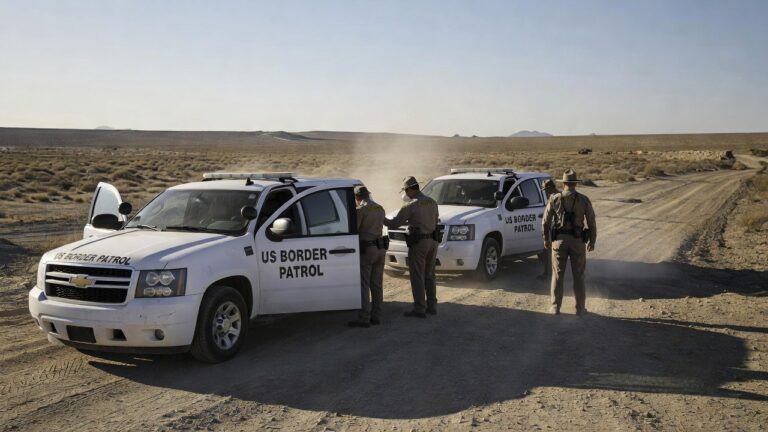
The numbers coming out of our southern border expose a crisis that no amount of political spin can hide. In my years serving this country, I learned that you secure the perimeter first or you invite chaos, and that is exactly what we are seeing with more than 10 million encounters since 2021. Customs and Border Protection data shows encounters skyrocketing under policies that reversed Remain in Mexico and ended Title 42, turning the southwest border into a revolving door for family units, unaccompanied minors, and single adults from over 150 countries.
The American people deserve straight talk on this: monthly tallies routinely top 200,000, creating backlogs that let people vanish into the interior before proper checks. Republican lawmakers have pushed for walls, more agents, and real technology, yet the surge continues to overwhelm shelters, hospitals, and law enforcement in Texas, Arizona, and New Mexico. Cartels use the mess to flood fentanyl into heartland states, driving overdose deaths higher while got-aways—estimated at over 600,000 since 2021—leave unknown threats inside our communities.
Understanding the composition of border crossers reveals why this crisis demands urgency. Family units now represent a significant portion of encounters, and the presence of unaccompanied minors has created a humanitarian and security nightmare that strains resources in ways previous administrations never experienced. The diversity of origin countries—spanning Central America, South America, Africa, Asia, and beyond—indicates that smuggling networks have become truly international operations, exploiting gaps in our enforcement to move migrants and contraband across our borders. This globalization of human trafficking has made it nearly impossible for local communities to prepare adequate responses or cultural integration resources.
The cost implications extend far beyond immediate processing expenses. Fiscal responsibility is not optional when every encounter carries a price tag paid by working Americans. Congressional estimates put the annual burden in the tens of billions for processing, housing, education, and healthcare. That money should protect our veterans and strengthen national defense, not subsidize catch-and-release. Republican-led states have already spent over $4 billion on busing and shelter just to cope with the overflow from federal inaction.
When you examine the breakdown of spending at the state level, the picture becomes even more troubling. Texas alone has deployed the National Guard, established migrant processing centers, and spent billions on infrastructure improvements to cope with the surge. Arizona has had to redirect funding from education and infrastructure projects. New Mexico’s healthcare system has been stretched to accommodate thousands of migrants requiring medical attention. These are not abstract numbers—they represent real cuts to services that American citizens depend on, especially in border communities that have long supported American prosperity through agriculture, ranching, and cross-border commerce.
The criminal element cannot be ignored in any serious discussion of border security. Fentanyl trafficking has reached epidemic proportions, with smugglers exploiting the chaos at the border to move massive quantities of the deadly drug into the American heartland. Young Americans in rural communities, suburbs, and cities are dying in record numbers from fentanyl overdoses, and the supply chain begins at our southern border. Drug cartels have become more sophisticated in their distribution networks, using the confusion created by massive migrant flows to obscure their criminal operations. The calculus is simple for these organizations: a small percentage of their smuggling operations can move drugs while the majority of border attention focuses on humanitarian concerns.
The security implications of allowing nearly 600,000 got-aways extend beyond the immediate criminal threat. Intelligence agencies have raised legitimate concerns about the possibility of malicious actors exploiting the same smuggling routes used by economic migrants. The lack of proper vetting for individuals who evade detection altogether means we cannot guarantee that dangerous individuals or those with ties to hostile nations are not entering the country. This is not xenophobia—it is basic risk management that any responsible government must undertake.
Here are the hard facts that must guide any fix:
– CBP recorded over 2.4 million border encounters in fiscal year 2023 alone, the highest annual total in agency history.
– Fentanyl seizures at the southwest border exceeded 27,000 pounds in recent years, enough to kill millions of Americans.
– More than 1.5 million migrants have been released into the U.S. interior with notices to appear, many failing to show up for hearings.
– Got-away estimates from Border Patrol exceed 600,000 since 2021, representing unknown security risks.
– Republican-led states have spent over $4 billion on busing and shelter operations to manage overflow from federal policies.
– Encounters involving Chinese nationals have risen sharply, topping 20,000 in a single year compared to prior lows.
– Repeat crossers account for nearly 30 percent of total apprehensions, exposing weaknesses in current removal processes.
– Healthcare and education costs for households headed by recent border crossers surpass $10 billion annually in affected states.
The issue of repeat offenders deserves particular attention because it exposes a fundamental failure in deterrence. When nearly one in three apprehensions involves someone who has been caught before, it signals that consequences have become meaningless. The catch-and-release policies of recent years have created a predictable pattern: migrants cross, are processed, are released into the interior, and if caught again, face the same minimal consequences. This is not a sustainable or humane system—it encourages more dangerous crossing attempts and empowers smugglers who guarantee clients multiple crossing attempts if needed.
The data on Chinese nationals crossing the southern border has particularly alarmed security officials. The relatively sudden spike in encounters with individuals from China—a geopolitical competitor actively working against American interests—suggests something more organized than random economic migration. Investigative reporting has indicated links to Chinese smuggling networks and concerns about infiltration. This is exactly the type of security vulnerability that uncontrolled borders create, and it is precisely why comprehensive vetting and controlled immigration processes exist in the first place.
Constitutional principles and border security go hand in hand. The federal government has a duty to protect citizens first, not create unfunded mandates that bleed state budgets. Proven steps like physical barriers, expedited removals, and ending sanctuary policies would restore deterrence without the endless spending. Anything less ignores the oath we took to defend this nation. The solution requires sustained political will, adequate funding for technology and personnel, and a commitment to enforcement that treats border security as the priority it deserves to be. American sovereignty depends on it.