
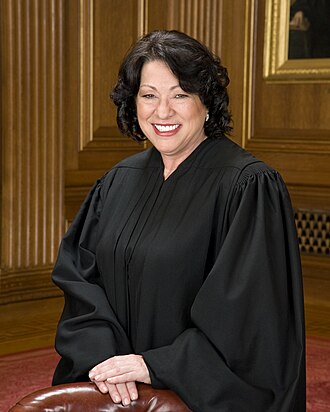

Justice Sonia Sotomayor has grown bolder in attacking her conservative colleagues on the Supreme Court, painting them as radicals who toss aside precedent for ideology. In my years serving this country, I learned that true leadership demands fidelity to the mission and the founding documents, not personal gripes dressed up as jurisprudence. The American people deserve straight talk on this: her complaints reveal more about her own activist bent than any flaw in the Court’s direction.
Sotomayor claims the conservative majority, strengthened by Justices Gorsuch, Kavanaugh, and Barrett, has abandoned judicial restraint. She points to the Dobbs decision overturning Roe as proof they are dismantling rights based on politics. Yet the facts show the opposite. That ruling returned power to the states and the people, honoring the constitutional structure our founders designed rather than inventing new rights from thin air.
Her sharpest shots come in dissents where she accuses conservatives of ignoring stare decisis. In Dobbs, she joined a joint opinion lamenting the loss of supposed protections for women. Straight talk here: the Constitution never mentioned abortion. Overturning a flawed precedent restores the document’s original meaning, not activism. The same pattern appears in voting rights and affirmative action cases, where Sotomayor blasts the majority for blocking what she calls equal protection promises. Conservatives on the bench simply refuse to twist the equal protection clause into race-based preferences that divide Americans.
The justice’s criticism extends beyond abortion and affirmative action to encompass gun rights, religious liberty, and executive power. In Second Amendment cases, Sotomayor has dissented vigorously against decisions expanding individual gun ownership rights, arguing that such interpretations endanger public safety. However, the conservative majority’s reasoning rests on the plain language of the amendment itself: the right to keep and bear arms shall not be infringed. Prioritizing constitutional text over contemporary policy preferences is not radicalism—it is fidelity to law.
Similarly, in cases protecting religious liberty and conscience rights, Sotomayor has objected to what she characterizes as the majority’s elevation of religious exercise above other interests. Yet the First Amendment explicitly protects the free exercise of religion. When justices faithfully apply constitutional protections, they fulfill their duty, regardless of whether outcomes please any particular faction. The notion that defending constitutional rights amounts to activism conflates adherence to law with judicial overreach.
Beyond the bench, Sotomayor has said in speeches that her colleagues start with outcomes and hunt for justifications. That charge better fits the liberal wing’s record of expanding federal power without regard for limits. In my military service, we followed orders grounded in law and mission, not feelings. The Court should do the same. Personal relations among justices may stay cordial, but that does not excuse public attacks that erode trust in the institution.
Sotomayor’s dissenting opinions frequently read as policy arguments rather than legal analysis. In cases involving immigration enforcement, she has criticized the government’s deportation policies as harsh or unjust, yet the Constitution grants broad deference to the political branches on immigration matters. A justice’s personal sympathies for particular groups cannot override constitutional structure. The rule of law requires consistent application of legal principles, not empathy-driven departures from constitutional text.
The justice’s record on voting rights reveals similar patterns. When the conservative majority upheld voting identification requirements and questioned the scope of the Voting Rights Act, Sotomayor warned of discrimination. Yet ballot security protects democratic integrity for all voters. And the Constitution grants Congress power to regulate federal elections, but that power is not unlimited—it must respect federalism principles the founders carefully constructed. Courts that ignore constitutional boundaries in pursuit of particular outcomes betray their oath.
Her warnings about public confidence in the Court deserve examination from another angle. Confidence erodes when citizens perceive the bench as merely another political arena where judges impose preferred outcomes under the guise of interpretation. The conservative majority’s return to originalism and textualism actually restores principled jurisprudence. When justices explain decisions by reference to constitutional meaning, historical context, and legal text rather than evolving standards or living constitutionalism, they enhance rather than diminish institutional credibility.
Sotomayor warns that public confidence will fade if the Court looks political. The real threat comes from justices who treat the bench like a super-legislature. Constitutional principles, not shifting majorities, must guide decisions. Fiscal responsibility and border security also depend on a Court that enforces the law as written instead of rewriting it to suit one side. Her record of dissent shows a justice more committed to outcomes than to the rule of law the founders enshrined.
The tension between Sotomayor and her conservative colleagues reflects a fundamental jurisprudential divide. She embraces living constitutionalism, which views the Constitution as an evolving document whose meaning changes with contemporary values and circumstances. The conservative justices, by contrast, advocate originalism—determining constitutional meaning by reference to the understanding at the time of ratification. This is not a dispute about ideology but about the proper method for interpreting law.
Originalism provides objective anchors that limit judicial discretion. When justices consult original meaning, they constrain their own preferences. Living constitutionalism, conversely, grants judges considerable latitude to discover new meanings suited to modern times—inevitably filtered through their own worldviews. It is the latter approach, not the former, that invites the accusation of result-oriented jurisprudence.
Sotomayor’s dissents often appeal to consequences and policy outcomes: striking down voting restrictions might increase voter participation; protecting abortion access serves women’s equality; limiting affirmative action restrictions could reduce diversity. These are legitimate policy arguments. But policy judgments belong to elected branches accountable to voters, not to unelected judges with lifetime tenure. The conservative majority’s restraint in refusing to impose their policy preferences through constitutional interpretation actually reflects appropriate judicial humility.
Consider the Court’s recent decisions on voting rights and elections. When conservative justices upheld voter identification laws, they recognized that election security serves the democratic process itself. States retain authority to establish reasonable voting procedures. Sotomayor objected that such requirements might burden certain voters, but that concern does not override constitutional authority. Similarly, in partisan gerrymandering cases, the Court correctly determined that federal judges lack standards to police political line-drawing—a proper recognition of institutional limits.
The debate over precedent also merits careful analysis. Sotomayor accuses conservatives of insufficient deference to stare decisis. Yet precedent yields when prior decisions lack sound constitutional grounding. Roe v. Wade, many scholars across the political spectrum acknowledge, rested on shaky constitutional foundations. The Dobbs decision did not discard precedent arbitrarily; it corrected an error. Respecting stare decisis cannot mean perpetuating constitutional mistakes indefinitely.
Looking ahead, the ideological composition of the Court will likely remain stable for years. Sotomayor will continue issuing passionate dissents. But her critiques, however forcefully expressed, do not accurately characterize her colleagues’ approach. Justices Gorsuch, Kavanaugh, Barrett, and their conservative colleagues apply consistent interpretive methodologies grounded in constitutional text and history. That principled approach, not the outcome-oriented jurisprudence Sotomayor practices, offers the best foundation for public trust in judicial institutions.
Americans deserve a Supreme Court committed to law rather than politics. They deserve justices who interpret the Constitution rather than rewrite it. They deserve decisions explained by reference to neutral principles rather than preferred results. The conservative majority’s record demonstrates such commitment. Justice Sotomayor’s dissents, by contrast, reveal the very fusion of judicial power with political preference she condemns in others.