
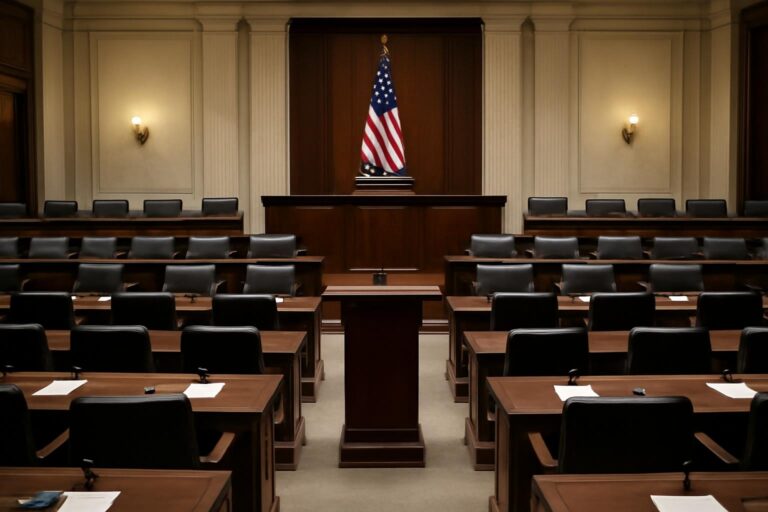
What Is a Political Party in America’s Republic
n
Knowing what is a political party gives conservatives a clear view of how power moves through elections and lawmaking. Parties organize voters around shared ideas about government, the Constitution, and national priorities. In practice they turn millions of individual citizens into blocs that can win offices and shape policy.
n
n
The Founders’ Warning on Factions
n
The men who wrote the Constitution feared organized groups that might place party above country. Madison warned in Federalist 10 that factions could threaten liberty if they grew too strong. Yet parties formed almost immediately once the new government began work. Federalists backed a stronger national structure while their opponents preferred power kept closer to the states and the people.
n
What Is a Political Party and How It Functions
n
A political party is a durable organization that recruits candidates, writes platforms, raises money, and mobilizes voters. In the United States the system settled into two major parties by the mid-1800s. Republicans emerged to defend the Union and later became the party of limited government, strong national defense, and traditional values. Democrats moved in the opposite direction over time, embracing bigger federal programs and cultural changes that many conservatives reject.
n
Core Jobs of Modern Parties
n
- n
- Screen and train candidates who will carry the party’s message
- Build voter lists and run get-out-the-vote drives in key states
- Raise funds and coordinate advertising across House, Senate, and presidential races
- Write platforms that spell out positions on taxes, borders, energy, and courts
n
n
n
n
n
Party Platforms Reflect Deep Differences
n
Republican platforms stress individual responsibility, secure borders, school choice, and originalist judges. Democratic platforms push expansive federal spending, identity-based policies, and greater regulation of speech and business. These contrasts are not minor. They determine who sits on the Supreme Court, how much money Washington takes from workers, and whether the military stays strong enough to deter adversaries.
n
Registration and Primaries
n
Most states let voters register with a party or stay independent. Registered Republicans choose nominees in primaries that reward candidates who speak directly to conservative concerns rather than chasing media approval. Turnout in those primaries often decides the direction of the party for years.
n
Why the Two-Party System Endures
n
Single-member districts and the Electoral College push voters toward the two largest parties. Third-party efforts rarely win seats because they split the vote and hand victories to the side they oppose most. Conservatives therefore focus on winning inside the Republican Party rather than starting new organizations that lack infrastructure.
n
Patriotic Duty and Party Loyalty
n
Supporting a party does not mean blind obedience. It means recognizing that elections have consequences and that organized effort beats scattered complaints. Citizens who want constitutional government must show up in primaries, volunteer for candidates who keep their word, and hold officeholders accountable after they win. The alternative is watching the administrative state grow while elected leaders drift.
n
State parties handle much of the daily work. County committees recruit poll watchers, state committees manage voter rolls, and national committees set messaging for presidential years. When these structures operate well, Republican turnout rises in rural counties and working-class precincts that decide close races.
n
Practical Effects on Daily Life
n
Which party holds power shapes the rules on energy production, education standards, immigration enforcement, and Second Amendment protections. A Republican majority in Congress can block new spending programs and confirm judges who respect enumerated powers. A Democratic majority tends to expand federal reach into areas once left to families, churches, and states.
n
Conservatives track these shifts through voting records rather than campaign speeches. Sites such as Heritage Foundation score members on key issues. The U.S. Senate publishes roll-call votes so citizens can see exactly how their senators voted on spending bills and judicial nominations. The Federal Election Commission releases campaign finance data that shows which donors back each party.
n
Understanding what is a political party therefore starts with watching results, not rhetoric. Americans who want the republic to endure must treat parties as tools, not idols, and use them to advance the principles of limited government and ordered liberty that the Founders set down.
The Party Organization: From Grassroots to National Leadership
Political parties operate as hierarchical networks that connect local activists to national strategy. Precinct captains organize neighborhoods, county parties coordinate multiple precincts, state parties manage the entire state apparatus, and the Republican National Committee sets tone and resources for the whole organization. This structure matters because primary races and general elections are won block by block, county by county. A well-organized party apparatus can identify persuadable voters, remind them of early voting dates, and turn philosophical agreement into actual votes cast on Election Day.
Party discipline also flows through this system. When the House Republican Conference or Senate Republican Conference meets, leadership communicates priorities and explains why certain votes matter to the broader agenda. Members who stray too far risk losing committee assignments or facing primary challenges from candidates backed by party money. This accountability keeps the party focused rather than fragmenting into dozens of competing camps with no unified message.
Party vs. Country: Balancing Loyalty and Principle
The Founders worried about factions, yet modern Americans cannot escape them. The question is not whether to join a party but whether to join the one that aligns with constitutional principles. Conservatives must recognize that the Republican Party, while imperfect, remains the vehicle for defending the Constitution, limiting federal spending, and appointing judges who read law rather than rewrite it. The Democratic Party has moved decisively toward progressivism that abandons the Founders’ framework entirely.
This does not require mindless loyalty. Citizens should vote in primaries to nominate the most principled candidates, demand that elected officials keep campaign promises, and replace those who abandon conservative values. But withdrawing from party politics or splitting votes on third-party candidates only ensures that the opposing party wins. Effective conservatism works through Republican structures, not against them.