
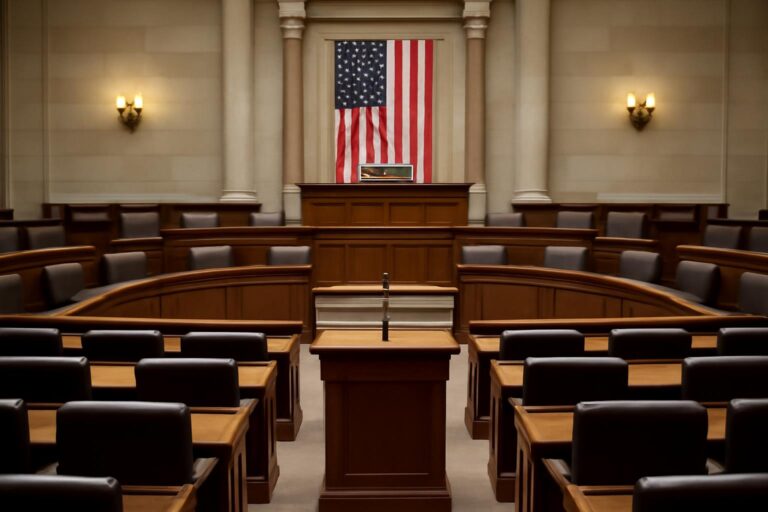
Political Socialization and the Making of American Patriots
n
Political socialization begins in the home and shapes how citizens understand liberty, duty, and the proper role of government. Conservative households pass down respect for the Constitution, individual responsibility, and national pride through daily conversations and family traditions. These early lessons often determine whether someone grows up viewing America as an exceptional nation worth defending or as a flawed system needing radical overhaul.
n
n
Family as the First and Strongest Influence
n
Parents transmit core beliefs long before children encounter outside voices. Dinner table talks about taxes, borders, and the Second Amendment carry more weight than later classroom lectures. Studies from the Heritage Foundation show that children raised in homes that emphasize self-reliance and constitutional limits tend to maintain those positions into adulthood. When fathers and mothers model civic involvement, such as voting or community service, kids absorb the habit without needing formal instruction.
n
Daily Habits That Reinforce Conservative Principles
n
- n
- Reading the Declaration of Independence together on the Fourth of July.
- Discussing current events from a perspective that values limited government.
- Encouraging part-time work so teenagers learn the connection between effort and reward.
n
n
n
n
Schools and the Distortion of Political Socialization
n
Public education often pushes a different message. Textbooks and curricula frequently frame American history through lenses of grievance rather than achievement. Teachers who lean left introduce concepts that downplay individual agency and elevate collective solutions. Parents who stay engaged can offset this by reviewing assignments and supplementing with primary documents like the Federalist Papers. Without that involvement, many students absorb progressive assumptions that stay with them for decades.
n
Media and Peer Pressure as Later Agents
n
Once children leave the home, television, social platforms, and friends add new layers. Mainstream outlets rarely present conservative arguments with equal weight, so young adults must actively seek alternative sources. Peer groups on college campuses can create strong pressure to conform to prevailing campus views on climate policy or identity. Those who entered college with firm family grounding prove more resistant to sudden shifts in outlook.
n
Political Socialization and Lasting Patriotism
n
Effective political socialization builds citizens who see military service, flag etiquette, and local governance as honorable duties. When families and communities reinforce these norms, the next generation stays connected to the founding principles instead of drifting toward abstract globalism. Data from Pew Research indicates that consistent exposure to patriotic symbols and stories correlates with higher trust in American institutions among those on the right.
n
Religion’s Supporting Role
n
Churches and synagogues add moral structure that aligns with constitutional order. Sermons on personal accountability and the dangers of centralized power reinforce lessons already taught at home. Conservative congregations often host voter registration drives and candidate forums that turn belief into action.
n
Practical Steps for Strengthening Political Socialization
n
Conservative families succeed when they treat political education as an ongoing responsibility rather than a one-time talk. Here are direct actions that produce results:
n
- n
- Limit screen time and replace it with age-appropriate books on American founders.
- Take children to town hall meetings so they witness local government in practice.
- Discuss election results honestly, highlighting both wins and needed improvements.
- Support homeschool networks or classical academies that prioritize primary sources over ideology.
n
n
n
n
n
Communities that organize youth groups focused on civics and marksmanship report stronger retention of traditional values. These efforts counterbalance the steady stream of messages from entertainment and academia that treat patriotism as outdated. When parents remain the primary voice, political socialization produces adults who defend borders, revere the Bill of Rights, and reject expansive federal programs as threats to freedom. The outcome is a citizenry more likely to preserve the republic rather than transform it into something unrecognizable.
n
Long-term patterns show that consistent reinforcement at home beats sporadic exposure later. Grandparents who share stories of military service or economic struggle add depth that textbooks rarely match. Local Republican clubs that invite young people to events create pathways for continued involvement. The process works best when every generation accepts its role in passing forward the habits that sustain ordered liberty.
nGallup polling on generational differences further supports the idea that early and repeated exposure to conservative viewpoints produces more durable attachment to founding ideals. Families that treat this transmission as essential rather than optional give their children a clearer compass for navigating future debates over spending, immigration, and national defense.
The Role of Mentorship and Community Leaders
Beyond the family unit, trusted mentors in churches, civic organizations, and youth programs serve as reinforcing voices in political socialization. A scout leader, coach, or local business owner who demonstrates integrity and sound judgment can solidify conservative principles when those lessons align with what children hear at home. These relationships prove especially valuable during the teenage years, when peer influence peaks and parental authority naturally diminishes. Research from the American Enterprise Institute shows that young people who maintained connections to mentors expressing traditional values were significantly more likely to vote Republican and support limited-government policies as adults.
Communities that foster these mentoring relationships create a web of reinforcement that protects against ideological drift. Veterans’ organizations, business associations, and neighborhood groups that actively engage youth transmit not just abstract principles but lived examples of responsibility and self-discipline. When a teenager works alongside a mentor who built a successful business through hard work and calculated risk, the conservative case for free enterprise becomes tangible rather than theoretical. The cumulative effect of multiple trusted adults delivering consistent messages about duty and self-reliance proves far more persuasive than classroom lectures or media campaigns alone.
Counteracting Progressive Messaging Through Honest Dialogue
As children mature, they inevitably encounter arguments from the left—through friends, teachers, and digital platforms. Conservative parents and leaders who ignore this reality set young people up for confusion when contrary viewpoints arrive. Instead, the most effective approach involves direct engagement with progressive claims, using primary sources and logical reasoning to explain why conservative solutions better serve individual liberty and economic prosperity. Teaching teenagers to think critically about all arguments, rather than simply rejecting progressive ones outright, builds resilience against future persuasion attempts.
Families that schedule regular discussions about current controversies—from regulatory overreach to education policy—prepare children to defend their beliefs with evidence rather than emotion. This inoculation approach acknowledges that political socialization is not a one-time event but an ongoing process requiring active maintenance throughout young adulthood. Communities that support this dialogue, whether through debate clubs, reading groups, or family forums, produce citizens better equipped to articulate and uphold conservative principles when challenged in college, at work, or in their own future families.