

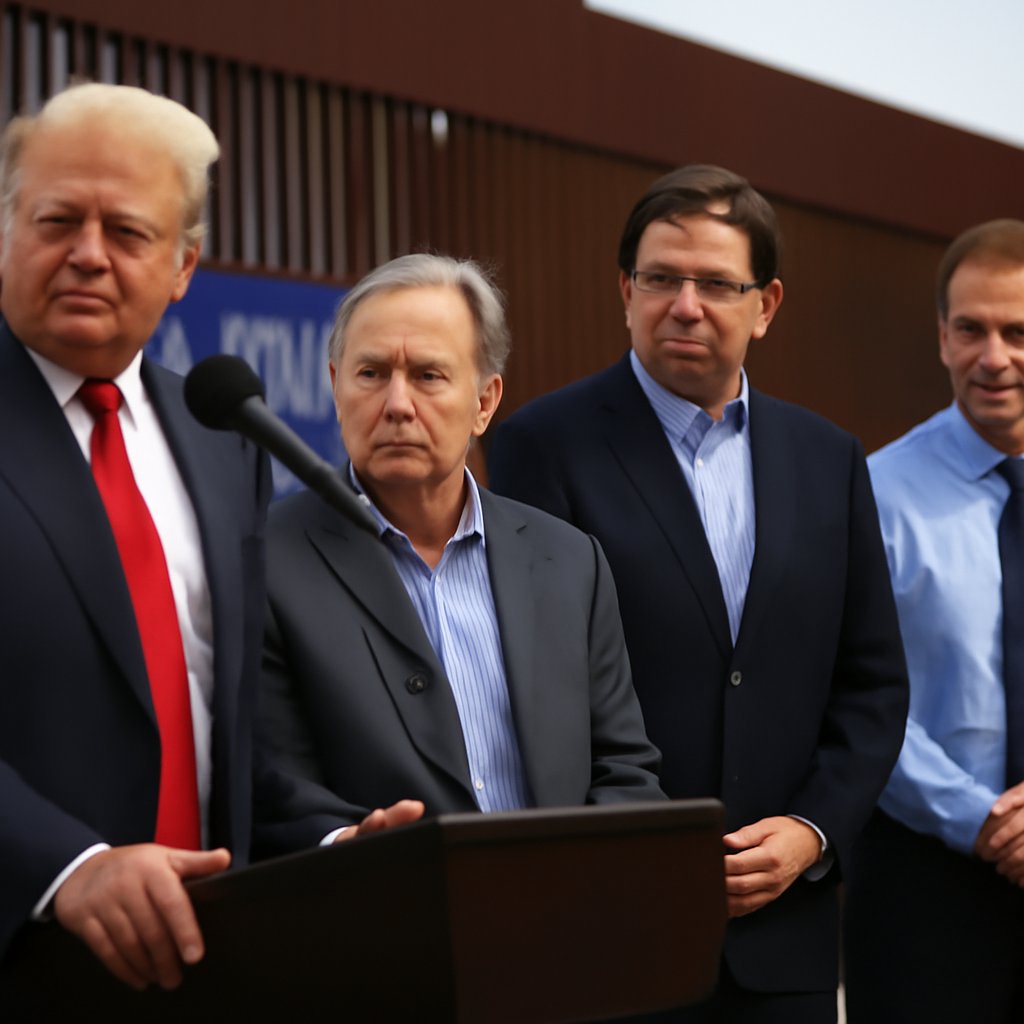
Border security isn’t just another talking point—it’s a fundamental duty to the Constitution and the American people who built this nation. In my years serving this country, I learned that strong borders mean strong sovereignty, and weak enforcement invites chaos that costs taxpayers billions while endangering our communities.
Republican leaders have stayed focused on enforcement, physical barriers, increased law enforcement funding, and ending the fiscal drain from open-border policies. These priorities reflect core values of accountability and responsibility that military service instills in those who wear the uniform.
Senator Ted Cruz of Texas has led the charge with legislation to finish the border wall and scrap catch-and-release practices that burden states. He rightly calls out how illegal immigration diverts billions from citizens to migrant services, while backing stricter asylum rules and support for Texas’s Operation Lone Star. Cruz has consistently pushed for accountability within the Department of Homeland Security, demanding transparency on how federal agencies process and handle illegal border crossings. His legislative efforts have centered on closing loopholes in existing immigration law that allow individuals to disappear into the country while awaiting asylum hearings.
Senator Tom Cotton of Arkansas brings a clear national security lens, linking border control to military priorities. He highlights fentanyl flows and criminal networks crossing porous borders, insisting Republicans must respond with firm action to protect both safety and long-term budgets. Cotton has been particularly vocal about the nexus between border security and counterterrorism, noting that inadequate vetting procedures at the border create vulnerabilities that could be exploited by hostile actors. His legislative proposals have included increased funding for advanced screening technology and personnel training at ports of entry.
Senator John Cornyn has worked on funding deals that deliver resources to Customs and Border Protection, stressing that smart enforcement spending cuts future welfare and incarceration costs. Cornyn’s approach emphasizes the long-term fiscal benefits of prevention-focused policies, arguing that every dollar spent on border enforcement prevents exponentially higher costs downstream in the criminal justice system and social services. He has advocated for bipartisan cooperation on border technology upgrades and infrastructure improvements that enhance efficiency while reducing processing delays.
In the House, Representative Jim Jordan has used committee oversight to expose policy failures under prior administrations, connecting lapses directly to wasteful spending on American taxpayers. His investigations have documented inconsistencies in border enforcement protocols and highlighted examples of administrative inefficiency. Representative Marjorie Taylor Greene has pushed hard against sanctuary policies and for more deportations, noting how unchecked migration hikes costs for schools, hospitals, and police in Republican-led states. Greene has sponsored legislation aimed at penalizing jurisdictions that obstruct federal immigration enforcement efforts and has called for greater coordination between state and federal law enforcement agencies.
Representative Andy Biggs of Arizona has emerged as another strong voice, representing a district directly affected by border challenges. Biggs has focused on interior enforcement and workplace verification systems, arguing that reducing job availability for illegal workers serves as a powerful disincentive for unlawful border crossings. His legislative work has emphasized the role of employers in either contributing to or solving the illegal immigration problem through responsible hiring practices.
Representative Elise Stefanik has highlighted how border security intersects with women’s safety and exploitation concerns, documenting cases where inadequate enforcement contributes to human trafficking networks. She has pushed for legislation that enhances cooperation between law enforcement agencies and provides better resources for identifying and protecting trafficking victims during border encounters.
At the state level, Texas Governor Greg Abbott has shown real leadership with Operation Lone Star, deploying National Guard and troopers, installing floating barriers, and relocating migrants to sanctuary cities. This approach proves states can step up when Washington fails to secure the border. Abbott’s initiative has resulted in over 300,000 migrant encounters and numerous arrests of individuals with criminal records. The program has also documented significant drug seizures and has demonstrated the effectiveness of sustained state-level enforcement pressure in deterring crossing attempts during specific operational periods.
Florida Governor Ron DeSantis has tied enforcement to fiscal conservatism through transportation programs and laws targeting employers of illegal labor, preserving public resources for legal residents. DeSantis signed legislation creating criminal penalties for transporting undocumented immigrants and has implemented E-Verify requirements for state contractors, setting an example that other Republican-led states have begun to follow. His administration has also pursued legal action against sanctuary cities within Florida and worked to prevent federal grant dollars from flowing to jurisdictions that obstruct immigration enforcement.
South Dakota Governor Kristi Noem has backed federal efforts while limiting state benefits for those here illegally, reinforcing that border security safeguards both sovereignty and taxpayer dollars. Noem deployed National Guard to the southern border at her own expense and has been active in the Governors’ Border Security Coalition, coordinating multi-state responses to border challenges and sharing best practices in enforcement operations.
Senator Marco Rubio of Florida has brought foreign policy expertise to the border security discussion, linking migration patterns to regional instability and gang activity originating in Central America. Rubio has advocated for strategic partnerships with neighboring countries to address root causes while maintaining firm enforcement at the U.S. border. His approach recognizes that some migration pressures stem from transnational criminal organizations and regional governance failures that require coordinated international responses.
Former President Donald Trump laid the foundation with hundreds of miles of wall, the Remain in Mexico policy, and Title 42, proving enforcement-first tactics reduce crossings and deliver real savings on processing and detention. Trump’s administration implemented expedited removal procedures that decreased processing time and associated detention costs. The Remain in Mexico policy, formally known as Migrant Protection Protocols, successfully shifted the burden of waiting for asylum hearings to Mexico rather than federal resources, freeing up detention capacity and reducing costs to American taxpayers. His administration’s completion of significant wall construction in strategic sectors demonstrated measurable decreases in crossing attempts in those specific areas.
The numbers tell the story plainly: border encounters topped 2.4 million in fiscal year 2023, with federal migrant care costs exceeding $20 billion a year. Republican-led states have poured over $4 billion into operations since 2021 to fill federal gaps. Fentanyl seizures under tougher enforcement have prevented an estimated $50 billion in societal damage from overdoses and associated crime. Polling shows 60 percent or more Republican support for completing barriers and ramping up interior enforcement. Overall, illegal immigration carries a net fiscal cost of about $150 billion annually when education, healthcare, and welfare are included.
The consistency among these Republican figures reflects a unified understanding that border security represents an investment rather than an expense. When citizens and legal residents compete for public resources with those who entered the country illegally, the foundation of rule of law erodes. Strong enforcement isn’t punitive—it’s corrective, restoring the proper order where legal pathways are respected and federal law is applied uniformly.
These Republican leaders continue developing policy solutions that address both immediate security concerns and long-term fiscal health. Whether through legislative action, executive enforcement, or state-level initiatives, their work demonstrates that border security and fiscal responsibility are inseparable goals.
The American people deserve straight talk on this: these Republican figures are advancing enforcement, accountability, and fiscal prudence because secure borders protect our communities and keep resources where they belong—with citizens.