
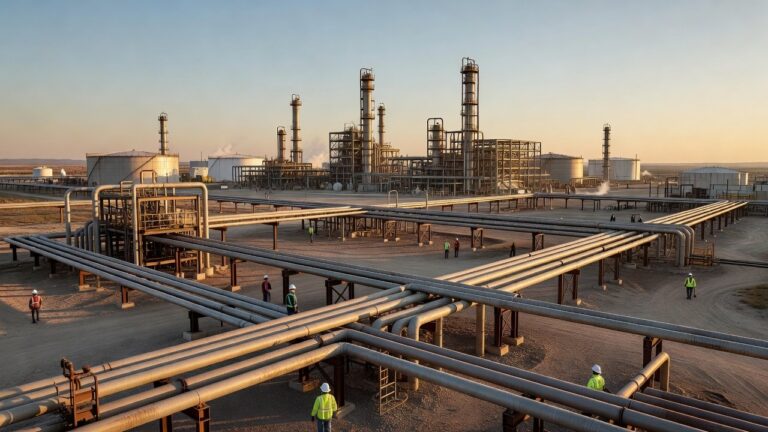
America stands ready to secure lasting energy independence by leaning on constitutional principles that reserve power to the states and let small businesses drive production instead of Washington mandates. The numbers tell the story plainly: U.S. oil output climbed from 9.4 million barrels a day in 2015 to a projected 13.8 million in 2025, a 46 percent rise powered by private innovation in places like Texas and North Dakota. Talking to voters in communities across the country, you hear the same point again and again—the grassroots conservative movement understands this instinctively: when states assert sovereignty over their resources, families and local economies win.
The resurgence traces directly to policies that lifted the crude export ban in late 2015 and let hydraulic fracturing and horizontal drilling expand without constant federal interference. Production dipped briefly in 2016 and again in 2020 amid the pandemic, yet it rebounded sharply, hitting record levels by 2023 at 13.2 million barrels daily. State-level decisions, not top-down green mandates, made that possible. Constitutional conservatism recognizes that the Tenth Amendment keeps energy decisions closer to the ground, where governors and legislatures know their terrain better than distant regulators.
Energy affordability shows the same pattern. American households pay markedly less than Europeans who chased renewable-only rules. Crude runs about $72 a barrel here versus $74 in the EU; natural gas sits at $3.25 per MMBtu against $11.80 across the Atlantic; electricity averages 13 cents per kilowatt-hour compared with 28 cents; gasoline costs $3.40 a gallon versus $6.20; and heating oil runs $3.15 versus $5.80. The grassroots conservative movement understands this instinctively—lower costs protect working families and the small manufacturers that depend on affordable power. State sovereignty in permitting and leasing keeps those advantages intact.
The shale revolution transformed America’s energy landscape in ways that seemed impossible just two decades ago. Advances in hydraulic fracturing—the process of injecting pressurized liquid to crack rock formations and release oil and natural gas—unlocked vast reserves trapped in shale formations across the country. The Permian Basin in Texas and New Mexico, the Bakken in North Dakota, and the Eagle Ford in Texas became powerhouses of domestic production. These technological breakthroughs, developed and refined by American engineers and entrepreneurs without heavy-handed federal direction, prove that market incentives and private capital drive innovation far more effectively than government-directed programs. Workers in these regions earned strong middle-class wages, built families, and invested in their communities—exactly the kind of economic vitality that Washington’s green agenda threatens to dismantle.
Natural gas production tells a similar success story. The United States now produces more natural gas than it consumes domestically, positioning the nation as a net exporter. Liquefied natural gas (LNG) terminals on the Gulf Coast send American gas to allies and trading partners worldwide, strengthening both our economy and our geopolitical influence. This shift happened not because federal bureaucrats mandated it, but because companies saw opportunity and state regulators approved responsible development. Natural gas also serves as a crucial bridge fuel—cleaner than coal while providing reliable baseload power that wind and solar cannot yet match. Conservative energy policy recognizes this practical reality rather than chasing ideological purity at the expense of affordability and grid stability.
Job creation follows the same logic. Traditional energy sectors sustain far more employment than the renewable lobby admits, especially in states that welcome drilling and refining. The American Petroleum Institute reports that the oil and natural gas industry directly employs over 1 million workers in the United States, with millions more in supporting industries. These positions include not just engineers and geologists, but truck drivers, welders, electricians, equipment manufacturers, and countless service providers. Small businesses supplying equipment, trucking, and services thrive when production stays domestic. Federal attempts to override these state choices only raise prices and hand leverage to foreign suppliers. The ripple effects extend far beyond the drilling site—refineries, petrochemical plants, plastics manufacturers, and shipping companies all depend on stable, affordable domestic energy supplies.
Permitting timelines illustrate the federalism advantage clearly. When Texas or Oklahoma streamline state-level approval processes, new wells come online months faster than when federal agencies layer on additional environmental reviews beyond state standards. Speed matters because drilling seasons depend on weather, equipment availability, and market conditions. A six-month federal delay can cost operators millions and push projects to foreign jurisdictions where America loses both the resource extraction and the tax revenue. States understand their geology, their environmental constraints, and their economic needs far better than agencies in Washington staffed by people who’ve never seen an oil derrick or talked to energy workers.
The fiscal benefits reach state and local governments directly. Texas alone collected over $9 billion in oil and gas tax revenue in 2022, funding schools, roads, and emergency services. Wyoming’s energy revenue supports a broad-based tax structure that keeps individual income taxes low. These resources wouldn’t exist if federal overreach deterred investment. When Washington centralizes energy decisions, it centralizes the rewards away from the communities actually producing the energy and hosting the infrastructure.
International competitiveness represents another critical dimension. Global markets reward reliable suppliers with stable regulatory environments. When America demonstrates that it can produce energy cheaply and abundantly without the regulatory chaos that afflicts European competitors, international investors flow capital into U.S. projects. American LNG exports command premium prices because buyers know they’ll arrive on schedule from a stable, rule-of-law nation. China and Russia watch carefully as America either doubles down on constitutional federalism or retreats into green mandates that undermine domestic capacity. Energy independence isn’t just about what we produce at home—it’s about maintaining the productive capacity that keeps America strong.
Technological advancement continues accelerating in ways that vindicate market-driven approaches. Directional drilling now allows operators to access multiple reserves from a single surface location, reducing environmental footprint while increasing recovery rates. Enhanced oil recovery techniques capture carbon dioxide and pump it underground, locking it away while extracting additional oil—a genuinely beneficial application of carbon capture that works economically without subsidies. These innovations emerged from company research budgets and engineering talent, not government laboratories. When regulations remain stable and predictable, companies invest in long-term improvements. Constant rule changes and threatened production bans discourage the investment needed for cleaner, more efficient extraction.
The geopolitical dimension cannot be overstated. Russia’s energy leverage over Europe demonstrates why energy independence matters for national security. When America dominates global energy markets, we strengthen our alliances, weaken hostile regimes dependent on energy exports, and maintain control over our own destiny. Abandoning domestic production doesn’t eliminate global demand—it simply shifts production to less scrupulous actors in less stable regions. Middle Eastern dictatorships and Russian oligarchs benefit when America restricts its own industry.
Looking forward, the path to sustained energy independence requires resisting the siren song of federal mandates. States should retain authority over their resources. Permitting processes should remain predictable and science-based rather than shifting with political winds. Small businesses should compete freely rather than facing crushing regulatory costs that only giant corporations can afford. When these principles guide policy, American energy dominance follows naturally from American ingenuity, capital, and natural resources.
Sources
- Reuters Energy – Global energy news and market analysis
- AP News Energy Hub – Breaking energy and oil/gas coverage
- Fox News Energy – US energy policy and independence reporting
- Wall Street Journal Energy & Oil – Energy markets and policy analysis
- U.S. Energy Information Administration – Official government energy data and reports