

Home Blog Page 8

Deregulation Empowers Small Businesses to Drive American Economic Growth

“`html

Deregulation Empowers Small Businesses to Drive American Economic Growth

Excessive federal regulations continue to saddle America’s small businesses with mounting compliance costs that stifle expansion, hiring, and genuine competition. Conservative principles rightly call for slashing this interference so entrepreneurship can flourish and economic progress can take root at the local level. When mandates pile up without clear justification, family-owned firms feel the pinch far more than large corporations with armies of lawyers on staff. Targeted deregulation cuts through these barriers and lets market signals guide decisions instead.

Talking to voters in communities across the country, the grassroots conservative movement understands this instinctively. Small business owners repeatedly describe how rules from agencies like the EPA, OSHA, and the Labor Department generate reams of paperwork, mandatory upgrades, and endless reporting that drain thousands of dollars per employee each year. These burdens often stem from sweeping federal directives rather than real local needs, landing hardest on operations without dedicated compliance departments.

Environmental reporting requirements push small manufacturers to bring in outside specialists for tasks far removed from their actual work. Labor rules on overtime and benefits force complicated tracking that strains modest payroll teams. Licensing and permitting bottlenecks at multiple layers of government delay new sites and expansions by months. Studies confirm small firms devote a larger slice of revenue to these obligations than their bigger rivals.

The compliance cost differential is particularly stark when examining real-world numbers. Research from the National Federation of Independent Business indicates that regulatory costs per employee can reach $12,000 annually for firms with fewer than 50 workers, compared to roughly $7,500 for larger enterprises. This disparity exists because regulatory compliance involves substantial fixed costs—legal consultation, software systems, training, dedicated staff—that large corporations can distribute across thousands of employees while small firms cannot. A ten-person operation paying $5,000 to hire a compliance consultant faces a proportionally heavier burden than a 500-person corporation spreading the same cost across its workforce.

Periods of deliberate regulatory rollback have delivered clear gains. Energy reforms eased permitting and let domestic producers ramp up output, which trimmed costs for manufacturers and retailers downstream. Adjustments in financial services relaxed capital rules that had choked lending to neighborhood businesses. Construction companies added workers once environmental reviews moved faster. Retail and service outlets trimmed administrative overhead after duplicate filings disappeared. Tech and logistics startups reached capital markets more quickly when disclosure demands simplified. These tangible results demonstrate that deregulation isn’t merely theoretical—it produces measurable economic benefits that ripple through local communities.

Consider the manufacturing sector specifically. When environmental permitting timelines shortened from 18 months to 6 months in certain jurisdictions, small and mid-sized manufacturers reported they could proceed with facility expansions that had languished in planning limbo. This acceleration enabled them to invest in new equipment, hire production staff, and increase output without the uncertainty that regulatory delays had previously imposed. Similarly, when overtime classification rules were clarified rather than constantly reinterpreted through agency guidance, payroll administrators spent less time in legal gray zones and more time managing actual business operations.

Small businesses generate most net new jobs nationwide. Deregulation supports that role by shrinking the fixed costs of growth, so owners can add staff without bracing for sudden regulatory spikes. States exercising their sovereignty under constitutional conservatism have shown the way, with lighter-touch environments producing stronger formation rates and lower unemployment in rural and suburban counties. Communities thrive when local employers expand and wages stay circulating through nearby shops, schools, and services.

The job creation multiplier effect deserves emphasis here. When a small business owner avoids spending $50,000 annually on compliance overhead, that capital stays available for payroll. A modest salary increase or additional hire directly supports local economic activity—those employees spend paychecks at neighborhood restaurants, retail shops, and service providers. This virtuous cycle strengthens community resilience and reduces dependence on distant corporate chains or government transfer programs. States like Texas and Florida have particularly benefited from business-friendly regulatory environments, consistently ranking among leaders in job creation and population growth.

One critical distinction separates smart deregulation from reckless abandonment of necessary safeguards. Conservatives advocate for eliminating regulations that lack clear cost-benefit justification, that duplicate efforts across agencies, or that impose disproportionate burdens relative to their stated benefits. This isn’t about eliminating food safety standards or removing workplace safety basics—it’s about eliminating the redundant paperwork, the outdated mandates written for industries that have transformed, and the agency turf wars that force businesses to navigate contradictory requirements from multiple federal departments.

The regulatory budget approach offers one path forward. By requiring agencies to offset new regulations with equivalent repeals of existing ones, policymakers can ensure that regulatory accumulation doesn’t continue indefinitely. This “one-in, two-out” framework encourages agencies to prioritize their most essential functions while eliminating lower-value mandates. Small businesses particularly benefit because the most outdated and burdensome rules tend to be those that have existed longest and accumulated the most compliance baggage.

Without constant federal pressure, small operators regain room to test new products, pricing, and technologies. This setup rewards efficiency and customer service over political connections or legal maneuvering. Entrepreneurs can focus on solving actual problems instead of chasing forms and audits. The ability to innovate freely—whether through new service delivery models, manufacturing techniques, or business structures—directly correlates with competitive success and long-term survival rates for young firms.

Digital platforms and fintech companies illustrate this principle clearly. When regulatory barriers to market entry remain high, entrenched players face less competitive pressure to innovate. Conversely, when licensing requirements rationalize and permitting accelerates, new competitors can launch services faster, forcing established firms to improve offerings and efficiency. This creative destruction—the market mechanism that drives genuine progress—works best when regulatory friction doesn’t artificially protect incumbents.

State-level examples provide instructive lessons for federal policy. Mississippi’s recent efforts to streamline business licensing processes, Tennessee’s reduction in administrative requirements for small manufacturers, and South Carolina’s fast-track permitting for certain industries have all correlated with measurable small business growth. These aren’t massive overhauls but targeted reforms removing genuine obstacles without compromising legitimate public purposes. The template proves replicable at the federal level with sufficient political will.

Lawmakers at every level, especially in state legislatures, should weigh every new rule against its effect on firms with fewer than 500 employees and move to repeal duplicative or outdated mandates. That approach preserves the competitive edge that has long defined American enterprise and sustains broad-based growth grounded in free markets and constitutional limits on centralized power. When regulatory barriers fall, entrepreneurship flourishes, communities prosper, and the American economy delivers opportunity to those willing to work and innovate rather than lobby and litigate.


Sources

“`

Military Spending Defense Budget Increase

“`html

Military Spending Defense Budget Increase

America faces mounting challenges from aggressive adversaries around the world, and a robust increase in military spending stands essential for preserving national security and global stability. Conservative principles have long emphasized a strong defense as the foundation of peace through strength, and recent budget constraints have left critical gaps in readiness that hit states hard. Boosting the defense budget allows the United States to modernize forces, deter threats, and support the men and women who serve, all while aligning with longstanding American values of protecting freedom and sovereignty without apology.

Talking to voters in communities across the country, the gaps in military readiness come up again and again as a practical concern rather than an abstract debate. The U.S. military has operated under tight fiscal limits that have strained equipment, training, and personnel resources. Aging aircraft fleets, delayed ship maintenance, and insufficient ammunition stockpiles represent real vulnerabilities exposed by shifting global priorities. Conservative analysts point out that previous reductions in defense allocations have forced difficult choices, such as scaling back exercises and delaying critical upgrades. These shortfalls undermine the ability to respond swiftly to crises and place unnecessary burdens on service members.

The grassroots conservative movement understands this instinctively when it comes to impact on personnel and training. Recruitment shortfalls persist when pay and benefits lag behind civilian opportunities. Training hours have declined for pilots and ground forces due to maintenance backlogs. Family support programs require additional funding to retain experienced troops. Addressing these issues through targeted budget growth restores the professional edge that has defined U.S. forces for generations, with many of those jobs and supply chains running through small businesses in heartland states.

Communist China continues its rapid military expansion, including advanced naval vessels and hypersonic weapons aimed at challenging American interests in the Indo-Pacific. Russia maintains aggressive postures in Europe and the Middle East, testing NATO resolve through hybrid tactics and conventional buildups. A larger defense budget enables investments in next-generation capabilities that outpace these competitors. Conservatives argue that hesitation only invites further aggression, while decisive funding sends an unmistakable message of resolve. Key strategic priorities for deterrence include expanding the Navy fleet to maintain sea control, accelerating missile defense systems, and enhancing cyber operations. These measures directly counter the asymmetric advantages adversaries seek to exploit, and historical evidence shows that sustained military investment has repeatedly prevented larger conflicts by convincing rivals that the costs of aggression outweigh any potential gains.

The modernization of America’s nuclear triad remains a critical component of any comprehensive defense spending increase. The Air Force’s B-21 Raider stealth bomber program, the Navy’s Columbia-class ballistic missile submarines, and the Ground-Based Strategic Deterrent system represent generational investments in strategic stability. These platforms ensure that potential adversaries understand the futility of direct confrontation with the United States. While these programs require substantial upfront capital investment, they extend operational relevance for decades and provide the ultimate guarantee against peer conflict escalation. Deferring these investments only increases costs exponentially while creating windows of vulnerability that adversaries might exploit.

Cyber warfare capabilities have emerged as a defining battleground of the 21st century, yet funding for defensive and offensive cyber operations remains inadequate relative to the threat. State-sponsored actors continuously probe American military networks, critical infrastructure, and election systems. Increased defense spending directed toward cyber command capabilities, threat intelligence operations, and workforce development in cybersecurity creates a competitive advantage against nations attempting to undermine American interests through digital means. The private sector workforce shortage in cybersecurity professionals makes military investment in this space particularly valuable, as it builds expertise that strengthens both government and commercial defenses against constant threats.

Increased military spending generates substantial returns for the American economy through high-skill manufacturing jobs and technological innovation that respect state sovereignty. Defense contracts support factories across the heartland, from aircraft production in the Midwest to shipbuilding on both coasts. These expenditures stimulate supply chains that benefit small businesses and create pathways for veterans transitioning to civilian careers. Unlike many government programs, defense funding directly enhances both security and prosperity without expanding bureaucratic overhead. Research into advanced materials and propulsion systems often transfers to commercial sectors, space and missile programs drive breakthroughs in communications and computing, and workforce development through defense apprenticeships builds a stronger industrial base. This dual-use effect reinforces constitutional conservatism by showing that strong defense policy and economic growth reinforce each other rather than compete.

The geographic distribution of defense spending across American states represents another significant factor in understanding the economic impact of budget increases. States like Virginia, California, Texas, and Pennsylvania host major defense contractors and military installations that employ hundreds of thousands of workers. However, smaller states and rural communities throughout the nation benefit substantially from supplier networks, logistics operations, and maintenance facilities. A strategic defense budget increase ensures that these economic benefits reach communities that depend on defense manufacturing for stable, well-paying employment. Conservative policymakers recognize that national security and local prosperity are intertwined, making defense investment a practical concern for constituents in every state.

Energy security and logistics capabilities warrant increased attention within expanded defense budgets. America’s military depends on secure supply chains and reliable energy sources to project power globally. Investments in advanced energy systems for military bases, improved logistics networks, and strategic fuel reserves enhance operational independence and reduce vulnerability to disruptions. These infrastructure improvements also modernize aging military facilities across the country, providing employment for construction workers and engineers while improving the quality of life for military families stationed at bases nationwide.

Space capabilities represent an increasingly critical domain where American dominance cannot be taken for granted. The Space Force, established as a separate military branch in 2019, requires sustained investment to maintain American leadership in orbital operations, satellite communications, and early warning systems. Adversaries are rapidly developing anti-satellite weapons and pursuing their own space militarization strategies. A robust defense budget that prioritizes space operations ensures continued American superiority in this vital domain, protecting not only military communications but also the civilian technologies that depend on satellite infrastructure.

From the founding era onward, American conservatives have viewed a capable military as indispensable to liberty and independence under the constitutional mandate to provide for the common defense. Increasing the defense budget reflects a commitment to peace through overwhelming strength rather than reliance on international institutions or wishful diplomacy. This stance prioritizes American interests first while ensuring allies can count on credible U.S. commitments. By focusing resources on proven capabilities and avoiding wasteful diversions, policymakers can deliver measurable improvements in force posture at both the federal and state levels. The result is a military prepared for any contingency, backed by the full weight of the American people and their elected representatives.

Accountability and fiscal responsibility remain essential principles even as defense spending increases. Oversight mechanisms, regular audits, and performance-based contracting ensure that taxpayer dollars are spent efficiently and effectively. Conservative stewardship demands that military investments produce genuine security improvements rather than padding contractor profits or funding unnecessary bureaucracy. This balanced approach—combining robust funding with rigorous accountability—represents the mature conservative position on defense spending and distinguishes prudent investment from wasteful excess.


“`

Voter ID Laws: Essential Safeguards for Fair Elections

“`html

Voter ID Laws: Essential Safeguards for Fair Elections

Secure elections stand as the cornerstone of self-government, and conservatives from statehouses to small-town main streets recognize voter ID laws as one of the simplest, most effective ways to safeguard ballot integrity. These measures deter fraud and confirm that only eligible citizens participate, without erecting barriers. They mirror the identification standards small businesses already follow when selling age-restricted goods or processing transactions, and states that have adopted them report strong compliance alongside steady or rising turnout.

Talking to voters in communities across the country, the need for basic verification comes up again and again. Reports of non-citizens on rolls, ballots in deceased names, and double voting in different jurisdictions keep surfacing in audits and court filings. Voter ID addresses these vulnerabilities directly by checking identity at the polls. Without it, elections rest on an honor system that no serious institution would tolerate for high-stakes decisions.

The grassroots conservative movement understands this instinctively. States such as Georgia have run strict photo ID systems for years and still posted record turnout after tightening rules. Indiana and Wisconsin saw the same pattern once courts upheld their laws and state agencies made free IDs available. These outcomes show that proper checks and broad access can operate together.

Common activities already demand identification, from buying alcohol or tobacco at a local shop to entering federal buildings, cashing checks, or boarding a plane. Voting deserves at least the same standard, yet opponents treat it as uniquely burdensome. That double standard points more to political calculation than genuine worries about participation.

Claims that voter ID suppresses minority or low-income turnout do not hold up against the data. Black and Hispanic participation has increased in multiple states after implementation, often surpassing earlier levels. Free ID programs, longer early voting windows, and mail options eliminate practical hurdles. Academic studies and state election offices confirm that the overwhelming majority of Americans already carry acceptable photo identification, and those who do not can obtain one at no cost where programs exist.

States enforcing robust requirements offer the clearest evidence. Georgia’s system, upheld through repeated legal challenges, delivered the highest midterm turnout in state history with minimal provisional ballots. Texas saw fraud detections rise after tightening rules. In both places, verification built public confidence rather than limiting votes. By contrast, states lacking strong ID rules continue to encounter documented weaknesses that invite illegal voting.

Constitutional conservatism places election integrity at the state level, where sovereignty allows tailored solutions instead of one-size-fits-all federal mandates. Republicans in state legislatures have led this effort, defending measures against lawsuits often backed by progressive organizations. Federal attempts to override state authority must be resisted, while practical improvements like pairing same-day registration with ID checks deserve support.

The implementation of voter ID laws reveals important distinctions between different approaches. Some states accept a range of photo identification—driver’s licenses, military IDs, passports, tribal documents, and state-issued ID cards—giving voters flexibility in how they establish their eligibility. This tiered approach respects practical realities while maintaining verification standards. Poll workers are trained to recognize legitimate documents quickly, minimizing delays at precincts. The goal is never to slow voting but to ensure it remains the privilege of qualified citizens only.

Election officials across red states have developed best practices that balance accessibility with security. Providing free ID services at DMV branches, county courthouses, and libraries removes cost barriers entirely. Some states extend hours or offer mobile ID services in underserved areas. Early voting periods—often spanning weeks—allow voters ample opportunity to cast ballots without long lines. These practical provisions undercut claims that ID laws inherently suppress participation. When states combine reasonable ID requirements with genuine accommodation measures, turnout typically stays robust or grows.

The broader context of election administration also matters. Voter ID laws function best within comprehensive systems that include accurate registration rolls, verification of citizenship status, and maintenance procedures that remove ineligible voters promptly. Multiple states have invested in cross-state databases to prevent double registration across jurisdictions. These technological tools, paired with photo ID verification, create layers of protection against fraud without complexity at the ballot box itself.

Public confidence in elections hinges on voters’ belief that their ballots count and that the system prevents cheating. Surveys show that election security consistently ranks among voters’ top concerns across the political spectrum. Voter ID addresses this directly and visibly. When poll workers request ID and verify information against rolls, voters see that safeguards are functioning. This transparency strengthens trust in outcomes, which strengthens democracy itself. States that have implemented ID laws report that voters appreciate knowing the system checks legitimacy carefully.

Legal challenges to voter ID laws have produced a strong track record of judicial approval. Multiple federal courts have upheld requirements as constitutional when paired with free ID access and reasonable accommodation. The Supreme Court’s decision in Crawford v. Marion County Election Board affirmed that photo ID verification does not violate the right to vote when states provide free alternatives. This legal foundation gives conservative states confidence to implement and refine their approaches without fear of arbitrary reversal.

The distinction between different types of voter ID requirements also deserves attention. Photo ID requirements stand apart from signature-matching or address-verification alone because they confirm identity through objective, standardized documentation. A driver’s license or passport provides measurable proof that the person voting is registered to vote in that location. This empirical standard is harder to dispute or challenge than subjective judgment calls by poll workers, making it both more secure and fairer to voters.

The grassroots conservative movement understands that honest elections protect the value of every legal vote. States can strengthen systems further through verified registration, expanded free ID access at DMVs and libraries, and clear paper trails. Public education on requirements helps smooth implementation. Citizenship and eligibility must be confirmed at the point of voting. Anything less invites doubt and opens the door to manipulation. Conservatives will continue pressing this standard because fair elections depend on it.

As election technology evolves, voter ID laws remain a cornerstone of election integrity strategy. They represent a common-sense measure that everyday Americans understand and support. In an era when election administration faces increased scrutiny and pressure, maintaining these safeguards ensures that voting remains secure, trustworthy, and the exclusive right of American citizens legally entitled to participate. The path forward combines reasonable verification requirements with genuine accessibility, protecting both ballot integrity and the democratic participation that conservative voters cherish.
“`

School Choice Gives Parents the Power to Fix Failing Schools

“`html

School Choice Gives Parents the Power to Fix Failing Schools

Parents across this great nation are fed up with a public education system that puts bureaucracy ahead of real results for our kids. Decades of throwing more money at the problem have left test scores flat, behavioral issues climbing, and classrooms where ideology crowds out the basics like reading, writing, and arithmetic. School choice cuts through the nonsense by putting decision-making power back where it belongs—with families, not some distant administrator or teachers union boss. These programs let parents pick the environment that fits their child best, whether it’s a solid public school, a charter, a private academy, or even homeschooling.

The American people deserve straight talk on this. In my years serving this country in uniform, I learned that accountability and competition sharpen performance every time. The same holds true here. Our public school monopoly keeps churning out poor outcomes despite per-pupil spending that sits among the highest in the developed world. National data shows American students still trail international peers in math, reading, and science. Urban districts especially struggle with chronic absenteeism and falling proficiency rates that have only gotten worse lately. Parents see it when their children leave school without the skills needed for college or a good job.

Key problems stare us in the face: one-size-fits-all curricula that ignore how different kids learn, resistance to showing parents what’s actually being taught, heavy influence from unions shielding weak performers, and real safety worries as discipline slides. These flaws hit hardest in low-income areas where options stay limited, trapping children in failing setups.

School choice works through proven tools. Education savings accounts hand families a slice of state funds to spend on approved options. Vouchers send dollars straight to private schools. Charters get flexibility while staying publicly funded. Tax-credit scholarships pull in private donations to help lower-income students. States expanding these have drawn in more middle-class and working families. Funding follows the student, not the institution, which forces every school type to step up or lose out. That’s fiscal responsibility in action—tax dollars shouldn’t prop up mediocrity.

Consider how these mechanisms function in practice. Education Savings Accounts, or ESAs, represent one of the most parent-friendly innovations to emerge in education policy. Instead of bureaucrats deciding how education dollars get spent, families receive a portion of per-pupil funding in an account they control directly. Parents then purchase services tailored to their child’s unique needs—whether that means tuition at a private school, online courses, tutoring, special education services, or even dual enrollment at community colleges for high-achieving students. This flexibility proves especially valuable for families with children who have specific learning needs or talents that traditional classroom settings struggle to accommodate. Several states have expanded ESA programs significantly, and participating families consistently report higher satisfaction levels than those trapped in one-size-fits-all district assignments.

Results back it up. Evaluations of existing programs show gains in academics, graduation rates, and parent satisfaction. Kids moving to better fits often post higher test scores within a few years. Parents gain better communication with teachers and confidence that school values match their own. It eases the double hit families take from taxes plus private tuition. Rural areas gain access to specialized programs once limited to cities. Special-needs students get tailored help that rigid district rules often block.

The real-world impact extends beyond statistics. Parents report having genuine input into their children’s education for the first time in years. Teachers at choice schools, knowing they must earn enrollment and parental trust, often demonstrate greater enthusiasm and responsiveness. The competitive pressure benefits everyone—even traditional public schools must improve their offerings or watch enrollment decline. This natural market correction outperforms top-down mandates every single time.

For families considering their options, understanding state-level programs matters tremendously. Florida’s tax-credit scholarship program has grown to serve over 100,000 students, with participating families coming from across the income spectrum. Arizona’s charter school sector has become one of the nation’s most robust, offering families in Phoenix and rural areas alike genuine alternatives to assigned district schools. Indiana’s Choice Scholarship Program uses a voucher model that has expanded access for lower and middle-income families. Each state’s structure differs, reflecting different legislative priorities and constitutional frameworks, but the common thread remains—giving families control produces better outcomes.

The education establishment fights back hard through lawsuits, political muscle, and scare tactics about funding losses. But facts show public schools still keep the lion’s share of state dollars even after choice expands. States with long-running reforms see overall improvement, not collapse. Conservative lawmakers push ahead, putting parental rights and student results first. Models in places like Florida and Arizona prove competition lifts standards across the board.

Critics claim school choice drains resources from public schools, yet the evidence tells a different story. When funding follows students, districts receive exactly what they should—money to educate the students who remain. In fact, most choice programs distribute less per-student than traditional public school funding, meaning overall education spending often decreases while results improve. Parents also shouldn’t overlook the fiscal argument—a family receiving a $7,000 education voucher still provides the state savings compared to $15,000 annual per-pupil district costs. The economics favor choice when viewed honestly.

Safety represents another dimension where school choice delivers. Parents increasingly prioritize secure, disciplined learning environments where teachers can actually teach. Some charter networks and private schools have built reputations for maintaining order while still supporting student development. Parents can select schools aligned with their values regarding discipline, safety protocols, and behavioral expectations. In an era when discipline has grown too permissive in many districts, this option proves invaluable. Students learn better in calm, orderly settings—a principle any experienced educator will confirm.

The homeschooling option deserves particular attention as part of the broader school choice landscape. For families with resources and commitment to personalized instruction, homeschooling has expanded dramatically in recent years. Many states now offer education savings accounts that support homeschooling families, funding curriculum purchases, tutoring, and even co-op learning arrangements. High-achieving homeschooled students regularly score above national averages on standardized tests and gain acceptance to top universities. This option provides maximum parental control while maintaining educational rigor.

In my years serving this country, I learned that strong borders protect the homeland just as strong parental authority protects our children’s futures. Grassroots parent groups now drive reform at the state level, showing up at school boards, contacting lawmakers, and sharing their stories. This has delivered record new programs in recent sessions. Families should check their state’s options, link up with local advocates, and watch bills in each session. Organizations dedicated to advancing school choice provide resources, research, and support to families navigating these decisions. The momentum continues building as more parents experience the benefits of choosing schools that match their family’s values and their child’s learning style.

Every child deserves an education that builds success, not one run by a failing monopoly that ignores constitutional principles of liberty and responsibility. When parents gain power to choose, American children win. That’s the promise of school choice—and it’s within reach for families willing to pursue it.


Sources

“`

Restoring America’\”s Energy Dominance Through Expanded Oil and Gas Production

Restoring America's Energy Dominance Through Expanded Oil and Gas Production

America holds vast reserves of oil and natural gas that can deliver genuine energy independence, ease the burden on working families, and bolster our national security. Conservative policies favoring domestic production have time and again driven higher output, supported jobs, and curbed dependence on foreign suppliers. By contrast, layers of federal rules and limits on public lands have held back growth and pushed prices higher. The approach values American workers and secure energy supplies over distant climate pacts.

Talking to voters in communities across the country, one hears the same refrain: energy policy hits hardest at the state and local level, where small businesses in drilling, transport, and refining keep towns alive.

Oil and gas activity sustains millions of well-paying positions nationwide. Roles in extraction, processing, pipelines, and related manufacturing pay above-average wages and cluster in states such as Texas, North Dakota, Pennsylvania, and Oklahoma. When states retain authority to encourage responsible development, local economies strengthen and generate revenue for schools and roads without new taxes on families. The grassroots conservative movement understands this instinctively: sovereignty over resources belongs closer to the people who live with the results.

The economic impact extends well beyond the drilling sites themselves. Supply chain businesses—from equipment manufacturers to transportation logistics—benefit substantially from robust domestic production. Communities that embrace energy development often see improved infrastructure, expanded municipal services, and stronger tax bases. Workers in these industries frequently earn six-figure salaries with comprehensive benefits, creating stable middle-class opportunities in regions where other manufacturing has declined. The multiplier effect means each energy sector job supports additional positions in retail, services, and construction as workers spend their wages locally.

Greater domestic output holds gasoline, heating fuel, and power prices steadier. Expanded supply reduces the sway of OPEC producers and shields consumers from overseas shocks. Past expansions under conservative-led leasing on federal acres aligned with steadier or lower fuel costs, directly aiding truckers, farmers, and manufacturers. More permits translate into added supply and steadier prices at the pump. Shale natural gas has already displaced coal in many power plants, lowering utility bills. LNG export facilities add revenue while protecting domestic affordability.

The Permian Basin in Texas and New Mexico, the Bakken formation in North Dakota, and the Eagle Ford Shale in Texas have demonstrated the transformative potential of American energy development. These regions have witnessed dramatic production increases over the past two decades, proving that modern extraction techniques can be both economically viable and environmentally responsible. The technological innovations that have made shale production feasible—including hydraulic fracturing and horizontal drilling—represent American ingenuity at its finest and position the nation as a global energy leader.

Dependence on oil from unstable regions leaves the United States open to supply interruptions and foreign leverage. Strong home production shields military needs and the wider economy from pressure by adversarial governments. Conservative administrations have treated energy exports as a tool to reinforce alliances and limit revenue flowing to competitors. Nations hostile to American interests—from Venezuela to Iran—have weaponized energy supplies to destabilize markets and fund terrorism. By developing our own resources aggressively, we reduce the geopolitical influence of these actors and strengthen our hand in international negotiations.

The strategic benefits of energy independence became starkly apparent during recent global crises. When Russia invaded Ukraine, European nations suddenly faced an acute shortage of natural gas. Had the United States been able to rapidly expand LNG export capacity without bureaucratic delays, American energy could have mitigated the humanitarian and economic catastrophe unfolding in Europe. This lesson underscores how domestic production capacity directly translates into diplomatic leverage and the ability to support allies during critical moments.

When pipelines and refineries run at capacity, the country can adjust to global events without rationing or rushed imports. This readiness safeguards defense posture and avoids downturns sparked by overseas conflicts. Prioritizing output on American soil also curbs the reach of nations that channel oil proceeds into hostile actions. State-level permitting flexibility, rooted in constitutional principles of federalism, often proves more responsive than centralized mandates.

Excessive federal regulations, drawn-out permitting, and restrictions on public lands have slowed new wells and pipelines. These hurdles inflate costs and postpone projects that would deliver lower prices. Streamlining reviews while preserving core safety standards permits development that already meets high environmental benchmarks through improved technology. The permitting process for major projects can stretch eight to ten years or longer, during which inflation erodes project economics and competitors advance their capabilities. A more efficient review process—one that establishes clear timelines and measurable standards rather than open-ended environmental assessments—would accelerate development without compromising safety or environmental stewardship.

Modern drilling operations incorporate sophisticated monitoring systems that detect even minor leaks instantly. Computer modeling predicts geological challenges before drilling occurs. Directional wells allow multiple wells to tap the same reservoir from a single surface location, reducing land disturbance. These technological advances mean that today’s oil and gas operations leave a far smaller environmental footprint than operations from decades past. Yet permitting standards often fail to account for these improvements, treating modern operations as though they relied on 1970s technology.

Large reserves sit untapped under federal holdings in Alaska and the Mountain West. Opening portions under measured oversight would raise production without repeating earlier missteps. Modern directional drilling and monitoring systems limit surface disturbance while boosting recovery. Conservative policy emphasizes measurable results over symbolic limits that mainly raise costs for everyone. The Arctic National Wildlife Refuge contains an estimated 10.4 billion barrels of recoverable oil according to the U.S. Geological Survey, yet remains largely off-limits due to political opposition rather than technical or environmental constraints.

Federal lands could generate substantial revenue for the government while creating energy abundance. Lease sales, royalties, and taxes from oil and gas operations contribute billions to the Treasury annually. These revenues could fund infrastructure improvements, reduce the national debt, or support rural communities. The opportunity cost of leaving resources undeveloped is substantial—both in terms of forgone government revenue and the lost economic activity that production would generate.

True energy security means rejecting rules that favor intermittent sources at the expense of reliable oil and gas baseload power. Ongoing work on pipelines, export terminals, and cleaner extraction methods keeps the United States ahead of rivals. Focusing on abundance instead of engineered shortages lets the country remain the world’s leading energy producer for years ahead. Oil and natural gas provide the reliable, dispatchable power that keeps hospitals operating, powers data centers, and ensures industries remain competitive. These fuel sources work in tandem with other energy sources to create a resilient grid that serves all Americans.

American energy strength rests on the recognition that oil and gas continue to underpin prosperity and security. Expanding output under sensible state-guided rules brings jobs, stable prices, and strategic advantage that other sources have yet to match. Conservative leadership has shown it can deliver these gains once federal obstacles recede. The path forward requires policymakers willing to cut through regulatory red tape, trust state regulators to oversee development responsibly, and recognize that American energy workers deserve the opportunity to extract the resources beneath our feet.


Sources

Tax Cuts Drive Economic Growth and Strengthen American Businesses

“`html

Tax Cuts Drive Economic Growth and Strengthen American Businesses

Tax cuts stand as one of the strongest weapons we have for igniting real economic growth, spurring business investment, and putting more money in the pockets of American workers. In my years serving this country, I learned that you never strengthen the mission by bleeding resources on bloated overhead—fiscal responsibility demands the same discipline at home. Conservative policy has always held that letting individuals and companies keep more of what they earn drives productivity and shared prosperity. The record from multiple administrations proves lower rates beat high-tax systems every time, delivering growth without the deadweight of endless government meddling. The American people deserve straight talk on this: when Washington takes less, the private sector steps up.

Conservative leadership has shown again and again that tax relief unleashes the power of free enterprise. The Reagan reductions in marginal rates fueled strong GDP gains and job creation through the 1980s. Then came the 2017 reform that dropped the corporate rate from 35 percent to 21 percent, pulling overseas capital back home and accelerating business spending. These results rest on a simple constitutional truth—limited government leaves room for people to build. Critics insist the benefits flow only to the wealthy, yet the data tells a different story: unemployment hit historic lows across every demographic, and real median household income climbed steadily. Lower taxes raise after-tax returns, so companies put capital to work instead of parking it abroad.

The practical mechanics of tax relief merit closer examination. When corporations face lower effective tax rates, their immediate response is measurable and swift. Capital that once sat in foreign accounts—trapped there by tax code complications—returns to American soil. This repatriation effect has funded everything from facility upgrades to workforce expansion. Manufacturing plants modernize their equipment faster. Technology companies accelerate research and development. Retailers open new locations in underserved communities. The cascade of private investment creates conditions for sustained wage growth without requiring government mandates or artificial interventions.

High corporate rates push firms to shift operations overseas. Drop those rates and businesses respond by pouring money into equipment, technology, and facilities right here at home. That cycle creates jobs, lifts productivity, and supports higher pay earned through merit, not mandates. Companies gain room to reinvest profits in expansion. Domestic supply chains grow stronger and more competitive. Shareholder gains flow into retirement accounts that millions of middle-class families count on. Keeping rates in line with other developed nations stops capital flight and keeps America the top destination for enterprise. Business leaders cite tax predictability as essential for long-term hiring and planning decisions.

The international competitiveness argument deserves emphasis here. Our trading partners understand tax policy’s role in attracting investment. Canada, the United Kingdom, and other developed economies have moved toward lower corporate rates, recognizing that high-tax jurisdictions lose out in the global competition for jobs and innovation. When American corporate rates drift significantly higher than comparable nations, we handicap ourselves needlessly. American workers and communities lose when multinational firms choose to invest in lower-tax environments. The 2017 tax reform brought our rate closer to the international median, a shift that reflected sound economic reasoning rather than ideology.

Small businesses employ nearly half the private workforce and generate most net new jobs. Pass-through entities taxed at individual rates keep more earnings when rates fall, allowing owners to open new locations, upgrade tools, or improve benefits. Lower tax and regulatory pressure reduces barriers for startups, fueling innovation from manufacturing floors to tech services. Conservative tax policy understands these firms succeed when government stays out of the way and the payoff for risk remains real. In my years serving this country, I learned that you win by backing the men and women on the front lines, not by piling on costs from above.

The small business dimension extends beyond mere percentages. When a family-owned manufacturer or an independent service firm retains additional capital, that money often flows directly into their communities. The owner might hire a neighbor’s child, purchase materials from local suppliers, or invest in equipment manufactured domestically. This multiplier effect amplifies the benefits of tax relief far beyond what aggregate statistics alone capture. Local economies thrive when entrepreneurs have breathing room to invest in growth rather than sending profits to Washington.

Opponents claim tax cuts starve revenue, but history shows the opposite when growth takes off. Expanded economic activity widens the tax base and often makes up the difference. The Laffer Curve makes the point plain: past a certain point, higher rates shrink collections by discouraging work and investment. Reforms that close loopholes while cutting headline rates have improved compliance and delivered clearer revenue flows. This approach favors growth over redistribution and steers clear of the stagnation that comes with punishing taxation. Sustained expansion funds essential services more reliably than static high-rate systems that choke output. Fiscal responsibility like this also supports the constitutional duty to secure our borders—strong economies underwrite strong defenses.

The revenue question warrants particular attention because it strikes at the heart of policy debates. Dynamic scoring—the practice of measuring tax policy’s actual economic effects rather than assuming static economic conditions—reveals that significant tax cuts often recover a substantial portion of their static revenue cost through accelerated growth. This doesn’t mean all cuts pay for themselves, but it demonstrates that simple arithmetic that ignores behavioral responses misses the complete picture. Policymakers who craft tax relief understand they’re making an investment in future economic activity, not merely accepting revenue loss.

Workers across income levels benefit when tax policy encourages business expansion. Higher productivity justifies wage increases. New job openings give workers bargaining power. Career advancement opportunities multiply as companies grow. Entry-level positions open up as established firms expand their workforce. These gains flow to working families without requiring government transfer programs or dependency-creating welfare systems. Market-based prosperity preserves individual dignity and creates genuine opportunity for those willing to work.

Future tax policy must deliver permanence and simplicity. Temporary measures breed uncertainty that chills investment. Permanent lower rates on corporate and individual income, paired with lighter compliance loads, give businesses the stable ground they need to plan and expand. Conservative principles rest on the fact that prosperity springs from private initiative, not from government programs paid for by ever-rising taxes. By holding rates competitive and trimming deductions that warp markets, policymakers can produce steady growth that strengthens workers, families, and communities nationwide. The evidence is clear that properly structured tax cuts remain a cornerstone of sound policy that puts America first.

The path forward requires continued commitment to tax relief as an economic growth strategy. Policymakers should resist temporary gimmicks and instead build permanent structures that reward work, investment, and enterprise. Closing special-interest loopholes matters as much as cutting rates—both steps build confidence in a system that treats all participants fairly. American competitiveness demands nothing less than a tax code that reflects conservative principles: lower rates, simpler rules, and genuine opportunity for those willing to build something of their own.
“`

Protecting the Second Amendment: Why Gun Rights Remain Essential to Freedom

“`html

Protecting the Second Amendment: Why Gun Rights Remain Essential to Freedom

The Second Amendment remains a vital safeguard of American liberty, preserving the people’s inherent right to self-defense and resistance to overreach rather than any favor from Washington. Conservatives grasp that this protection flows directly from constitutional principles, not evolving policy fashions. In states where Democratic leadership has pushed stricter controls, law-abiding citizens often face higher crime burdens, while constitutional carry expansions in red states demonstrate how sovereignty at the state level can better align with founding intent.

Talking to voters in communities across the country, the pattern becomes clear: small business owners in rural counties frequently cite firearms as essential protection when police response lags and property threats rise. The grassroots conservative movement understands this instinctively, seeing gun rights not as optional but as a check rooted in state-level authority and individual responsibility.

The framers embedded the Second Amendment to prevent government disarmament of citizens, drawing from English common law and colonial experiences with British restrictions. James Madison and George Mason highlighted an armed populace as the ultimate defense of the republic, with historical records showing widespread ownership and militia service by ordinary people. This framework still counters modern regulatory expansion at both federal and state levels.

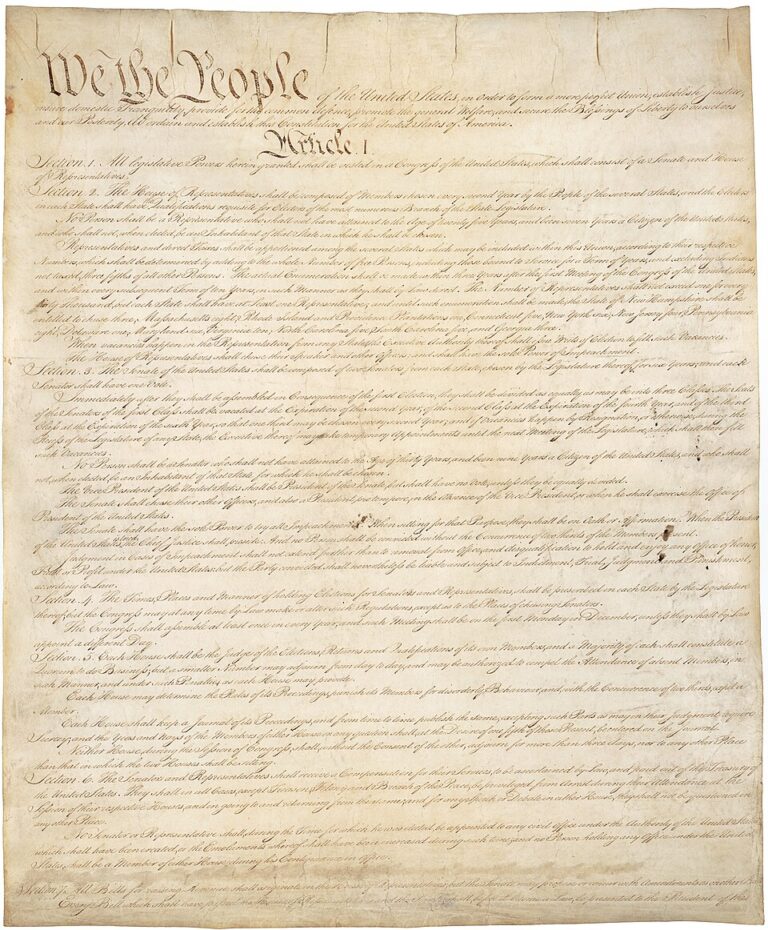
The constitutional text itself reads plainly: “A well regulated Militia, being necessary to the security of a free State, the right of the people to keep and bear Arms, shall not be infringed.” For centuries, courts and legal scholars have debated this language, but the weight of originalist interpretation supports the individual right to possess firearms independent of militia service. The prefatory clause about militia service acknowledges one important purpose, while the operative clause protects a broader individual liberty that the founders viewed as fundamental to preventing tyranny.

Current pushes in Democrat-led states for magazine limits, expanded background checks, and red-flag laws often sidestep due process and hit legal owners hardest. FBI data shows most gun violence concentrated in high-regulation cities that emphasize paperwork over prosecuting repeat offenders. By contrast, states preserving stronger protections frequently record better outcomes on certain violent crimes, underscoring how armed citizens can deter threats without new barriers.

The disconnect between policy intentions and real-world results deserves closer examination. Cities like Chicago, despite some of the nation’s strictest gun laws, consistently rank among the highest for violent crime rates. Similarly, California’s comprehensive regulatory framework has failed to prevent mass shootings or eliminate gang violence in urban centers. Meanwhile, states with minimal permitting requirements and strong constitutional carry protections have not experienced the predicted increases in lawlessness that advocates of restriction suggest would follow. This empirical reality undermines the core premise of gun control advocates and suggests that disarming law-abiding citizens addresses neither the supply of illegal weapons nor the criminal intent that drives violent crime.

Rural and suburban families feel these effects directly, relying on firearms for wildlife defense or isolated property security where response times stretch for hours. Small business operators in those areas encounter parallel challenges, as restrictive measures add compliance costs without addressing actual criminal conduct. Such policies overlook practical needs of single parents, the elderly, and working households that lack private security options.

Consider the practical reality facing a single mother living in a county where the nearest sheriff’s deputy is forty minutes away. For her, a firearm represents not a political statement but a tangible tool for protecting her children if an intruder threatens her home in the middle of the night. Police cannot always be present, and the Supreme Court has consistently held that law enforcement has no duty to protect specific individuals. This legal reality, affirmed in cases like Warren v. District of Columbia, places ultimate responsibility for safety squarely on property owners themselves. Restricting her access to effective self-defense tools abandons her to criminals who have no regard for gun laws in the first place.

Landmark rulings have upheld these individual protections. District of Columbia v. Heller confirmed the right to possess firearms for self-defense beyond militia contexts, while McDonald v. Chicago applied those safeguards against state and local infringement via the Fourteenth Amendment. Lower court fights continue over permitting schemes and restrictions, giving conservative attorneys general tools to defend state sovereignty. May-issue systems that let officials deny permits on subjective grounds remain prime targets for challenge.

The Supreme Court’s 2022 decision in New York State Rifle & Pistol Association v. Bruen further clarified that Second Amendment protections cannot depend on whether modern judges deem regulations “reasonable.” Instead, courts must ask whether a regulation aligns with the historical tradition of firearm regulation in America. This originalist approach has begun constraining lower courts’ ability to impose novel restrictions, though litigation continues across federal circuits as judges apply the Bruen framework to various state and local regulations.

States leading with constitutional carry have removed unnecessary permit requirements for law-abiding adults, affirming that core rights need no extra government stamp. Over thirty states now recognize constitutional carry in some form, reflecting a growing recognition that permitting systems primarily burden compliant citizens rather than criminals. These systems historically stemmed from discriminatory origins, designed in some cases to prevent certain populations from exercising rights granted to others. Modern constitutional carry movements acknowledge this history while advancing the principle that constitutional rights should not require government permission fees or subjective approval processes.

Citizens can advance similar measures through local engagement, primary elections, and support for groups focused on enforcement of existing laws against prohibited persons rather than fresh hurdles for compliant owners. Organizations dedicated to Second Amendment protection offer resources for grassroots advocacy, legal challenges to unconstitutional restrictions, and public education about both rights and responsibilities. Supporting candidates who appoint judges committed to originalism provides long-term protection for constitutional liberties against future erosion through judicial reinterpretation.

Education on safe handling further bolsters the case for broad ownership. Responsible gun ownership includes regular training, secure storage to prevent unauthorized access, and understanding of local self-defense laws. Many communities benefit from safety programs that emphasize responsible ownership without the pretext of discouraging legitimate use. Conservative organizations and local ranges frequently offer affordable certification courses that help new owners develop competency and confidence. This culture of responsibility demonstrates that broad gun ownership and public safety need not be in conflict.

Communities prioritizing personal responsibility and deterrence consistently show stronger results than those favoring disarmament approaches. When potential criminals understand that citizens in a community are armed and trained, criminal activity patterns shift. Evidence from concealed carry permit expansions in various states shows that increased lawful carrying does not correlate with increased accidental shootings or permit holder crime rates. Instead, the data suggests that armed citizens serve as a genuine deterrent, protecting not only themselves but contributing to neighborhood safety through their presence and preparedness.

The Second Amendment protects not merely a hobby or preference but a fundamental aspect of self-governance and personal liberty. As long as Americans remain committed to constitutional principles over political expediency, this protection deserves vigorous defense.


Sources

“`

America’\”s Border Demands Decisive Immigration Enforcement Now

“`html

America's Border Demands Decisive Immigration Enforcement Now

Our southern border is in crisis, and it demands decisive immigration enforcement right now. Weak policies have left the United States exposed to real dangers in safety, the economy, and our national sovereignty. Conservative principles make clear that controlled immigration backed by strong enforcement puts American citizens first while still opening the door to legal entry for those who play by the rules. The recent surge in illegal crossings has hit communities hard, supercharged the fentanyl epidemic, and eroded the rule of law. Border security must be treated as the urgent national priority it is.

In my years serving this country, I learned that you secure the perimeter before you worry about anything else inside the wire. That same military discipline applies here.

The Scale of Current Border Vulnerabilities

Porous southern borders have allowed millions of illegal entries in recent years, overwhelming federal resources and local infrastructure. Customs and Border Protection data consistently shows high volumes of encounters, got-aways, and repeat crossers who exploit gaps in surveillance and personnel. These vulnerabilities come straight from policy choices that favor catch-and-release over detention and removal.

The numbers tell a sobering story. In recent fiscal years, CBP has encountered over two million individuals at the southern border annually, with significant percentages representing repeat crossers who were previously apprehended. The “got-away” metric—individuals who evade detection entirely—remains a critical blind spot in our security posture. Without knowing who is entering the country, we cannot adequately assess the threat landscape or manage public health and safety concerns. The Biden-Harris administration’s decisions to limit interior enforcement operations and reduce deportations have directly contributed to this vulnerability cascade.

Key Enforcement Gaps
– Insufficient physical barriers and technology along high-traffic sectors
– Reduced interior enforcement by Immigration and Customs Enforcement
– Sanctuary jurisdictions that refuse cooperation with federal detainers
– Limited detention bed capacity, forcing early release of deportable aliens
– Inadequate resources for biometric tracking and identity verification

The American people deserve straight talk on this: you cannot run a country without controlling who crosses the line. When we fail to enforce immigration statutes uniformly, we send a message that laws are optional—a dangerous precedent that undermines civic order broadly. The rule of law is not negotiable; it is the foundation upon which all other rights and protections rest.

The southern border crisis has become particularly acute in Texas, Arizona, and California, where local border patrol agents report equipment shortages and personnel fatigue from sustained high-volume operations. Some sectors have seen such intense pressure that agents cannot adequately screen individuals for criminal histories or security concerns. This operational strain has real consequences: missed opportunities to interdict dangerous individuals and drugs that harm American communities.

Economic Costs of Uncontrolled Illegal Immigration

Illegal immigration piles direct fiscal burdens on American taxpayers through education, healthcare, and welfare programs accessed by households headed by non-citizens. Wage suppression in low-skill sectors hits working-class citizens hardest as they compete for the same jobs. Conservative analysis shows that legal immigration channels, when properly managed, deliver economic benefits without these hidden costs.

States along the border and in the interior report billions in added expenses for emergency services and housing. Texas alone has spent over $4 billion in supplemental border security and migrant support costs in recent years, diverting resources from education, infrastructure, and other state priorities. Cities like El Paso, Del Rio, and Eagle Pass have experienced temporary population surges exceeding their normal capacity, straining water supplies, sanitation systems, and emergency room services. These are not abstract policy debates—they represent real sacrifices by American communities.

Educational systems in border states struggle with the costs of English as a Second Language programs and specialized support services, while healthcare facilities report uncompensated emergency care costs reaching into the hundreds of millions annually. Legal citizens in these communities pay taxes to support services while witnessing resources stretched thin. The fairness principle underlying conservative fiscal policy demands that governments prioritize the welfare of their own citizens before extending benefits to those who entered illegally.

Enforcement that prioritizes removals of criminal aliens and recent arrivals reduces long-term strain on public resources and restores fairness to the labor market. Fiscal responsibility starts with stopping the bleeding at the border. When immigration enforcement focuses on removing individuals convicted of crimes, trafficking, or exploitation, it protects vulnerable communities and sends a deterrent signal that criminal behavior will not be tolerated regardless of immigration status.

Labor market data from economists across the political spectrum shows that while immigration’s overall economic effects are debated, communities experiencing rapid population increases from illegal immigration report wage pressure in construction, agriculture, and service sectors. American workers without college degrees have faced particular wage competition. Legal immigration reform that emphasizes skills matching, labor market needs, and enforcement provisions can deliver economic benefits while protecting vulnerable American workers.

National Security and Public Safety Threats

Border security is directly tied to preventing terrorist infiltration, gang activity, and drug trafficking. Cartels control smuggling routes and have expanded fentanyl distribution, driving overdose deaths across the country. Criminal non-citizens released into the interior have been linked to serious offenses that could have been prevented through consistent detention and deportation.

The fentanyl crisis represents perhaps the most urgent public health emergency connected to border security. Synthetic opioids seized at southern border ports of entry have increased exponentially, with single seizures sometimes containing enough fentanyl to kill hundreds of thousands of people. The Drug Enforcement Administration reports that Mexican cartels manufacture most of the fentanyl entering the United States, and porous borders facilitate distribution networks that reach every state. Young Americans are dying in record numbers from overdoses, and border enforcement directly impacts these mortality rates.

Beyond drug trafficking, intelligence agencies have identified special interest aliens—individuals from countries of concern with known terrorism ties—transiting through southern border vulnerabilities. While overall numbers remain proportionally small, a single individual with terrorist intent represents an unacceptable security failure. The 9/11 Commission specifically highlighted border security as critical infrastructure for counterterrorism, and subsequent threat assessments have reinforced this assessment.

Documented Risks
– Special interest aliens from countries with terrorism concerns
– MS-13 and other transnational gangs exploiting weak vetting
– Record seizures of lethal narcotics at legal ports and between them
– Human trafficking networks exploiting migrants for profit and exploitation
– Expansion of cartel smuggling infrastructure and operational reach

Restoring interior enforcement and ending catch-and-release practices sends a clear deterrent message that unlawful presence carries consequences. Constitutional principles demand we protect the citizens we swore to defend. When individuals know that apprehension will result in detention and removal rather than release into the interior with a future court date, behavior changes. Deterrence remains one of the most cost-effective crime prevention tools available.

Proven Strategies for Effective Enforcement

Historical periods of stronger enforcement prove that results follow when political will aligns with operational focus. Completing physical barriers, expanding expedited removal, and reinstating the Remain in Mexico policy have previously reduced crossings significantly. During periods when these strategies were implemented, illegal border crossings declined substantially, demonstrating that enforcement works when applied consistently.

The Trump administration’s border security initiatives, including barrier construction and metering procedures, corresponded with measurable reductions in illegal crossings. Apprehensions decreased from over 1 million annually to significantly lower levels, suggesting that a combination of enforcement signals, physical barriers, and operational focus produces results. These outcomes were achieved while maintaining legal ports of entry and processing systems for asylum claims.

Cooperation with local law enforcement through programs like 287(g) multiplies federal capacity without new spending. This program allows trained local officers to perform immigration enforcement functions, extending federal capacity across interior communities. Police departments participating in 287(g) have removed criminal aliens with serious felony records, protecting public safety while relieving federal resources. Ending sanctuary policies that prevent this cooperation undermines public safety and ties the hands of law enforcement professionals.

Ending sanctuary policies and prioritizing criminal aliens for removal protects communities while respecting due process. When local jurisdictions refuse cooperation with ICE detainers, they shield some individuals from removal despite criminal convictions. This policy inversion—placing political ideology above public safety—is indefensible. Legal immigration reform that emphasizes skills and assimilation complements enforcement by maintaining America’s tradition of ordered liberty.

Technology deployment at borders—advanced surveillance systems, biometric scanning, and real-time intelligence sharing—has proven effective at disrupting smuggling operations and identifying security threats. These investments in border infrastructure reduce false positives in inspections while improving detection of genuine security concerns, making ports of entry more efficient and secure simultaneously.

Restoring Sovereignty Through Policy Leadership

Border security is not isolationism but the basic responsibility of any sovereign nation. Conservative leadership focuses on measurable outcomes: lower illegal crossings, higher removal rates, and restored deterrence. Citizens expect their government to enforce existing immigration statutes rather than create new loopholes that invite further violations.

Second Amendment & Gun Rights: Update

0

“`html

Second Amendment & Gun Rights: Update

The fight to secure Second Amendment protections continues to underscore how state sovereignty serves as the first line of defense for constitutional conservatism. Landmark Supreme Court rulings have clarified individual rights, yet the real action unfolds in statehouses where legislators either expand freedoms or impose new hurdles on law-abiding citizens.

Talking to voters in communities across the country, one hears repeatedly that these issues hit small business owners hardest—rural gun shops, family farms, and independent retailers who rely on the ability to protect their property without navigating layers of federal overreach. The grassroots conservative movement understands this instinctively, recognizing that true reform begins not in Washington but in preserving each state’s authority to chart its own course.

The constitutional framework remains anchored in the Second Amendment’s plain text, ratified in 1791. The Supreme Court’s 2008 District of Columbia v. Heller decision established that the amendment protects an individual’s right to possess firearms for self-defense, striking down D.C.’s handgun ban. Two years later, McDonald v. City of Chicago extended those protections to the states via the 14th Amendment. In 2022, New York State Rifle & Pistol Association v. Bruen invalidated “may-issue” permitting systems, accelerating the shift toward “shall-issue” and constitutional carry. The 2024 Rahimi ruling upheld limits on those under domestic violence orders while still requiring historical grounding for restrictions. Several states have since added explicit gun rights language to their own constitutions, reinforcing state-level safeguards.

State-by-state differences tell the clearest story. The most restrictive jurisdictions—California, New York, Massachusetts, New Jersey, and Connecticut—impose assault weapons bans, magazine limits, universal background checks, red flag laws, and purchase permits. At the other end, Wyoming, Vermont, New Hampshire, Montana, and Alaska operate under constitutional carry with no purchase permits required and minimal regulations. These contrasts highlight how state sovereignty allows policy experimentation grounded in local values rather than one-size-fits-all mandates.

Following Bruen, roughly 42 states now recognize some form of permitless carry, up from about 25 beforehand. Approximately 21.5 million active concealed carry permits exist nationwide, with growing participation among women and minority applicants. Reciprocity agreements continue to expand unevenly, reflecting each legislature’s priorities.

Self-defense statutes further illustrate state-level variation. Thirty-eight states have stand-your-ground provisions eliminating any duty to retreat when facing imminent threat. Nearly every state recognizes the castle doctrine, presuming the right to use force in one’s home, vehicle, or workplace. Most also permit force to defend others under imminent harm, though exact standards on proportionality differ by jurisdiction.

Current legislative debates center on red flag laws now active in 23 states, universal background checks, and shifting definitions of assault weapons. Constitutional conservatives argue that any new restrictions must align with historical tradition and respect due process, rather than erode rights through administrative fiat.

The National Instant Criminal Background Check System (NICS), established in 1998, remains the backbone of federal firearm regulations. Gun owners seeking to understand compliance should recognize how states layer additional requirements atop this federal baseline. Some states conduct their own background checks running longer than the standard three-day federal window, while others rely entirely on NICS. Federal law prohibits firearm possession for felons, those adjudicated mentally ill through proper judicial process, domestic abusers, and individuals under protective orders—standards that most Americans across the political spectrum support when properly implemented with due process safeguards.

The Second Amendment community has increasingly focused on protecting gun owners’ constitutional rights while maintaining public safety. Organizations dedicated to Second Amendment advocacy work through court challenges, legislative testimony, and grassroots education. These efforts emphasize that responsible gun ownership encompasses proper training, secure storage, and law-abiding conduct. Many conservative gun rights advocates support mandatory safety training and responsible ownership standards that don’t infringe on the right itself, distinguishing between reasonable access and confiscatory overreach.

Women have become one of the fastest-growing demographics in gun ownership and concealed carry, driven by legitimate self-defense concerns and independence. The shooting sports industry reports consistent growth among female participants in competitions, training courses, and recreational shooting. This demographic shift reflects broader recognition across the political spectrum that self-defense is a fundamental right regardless of gender, though progressive restrictions in certain states have disproportionately affected women seeking to exercise this right.

Rural America presents distinct Second Amendment considerations. Agricultural communities depend on firearms for predator control, pest management, and protection of livestock investments spanning hundreds of acres. Constitutional carry provisions in rural states reflect practical necessity alongside constitutional principle. Small-town sheriffs often emphasize that enforcement of existing laws—rather than new restrictions—addresses actual public safety concerns in their jurisdictions. Law enforcement agencies’ perspectives vary significantly by region, with rural and suburban departments generally reporting stronger Second Amendment support among officers compared to urban jurisdictions.

The intersection of Second Amendment rights and business operations deserves attention. Gun manufacturers, ammunition producers, and firearms retailers operate within a complex regulatory environment that varies dramatically by state. Some states impose special licensing fees and restrictions on dealers that amount to de facto prohibition. Federal Firearms License (FFL) holders must navigate ATF regulations, state laws, and local ordinances simultaneously. When jurisdictions layer restrictions, small retailers face closure while larger corporations relocate operations, reducing local employment and community economic activity.

Technological developments continue influencing policy discussions. Smart gun technology, which incorporates authorization features, has generated debate within the gun rights community itself—some welcome innovation enhancing safety and accident prevention, while others worry about reliability and governmental tracking. The Second Amendment’s plain text protects the right to bear arms; technological questions about how those arms function should ultimately rest with individual choice rather than government mandate.

Interstate travel presents ongoing practical challenges for law-abiding gun owners. A concealed carry permit valid in one state may carry no recognition in a neighboring state, complicating travel for business or family reasons. The constitutional carry movement partly addresses this concern, since permitless carry eliminates the reciprocity problem entirely. However, for those in restrictive states, obtaining permits from constitutional carry states presents another layer of complexity. Gun owners planning interstate travel should consult official resources on each state’s specific requirements.

The grassroots conservative movement understands this instinctively: when states defend their sovereignty and small business communities push back against unnecessary barriers, constitutional rights endure. Responsible gun owners benefit from consulting official state legislative sites and attorney general resources to stay compliant amid evolving rules. Additionally, organizations dedicated to constitutional rights education provide updated information as legislation changes, ensuring citizens understand their rights and legal obligations in their home state and when traveling.

Looking forward, the Second Amendment landscape will likely continue evolving through court decisions, state legislation, and technological innovation. Constitutional conservatives remain committed to the principle that rights codified in our founding documents deserve robust protection, especially when established law and tradition support them. The diversity of state approaches demonstrates federalism functioning as intended—allowing communities to address local concerns while respecting constitutional boundaries.


Sources

“`

Second Amendment Court Victories

0

“`html

Second Amendment Court Victories

The recent wave of court victories for the Second Amendment shows what happens when judges stick to the Constitution’s text instead of inventing new limits. Talking to voters in communities across the country, small business owners repeatedly tell me they see these rulings as practical protection for their stores, farms, and workshops in states that value self-reliance over bureaucratic permission slips.

Following the Supreme Court’s 2022 decision in New York State Rifle & Pistol Association v. Bruen, federal courts have struck down several restrictions that lacked historical grounding. Cases such as Georgia Firearms Coalition v. Kemp in the 11th Circuit ended state limits on permitless carry. Firearms Policy Coalition v. Bonta in the Northern District of California blocked a 10-round magazine cap. Second Amendment Foundation v. Washington in the 9th Circuit upheld dealer licensing while preserving background checks. New Hampshire Gun Rights v. Satterfield added due-process safeguards before any seizure under extreme-risk orders. The Texas Supreme Court expanded campus carry, and the Second Circuit narrowed New York’s expansive “sensitive places” claims.

These outcomes reflect the Bruen test: regulations must align with the nation’s historical tradition of firearm rules rather than rest on modern policy arguments alone. The Supreme Court’s framework has fundamentally shifted how lower courts evaluate gun regulations, requiring judges to look backward to founding-era practices and early American precedent rather than allowing contemporary public safety concerns to override constitutional text. This originalist approach has proven decisive in case after case, as judges applying the Bruen standard have found that many modern restrictions cannot trace their lineage to longstanding American tradition.

State legislatures that respect sovereignty are moving ahead on their own. Thirty-one states now recognize constitutional carry, up from 28 just two years earlier. Permitless carry states show average gun-ownership rates of 34.2 percent, compared with 12.7 percent in the remaining may-issue states. Concealed-carry permit holders nationwide rose to 16.5 million, and female ownership climbed from 14.1 percent to 17.3 percent of women. These demographic shifts are significant because they indicate that as legal barriers to firearm ownership have been reduced, previously underrepresented groups have felt empowered to exercise their constitutional rights without fear of arbitrary government denial.

The correlation between constitutional carry adoption and robust gun ownership reflects a broader truth: when government removes uncertainty from the exercise of a constitutional right, more citizens act on it. Women’s firearm ownership has surged partly because permitless carry eliminates the discretionary approval process that some women found intimidating or concerning in may-issue jurisdictions. Similarly, constitutional carry has made self-defense tools more accessible to working-class Americans who might lack the time or resources to navigate permitting bureaucracies in restrictive states.

The grassroots conservative movement understands this instinctively. When state governments treat the right to bear arms as an individual liberty rather than a privilege granted at discretion, law-abiding citizens exercise it confidently. Constitutional carry expansions in places like Texas, Florida, Kentucky, Montana, and Mississippi illustrate how policy grounded in founding-era practice strengthens both personal security and local economies that depend on stable property rights. Each of these states has documented stable or declining violent crime rates even as permitless carry has taken effect, contradicting predictions from gun-control advocates who insisted that eliminating permit requirements would lead to bloodshed.

The economic impact of these court victories deserves attention as well. The firearm industry supports nearly 300,000 American jobs and generates billions in annual economic activity. When courts restore Second Amendment protections, manufacturers feel confident investing in new facilities and workers can expand operations without fear that sudden regulatory changes will destroy their livelihoods. Rural communities, in particular, have seen economic revitalization as shooting ranges, firearms retailers, and related businesses flourish in constitutional carry states.

Beyond permitless carry, courts have also protected Americans’ ability to carry self-defense tools in public in meaningful ways. The Bruen decision opened the door to challenges against overly restrictive “sensitive places” laws that some states and cities had weaponized to exclude firearms from nearly everywhere a citizen might venture. New York’s claim that its entire public transit system constituted a sensitive place, for instance, struck many jurists as historically unfounded and practically absurd. The Second Circuit’s decision to narrow New York’s approach recognized that founding-era Americans didn’t forfeit constitutional protections simply by walking into certain locations.

Magazine capacity restrictions have also fallen under scrutiny. California’s attempt to limit magazines to ten rounds, a policy that advocates claimed would reduce harm, failed to withstand Bruen analysis because such limits lacked historical precedent. Early Americans didn’t regulate magazine capacity because magazines as we know them didn’t exist, but the principle—that citizens could possess arms capable of self-defense without arbitrary limitations—ran deep through American legal tradition. Courts applying Bruen have recognized that modern technological features cannot be restricted based solely on contemporary policy preferences unsupported by historical practice.

Due-process protections have been another major victory. Extreme-risk protection order laws, sometimes called “red flag” laws, allow government to seize firearms with minimal procedural safeguards in some states. New Hampshire Gun Rights v. Satterfield represents judicial recognition that even well-intentioned policies cannot sidestep constitutional protections. Citizens facing firearm confiscation deserve notice, an opportunity to be heard, and meaningful due process—not administrative shortcuts that treat a constitutional right as something that can be suspended on suspicion rather than conviction.

The numbers confirm the impact of this constitutional restoration. An estimated 34.8 million American households now confidently exercise their Second Amendment rights without the cloud of uncertainty that hung over many of them in recent decades. This isn’t a trivial shift—it represents a fundamental recalibration of the relationship between Americans and their constitutional rights, powered by judges willing to follow the law rather than policy preferences.

Challenges remain. A handful of states still impose discretionary permitting or outright bans, and activist judges continue testing the limits of Bruen. California, New York, New Jersey, and a few other jurisdictions have shown remarkable creativity in attempting to circumvent the Supreme Court’s framework, using new regulatory schemes to accomplish what direct restrictions can no longer achieve. Yet the pattern of rulings favors text, history, and tradition over judicial rewriting. Conservatives at the state level keep pressing for originalist appointments and legislation that enforces the Amendment against criminals instead of disarming the law-abiding. The numbers confirm the result: more households—now estimated at 34.8 million—confidently exercise a right the Constitution never subjected to modern gatekeeping.

Looking ahead, the Second Amendment cause remains strong because it rests on principle rather than political whim. As long as courts continue applying the Bruen test honestly, respecting constitutional text and historical practice, Americans will continue reclaiming rights that were never supposed to have been restricted in the first place.
“`