
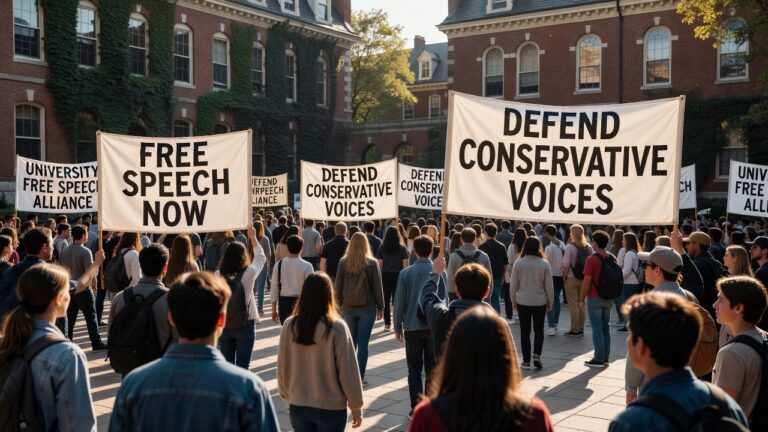
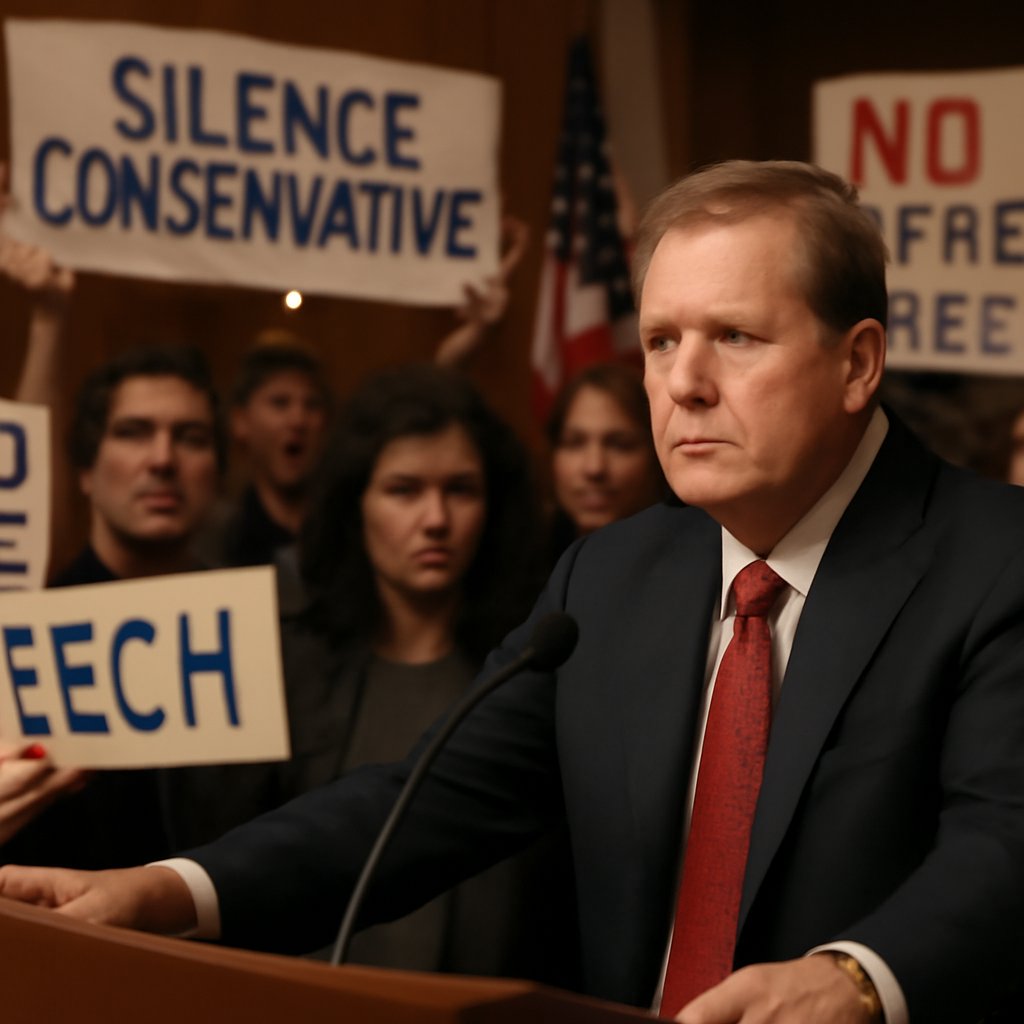
Conservative students and speakers are getting the silent treatment on college campuses from coast to coast. Universities that once prided themselves on open debate now hide behind speech codes and wink at protests meant to drown out any view that challenges the prevailing orthodoxy. This nonsense directly violates the First Amendment principles our founders enshrined, and it leaves young conservatives feeling like outsiders in their own institutions.
In my years serving this country, I learned that real leadership means standing firm for the Constitution even when it’s unpopular. These campuses have forgotten that lesson. Many schools keep speech codes and bias response teams that zero in on traditional opinions about immigration, gender, or race and slap the harassment label on them. Administrators claim it’s all about protection, but it just shuts down honest talk and rewards one side.
The same pattern shows up in free speech zones shoved into the far corners of campus, anonymous bias reports used as weapons against students who voice conservative values, and demands that event hosts foot the bill for security when troublemakers threaten violence. Groups like Turning Point USA have tracked these roadblocks for years, and the imbalance is obvious.
High-profile conservative speakers keep running into the same wall. Protests turn into blockades, fire alarms get pulled mid-speech, and some faculty members openly cheer the chaos. University leaders often cancel events over “safety” after threats roll in, which hands the veto to whoever shouts loudest. Students who show up anyway often face harassment or isolation afterward.
Surveys confirm conservative students are biting their tongues in class and steering clear of political groups to avoid penalties or social exile. Faculty ranks in the social sciences and humanities lean so far left that dissenting ideas barely get a hearing, so students learn to play along. Research from institutions tracking academic viewpoint diversity shows that in some departments, the ratio of left-leaning to conservative faculty members exceeds 10 to 1. This creates an echo chamber where challenging assumptions becomes a liability rather than an asset.
The American people deserve straight talk on this. Organizations such as the Foundation for Individual Rights and Expression have racked up court wins against public universities for viewpoint discrimination, proving these schools cannot play favorites. Several states have passed laws demanding neutrality and ending mandatory diversity statements that screen out conservative scholars. These steps restore fairness without bloating government.
What makes this assault on free speech particularly troubling is how it unfolds behind the scenes. Student activists don’t just organize peaceful counter-protests—they coordinate mass disruptions designed to prevent speakers from being heard at all. Campus security sometimes stands idle while mobs block building entrances or create noise so deafening that events cannot proceed. When administrators finally cancel speakers to “restore calm,” they’ve essentially rewarded the mob and punished the speaker, sending a message that the loudest voices win.
The bias response teams present another insidious threat to open discourse. These offices, often staffed by administrators sympathetic to progressive causes, accept anonymous complaints about “offensive” speech and launch investigations that can damage reputations and chill expression. A student might report a classmate for questioning government immigration policy or expressing skepticism about progressive gender ideology, and that report becomes part of the student’s disciplinary file. No due process, no confrontation of accusers, just bureaucratic punishment for the wrong opinions.
Faculty members who lean conservative face real professional consequences on many campuses. Hiring committees scrutinize hiring materials for ideological fit, tenure decisions hinge on demonstrating the right political commitments, and peer hostility makes academic life miserable for those who dissent. Young scholars learn quickly that publishing heterodox views or speaking at conservative venues can tank their career prospects. This self-censorship prevents the clash of ideas that universities supposedly exist to cultivate.
Free speech zones have become a particularly cynical tool. By confining protest and speaker events to small, isolated areas of campus—perhaps a corner of the parking lot or an unused field—universities manage to claim they support free expression while ensuring that speech happens where nobody will hear it. Conservative student groups often have to jump through more hoops to reserve spaces and face stricter time restrictions than progressive organizations enjoy. The unequal application of these rules reveals their true purpose: controlling which voices get amplified and which get marginalized.
The security fee shuffle represents another way universities silence conservative events. When student groups invite a conservative speaker, administrators sometimes demand that the hosts pay thousands of dollars for additional security, knowing that student budgets cannot absorb such costs. Progressive events rarely face these charges. The message is clear: free speech is free, unless you’re saying things we disapprove of, in which case you’ll pay for the privilege.
Conservative students make progress when they organize, keep records, and lean on legal tools. Allies across the spectrum who still believe in free expression help the cause, and alumni who hold back donations until standards are applied evenly send a clear message. Several successful legal challenges have resulted in universities having to refund security fees and reform their speech codes. When conservative students document bias systematically and pursue complaints through proper channels, universities sometimes respond.
Technology has also empowered conservative students to work around campus censorship. Social media allows conservative viewpoints to reach fellow students directly, and recording campus events creates permanent records that prevent administrators from burying inconvenient truths. Student activists from groups like Young Americans for Freedom have successfully exposed double standards in how universities enforce their own policies, forcing administrations to back down.
Universities need to get back to their real job of chasing truth through tough debate instead of enforcing ideological lockstep. The next generation of leaders is coming out of these places, and America cannot afford to hand them a censored education. When young people graduate without ever seriously engaging with ideas that challenge their worldview, they emerge unprepared for the real disagreements they’ll face in the workplace, in politics, and in their communities. Education that avoids controversy is education that fails.
The stakes extend beyond campus. These young adults will soon enter the workforce, run businesses, serve in elected office, and shape American culture. If their formative educational years taught them that disagreement is dangerous and conservative viewpoints are inherently hateful, we’ll see that poison spread through every institution. Restoring intellectual diversity and real free speech on campuses is essential to preserving the free society our Constitution envisions.