

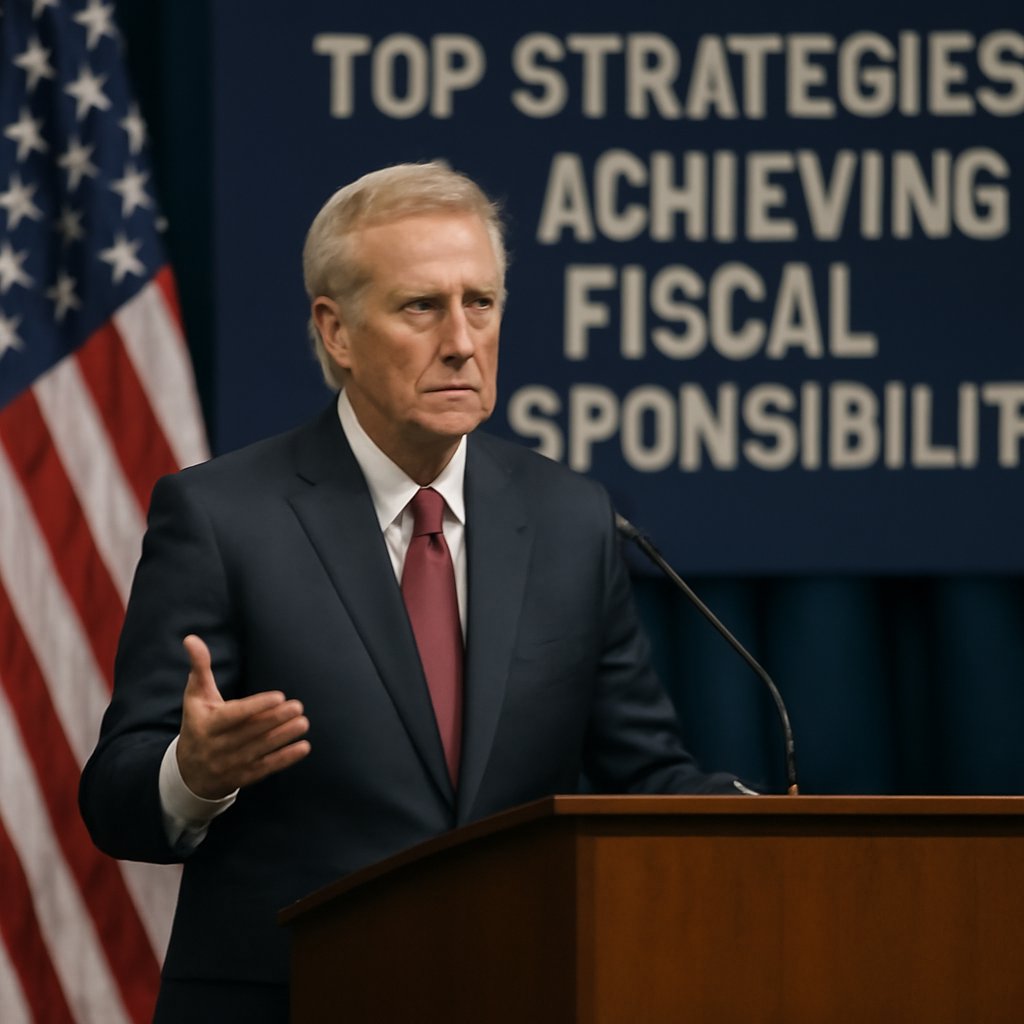
Folks, our national debt has blown past 34 trillion dollars, and it is time for straight talk on fixing this mess before it sinks the country our forefathers built. In my years serving this country, I learned that discipline and accountability are not optional—they are the bedrock of any mission worth completing, and that includes running the federal government. The American people deserve straight talk on this: fiscal responsibility means living within our means, honoring the Constitution’s limits on federal power, and securing our borders so we do not hemorrhage taxpayer dollars on problems we can prevent.
Republicans have the right approach here by going after wasteful spending head-on. That starts with cutting duplicative programs and shrinking bloated federal agencies that keep driving up deficits year after year. Lawmakers need to audit every corner of the bureaucracy to find real savings without touching the core functions that keep America safe. Shifting funds away from non-essential projects toward defense and infrastructure has worked before, and historical numbers show targeted discretionary cuts can trim hundreds of billions from deficits over a decade. This keeps taxes from climbing and leaves families and businesses with the economic freedom they earned.
A closer look at federal waste reveals the scope of the problem. The Government Accountability Office regularly documents billions in improper payments, duplicate benefits, and programs that have outlived their usefulness. When the same agencies operate under different names with overlapping missions, taxpayers foot the bill twice. Consolidating these operations and eliminating redundancies is not about cutting services—it is about delivering those services smarter and cheaper. Federal agencies have become so accustomed to spending increases that they treat budgets like entitlements rather than resources that must be justified annually. Moving to performance-based budgeting, where continued funding depends on measurable results, would transform how government operates.
Excessive regulations from past Democratic policies have piled on trillions in compliance costs. Rolling those back in energy and manufacturing gets the economy growing again, which brings in more revenue the natural way and reins in the administrative state. States run by Republicans have shown this works, keeping their budgets closer to balance instead of chasing endless deficits. Energy sector deregulation, in particular, has proven its worth. When states and the federal government streamline permitting for natural gas and oil production, those sectors generate massive tax revenues and high-paying jobs without government spending a dime. The same applies to manufacturing and agriculture—businesses that face fewer regulatory hurdles invest more, hire more, and contribute more in taxes.
The regulatory burden extends beyond direct compliance costs. Uncertainty created by overregulation freezes business investment and delays hiring decisions. Companies defer expansion plans when they cannot predict what new rules will cost next year. Small businesses, which lack dedicated compliance departments, face disproportionate burdens that large corporations can absorb. By cutting unnecessary regulations—not all regulations, but the ones that create costs far exceeding their benefits—conservatives unlock economic growth that is the most powerful debt-fighting tool available.
Entitlement programs are the biggest long-term drivers of debt, and they demand real reform. The proposals on the table protect today’s beneficiaries while making structural changes to Social Security and Medicare so future generations are not left holding the bag. Pair that with tax reforms that lower rates and simplify the code, and you get job creation and wage growth that expand the tax base without hammering the middle class. The 2017 tax cuts proved the point—revenues climbed nearly 20 percent afterward thanks to stronger GDP growth and lower unemployment.
These entitlement reforms deserve deeper examination. Social Security faces a funding crisis that delays only worsen matters. Raising the full retirement age gradually, adjusting benefit formulas for higher earners, and increasing the payroll tax cap represent serious options on the table. None of these changes affect current retirees or those nearing retirement, but they ensure the program survives for younger workers who have paid into the system their entire working lives. Medicare faces similar pressures as healthcare costs rise and the population ages. Means-testing benefits for wealthier beneficiaries, encouraging competition among providers to drive down costs, and modernizing how the program reimburses care could extend solvency for decades. The longer Congress delays these reforms, the more draconian the changes must become to fix the problem.
Border security ties directly into this. The billions spent every year on processing, healthcare, and welfare for illegal crossings add up fast, with conservative estimates putting the annual hit at around 150 billion dollars. Stronger enforcement and physical barriers cut those costs, ease the strain on entitlements and local budgets, and stop sanctuary policies from making things worse. In my years serving this country, I learned that you secure the perimeter first or you pay for it later in blood and treasure.
The fiscal impact of border security extends beyond the direct costs of processing and detention. Local governments in border states absorb enormous expenses for emergency room visits, incarceration, education services, and public benefits that federal immigration policy creates. These communities often lack the resources to handle the burden, and Washington’s failure to enforce existing law effectively shifts the costs to states and municipalities that already struggle with their own budgets. A serious border security strategy paired with workplace enforcement—making it genuinely costly for employers to hire illegally—reduces the draw that brings people across the border in the first place. When people know they cannot find work, many do not make the dangerous journey. That is both fiscally responsible and humane.
Oversight and accountability must back all of this up. Debt ceiling fights and appropriations transparency force the spending restraint Congress has dodged for too long. Zero-based budgeting, already delivering surpluses in states like Texas and Florida, makes agencies justify every dollar instead of banking on automatic increases. Enhanced audits and technology can root out improper payments that top 200 billion dollars annually, with stricter checks especially needed on border-related assistance to stop waste, fraud, and abuse.
Technology offers powerful tools for fiscal discipline that conservatives should embrace. Digital tracking systems can follow federal dollars in real time, flagging suspicious patterns that might indicate fraud. Machine learning can identify outlier payments and duplicate claims faster than traditional audits. Blockchain technology could ensure transparency in government contracting, making it harder for connected contractors to hide inflated costs. These innovations cost money upfront but save far more through fraud prevention and efficiency gains.
Congressional leadership also bears responsibility for fiscal discipline. Rather than treating appropriations bills as opportunities to load up with pet projects, lawmakers should operate under strict rules that limit spending to essential functions. Sunset provisions, where programs automatically expire unless Congress votes to reauthorize them, would force regular review of whether programs still serve their intended purpose. Line-item veto authority—which some argue the Constitution already permits—would give the President power to cut wasteful spending without holding up necessary appropriations.
Here are the hard numbers that tell the story: Republican-led states have posted budget surpluses averaging 5 percent of revenues while federal deficits under recent Democratic administrations have averaged over 1 trillion dollars a year. Entitlement spending eats more than 60 percent of the federal budget, and prompt reforms could save 10 trillion dollars over 30 years. Interest payments now exceed defense spending, a dangerous reversal that threatens our constitutional duty to provide for the common defense. Within a decade, if current trends continue, interest payments alone will consume 20 percent of all federal revenues—money that could have gone to defense, infrastructure, or tax relief but instead flows to bond holders, many overseas.
The choice before Americans is clear. One path leads to growing government, exploding deficits, and eventual fiscal crisis that destroys savings, crushes retirees, and leaves nothing for national defense. The other path requires discipline now—cutting waste, reforming entitlements, removing regulatory burdens, and securing the border. That path stabilizes our finances, protects those who have paid into the system, grows the economy, and preserves American strength for generations to come.
Achieving fiscal responsibility comes down to spending restraint, entitlement reform, and border security that actually works. These steps stabilize our finances, protect taxpayers, and keep America the land of opportunity for the generations that follow. We have the tools and the principles—now we need the backbone to use them.