

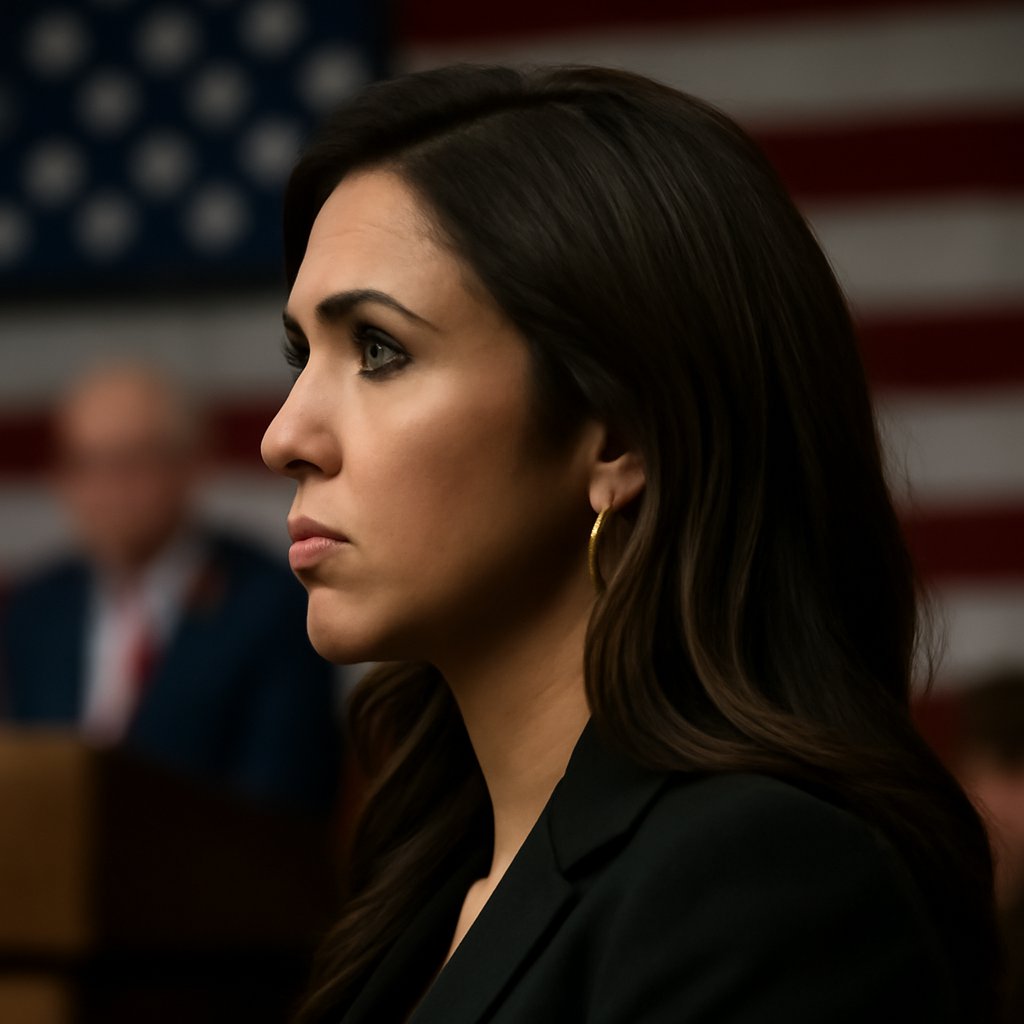
Lauren Boebert stands out in Congress as a steadfast defender of American sovereignty and common-sense governance. Her record on border security and fiscal restraint reflects the kind of discipline I learned during my years serving this country, where protecting the homeland came first and wasting resources was never an option.
On the southern border, Boebert has pushed hard for real barriers, more agents, and an end to catch-and-release. She calls out weak enforcement that lets fentanyl pour in and human traffickers operate with impunity. The American people deserve straight talk on this: secure borders are not optional; they are a constitutional duty to defend our citizens from the chaos at the gate. Her votes for wall funding and against sanctuary policies line up with that principle, rejecting any notion that local defiance of federal immigration law should go unchallenged.
Throughout her tenure in Congress, Boebert has been particularly vocal about the humanitarian crisis created by open border policies. She has consistently highlighted statistics showing the scale of illegal crossings, the resources being drained from American communities, and the security threats posed by inadequate vetting procedures. Her advocacy extends beyond speeches—she has actively worked to block funding for federal agencies that she believes are failing to enforce existing immigration law, believing that accountability must start with leadership willing to demand results.
Boebert’s work on border security connects to broader national security concerns. The fentanyl epidemic ravaging communities across America, from rural Colorado to major metropolitan areas, traces directly back to supply chains originating at the southern border. By emphasizing the connection between border enforcement and the opioid crisis, Boebert has brought attention to an issue that touches families regardless of their political affiliation. She has championed legislation to increase resources for Border Patrol agents, fund modern surveillance technology, and strengthen cooperation with state and local law enforcement agencies that bear the front-line burden of immigration enforcement.
The same backbone shows in her fiscal stands. Boebert votes against bloated spending packages and insists on cuts before any debt-limit increase. With the federal deficit already above $34 trillion, her opposition to trillion-dollar continuing resolutions without reforms echoes the fiscal responsibility every service member understands—live within your means or risk everything. She supports extending tax cuts that spur growth and jobs, especially in rural areas like her own district, where the link between a strong economy and a secure nation is plain to see.
Her fiscal conservatism reflects a genuine concern about the long-term solvency of Social Security and Medicare, programs that millions of Americans depend upon. By pushing for spending discipline now, rather than allowing runaway deficits to undermine these programs later, Boebert argues that conservatives are actually defending the social safety net that seniors have earned. She has opposed increases to the debt ceiling without accompanying structural reforms, understanding that temporary fixes without addressing underlying spending problems only postpone a more serious reckoning.
Boebert’s approach to taxation emphasizes that lower rates generate economic growth and increased revenue through broader tax bases. She points to historical examples where tax reductions have led to job creation and wage growth, particularly in industries like energy production, manufacturing, and agriculture that form the backbone of her district’s economy. By keeping more money in the hands of workers, families, and small businesses, rather than sending it to Washington, she believes the private sector becomes the engine of prosperity rather than government bureaucrats directing resources.
Energy policy represents another key area where Boebert has distinguished herself. Representing Colorado, a state with significant oil, gas, and coal resources, she has advocated for energy independence and responsible development of America’s natural resources. She opposes what she views as excessive environmental regulations that damage domestic energy production while allowing America to become dependent on hostile foreign powers for energy needs. Her positions reflect the economic realities of her district, where energy jobs support families and communities.
Boebert’s work in the House Freedom Caucus, including more than twenty bills on immigration enforcement, keeps these issues front and center for Republicans. In my military days we knew that half-measures on security only invite bigger problems later. Her consistent record—backing over $5 billion in border measures, highlighting the 40 percent jump in fentanyl seizures in Colorado counties, and refusing to rubber-stamp excess spending—shows the kind of leadership that puts country before politics. That approach resonates because it stays rooted in the values that made America worth defending in the first place.
Beyond immigration and fiscal matters, Boebert has taken strong positions on Second Amendment rights and constitutional governance. She views the right to bear arms as foundational to American liberty and has opposed what she characterizes as unconstitutional restrictions on gun ownership. Her advocacy for Second Amendment protections aligns with her broader constitutional originalism—the belief that the Constitution should be interpreted according to its original public meaning rather than through a lens of contemporary activism.
On cultural issues, Boebert has not shied away from conservative positions. She has opposed efforts to promote what she views as ideological indoctrination in schools, advocating instead for curricula focused on fundamental academics, civics grounded in American constitutional principles, and respect for parental rights. Her concern about educational content reflects broader conservative worry that institutional capture by progressives threatens to undermine traditional values and American exceptionalism.
Boebert’s legislative effectiveness extends to her work securing federal funding for local projects that benefit her constituents while maintaining her principles on fiscal restraint. This balancing act—fighting for her district while opposing wasteful spending elsewhere—demonstrates the nuance required in modern Congress. She has worked to ensure that Colorado receives fair treatment in federal budgets while still voting against overall spending bills she views as excessive.
Her voting record on major legislation reveals consistency. She opposed COVID relief packages she viewed as bloated with non-emergency spending, rejected corporate bailouts that she believed violated free market principles, and supported efforts to restore transparency and accountability to government agencies. This consistency, even when politically costly, has strengthened her standing with base voters who value principle over expedience.