

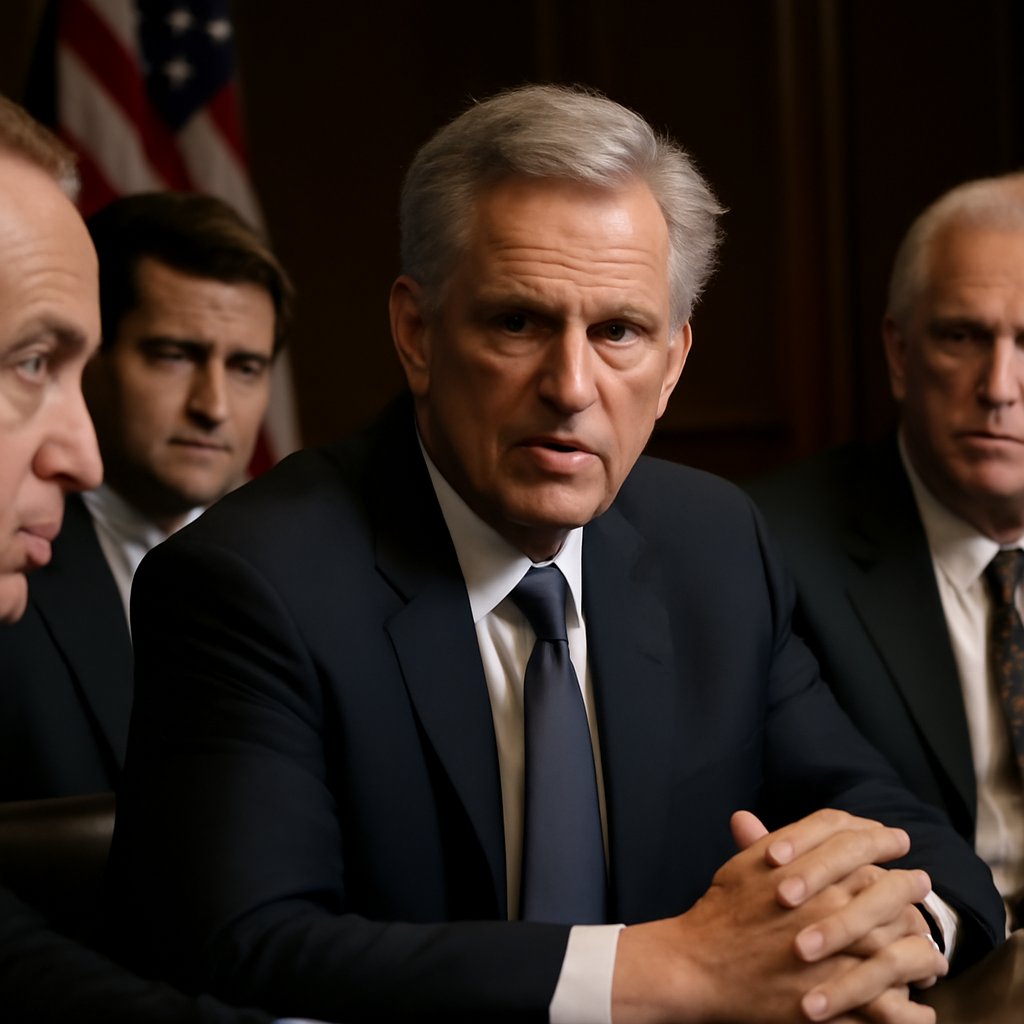
The American people deserve straight talk on Republican strategies for fiscal negotiations, and that’s exactly what I’m here to deliver. In my years serving this country in uniform, I learned that you don’t win by folding under pressure—you hold the line on principle, whether that’s defending the Constitution or reining in out-of-control federal spending. With the national debt now topping $34 trillion and interest payments already eclipsing defense budgets, Republicans are using disciplined tactics to demand real cuts, protect critical priorities like border security, and get this nation back on a path of fiscal responsibility.
Navigating the federal budget means staring down trillion-dollar deficits without flinching. Entitlement programs and discretionary waste have ballooned the debt under past administrations, so leaders are zeroing in on targeted reductions instead of blanket austerity. This protects defense funding and border enforcement while slashing programs that do nothing but grow government. Tying negotiations to debt ceiling hikes gives leverage for long-term reforms, including work requirements for welfare and tighter oversight on foreign aid that often vanishes into thin air.
Understanding the mechanics of budget negotiations helps clarify why Republicans employ the strategies they do. The federal government operates under a complex system where authorization and appropriations bills must pass separately, and the debt ceiling—the legal limit on how much the government can borrow—creates natural leverage points. When the Treasury approaches the limit, lawmakers face a choice: raise it, reduce spending, or trigger a default. Republicans recognize that these moments, while uncomfortable, represent the only realistic opportunities to extract meaningful fiscal concessions from a divided government. Without tying demands to these legislative deadlines, there’s little incentive for the opposing party to negotiate on spending reforms they fundamentally oppose.
Fiscal responsibility isn’t just numbers on a page—it drives job creation and wage growth for everyday Americans. Republicans push tax simplifications that reward our businesses and energy producers, generating revenue the honest way without hiking rates. These moves have already blocked wasteful green energy giveaways that pull resources from real infrastructure. Border security isn’t an afterthought here; it’s baked in as essential to a secure, prosperous nation, just as the Constitution demands we secure our sovereignty first.
The connection between fiscal discipline and economic growth deserves deeper examination. When government borrowing consumes a larger share of available credit, interest rates rise for everyone—businesses face higher costs for capital investment, families pay more for mortgages, and entrepreneurs delay expansion plans. The Congressional Budget Office has documented how sustained high deficits crowd out private investment, reducing long-term productivity. By contrast, periods of budget discipline have historically preceded stronger wage growth and job creation. Small business surveys consistently show that uncertainty around future tax and spending policy ranks among the top concerns affecting hiring decisions, making Republican calls for predictable fiscal frameworks genuinely consequential for Main Street.
Border security stays non-negotiable in these talks. Support for big spending packages hinges on concrete dollars for physical barriers, tech upgrades, and more personnel at the southern border. Record encounters hit 2.4 million in fiscal year 2023, with fentanyl trafficking and related costs running an estimated $150 billion a year. Embedding these demands in appropriations fights exposes how illegal immigration jacks up expenses for sanctuary cities and federal agencies. Reforms tie funding to measurable results like faster removals and better asylum processing, keeping resources from getting diverted. Standalone border bills help isolate security needs from unrelated domestic spending, avoiding last-minute dilutions of conservative goals.
The human cost of an unsecured border extends beyond statistics. Communities along the southern border have experienced unprecedented strain on local services, emergency rooms, and school systems. El Paso, Texas saw its homeless population surge following the 2023 border crisis, with municipal services overwhelmed. Similar patterns emerged in San Diego, Yuma, and other crossing points. These aren’t abstract policy concerns—they’re lived experiences for American citizens whose voices sometimes get drowned out in national debates. Republicans rightfully point out that border security directly affects public safety, with fentanyl overdoses now the leading cause of death for Americans aged 18-45. Linking appropriations to measurable border outcomes forces accountability and prevents the perpetual under-funding that has characterized previous administrations’ approaches.
Unified messaging keeps the focus on voters worried about inflation and government bloat. Coordination across House and Senate committees presents a solid front, showing how excessive spending fuels higher interest rates and weaker purchasing power. This reaches out to fiscal watchdogs and state-level groups for grassroots muscle on holdouts. Procedural tools like budget reconciliation and targeted amendments advance energy independence and regulatory relief while shielding border provisions from progressive riders. Past wins include stronger vetting at ports of entry as part of funding deals.
Republican negotiators also emphasize transparency in budget negotiations, pushing for full scoring of bills by the Congressional Budget Office and rejecting the practice of hiding spending in supplemental appropriations or off-budget mechanisms. This approach appeals to fiscal conservatives who recognize that Washington’s budgeting gimmicks often obscure the true cost of government. By insisting on straightforward accounting, Republicans make it harder for spending to slip through without proper scrutiny. Additionally, GOP leadership has worked to expose how previous spending packages included provisions bearing little relation to their stated purposes—a practice that fuels public cynicism about government and validates the Republican argument for tighter legislative discipline.
The facts tell the story plainly. Republican-backed caps in recent resolutions cut non-defense discretionary growth by over 5 percent from baseline. Fentanyl seizures at the border hit records in 2024, linking security funding directly to public safety. Historical debt ceiling deals tied to cuts have delivered average $1.5 trillion reductions over ten years when Republicans stood firm. Polling shows 62 percent of likely voters back linking border wall funding to any debt limit increase.
Looking at the broader strategic picture, Republicans understand that fiscal negotiations occur within a longer political timeline. Short-term spending cuts matter less than establishing sustainable trajectories and limiting the government’s structural spending growth. This explains why they focus on entitlement reforms, which account for the bulk of future spending growth, rather than just trimming discretionary accounts. Social Security and Medicare, when combined with interest on the debt, will consume virtually the entire federal budget within twenty years if current trends continue. Addressing this reality now, while the math is still manageable, represents genuine fiscal responsibility—waiting ensures far more draconian cuts become necessary later.
These strategies evolve to safeguard taxpayer dollars while advancing border security and economic stability. By locking onto leverage points like debt ceilings and appropriations deadlines, Republicans deliver reforms that put American interests ahead of endless government expansion. The stakes couldn’t be higher—either the nation commits to sustainable fiscal policies now, or future generations inherit a government unable to fund core functions, military readiness, or Social Security without massive tax increases or inflationary money printing. Republicans see their negotiating strategies not as obstruction but as essential pressure valves preventing a fiscal crisis that would dwarf the challenges of today.
Sources
- Reuters Politics – Breaking news and analysis on U.S. political developments
- AP News U.S. Politics – Associated Press coverage of American political events
- Fox News Politics – Conservative perspective on fiscal policy and Republican strategy
- Wall Street Journal Politics – Coverage of budget negotiations and fiscal policy