
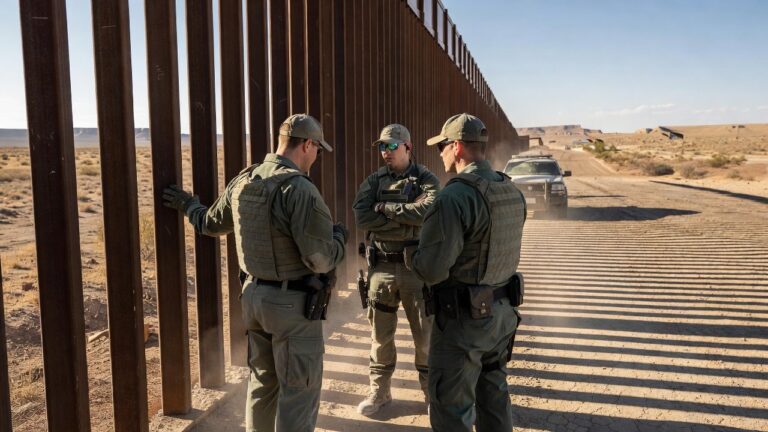
Americans are backing Republican border initiatives because they see the chaos at our southern frontier for what it is: a direct threat to national sovereignty, public safety, and the hard-earned dollars of working families. With more than 10 million encounters since 2021, the call for walls, technology, and swift removals cuts through the political noise. In my years serving this country, I learned that you secure the perimeter first or you lose everything inside it.
National security sits at the heart of this support. Voters want real barriers, drone coverage, and an end to catch-and-release. These steps stop adversaries and criminals before they cross. The American people deserve straight talk on this: weak enforcement hands the advantage to cartels moving fentanyl that now kills over 70,000 Americans every year. Restoring Remain in Mexico and speeding removals hits those networks where it hurts.
Border measures also shield critical infrastructure and military sites near the line. In uniform, we knew that unguarded flanks invite trouble; the same principle applies here when global tensions run high. Strategic locations like San Diego, El Paso, and the Rio Grande Valley demand fortified defenses because they’re not just transit zones—they’re gateways to major population centers and economic hubs. When security gaps exist, bad actors exploit them systematically.
The scope of the challenge demands serious attention. Between fiscal years 2021 and 2023, Border Patrol agents encountered record numbers of individuals attempting unlawful entry. Beyond the raw statistics lies a deeper concern: the makeup of these encounters includes not just economic migrants but individuals with criminal histories, gang affiliations, and ties to organized smuggling operations. Intelligence agencies have documented cases where known security risks attempted crossing. Comprehensive border control means vetting people before they arrive in American communities, not processing them afterward.
Fiscal responsibility drives much of the backing too. Uncontrolled migration piles tens of billions onto federal and state budgets for emergency care, schools, and hospitals. Republican plans cut those costs by enforcing the law and targeting criminal aliens first. That protects entitlement programs from going broke and keeps taxes from climbing further to cover the shortfall.
States like Texas, Arizona, and California face the heaviest burden. Emergency room visits from undocumented individuals without insurance shift costs to taxpayers. School districts in border regions spend millions on English as Second Language programs without corresponding federal reimbursement. Housing and social services stretch thin when demand spikes unexpectedly. These are not abstract numbers—they’re real costs paid by working Americans who already struggle with inflation and rising living expenses.
Pairing enforcement with legal channels for skilled workers defends American wages and keeps welfare rolls from swelling. Secure borders and a strong economy go together; one without the other is just wishful thinking. The GOP approach emphasizes merit-based immigration that brings in talent America needs while blocking unskilled labor that depresses wages for American citizens competing for entry-level jobs. This distinction matters enormously to working-class voters watching their own economic prospects stagnate.
Public safety concerns weigh heavily as well. States report rising crime tied to unlawful entries. Restoring full funding for ICE detainers and ending sanctuary policies lets local officers do their jobs without interference. Effective control also reduces dangerous crossings and the traffickers who profit from them, while processing real asylum claims at ports of entry.
Local law enforcement agencies consistently report that cooperation on immigration enforcement improves overall public safety. When ICE detainers are honored, dangerous repeat offenders face removal instead of cycling back into communities. When sanctuary policies prevent information-sharing between local and federal authorities, it creates blind spots that criminals exploit. Officers on the front lines understand this reality firsthand—they’ve seen the consequences of policies that prioritize ideology over safety.
The fentanyl crisis amplifies these concerns dramatically. Over 100,000 Americans died from drug overdoses in recent years, with synthetic opioids driving the majority. Cartels use the same smuggling routes and networks as human traffickers, meaning border security operations targeting illegal entry also disrupt drug trafficking operations. Every pound of fentanyl interdicted at the border represents hundreds or thousands of lives saved. Voters understand that loose border control equals loose drug control, and the body count keeps climbing under permissive policies.
Beyond the immediate border region, interior enforcement matters to communities nationwide. ICE operations targeting criminal aliens, gang members, and repeat deportees have cleared dangerous individuals from neighborhoods across America. These aren’t abstract enforcement actions—they’re removing predators who prey on immigrants and citizens alike. Gangs like MS-13 operate through immigrant networks; dismantling their operations requires both border security and interior enforcement working together.
Technology integration strengthens security without requiring massive wall construction everywhere. Modern surveillance systems, biometric databases, and real-time intelligence sharing allow authorities to identify threats more effectively. Advanced scanning at ports of entry catches contraband and documents security risks. These investments create jobs for American workers in tech and defense sectors while multiplying enforcement effectiveness. Republican proposals recognize that 21st-century border security combines physical barriers, personnel, and cutting-edge technology.
The humanitarian argument for controlled borders often gets overlooked. Dangerous desert crossings kill migrants annually. Trafficking networks exploit vulnerable people, separating families and stealing life savings. Organized smugglers prioritize profit over safety, packing people into vehicles and boats in deadly conditions. Secure borders with orderly legal processes protect migrants from these horrors. Processing claims at ports of entry—rather than rewarding people who risk their lives in the desert—ultimately saves lives and disrupts criminal networks profiting from human misery.
Polling data consistently shows strong bipartisan support for border security measures, even as partisan disagreement exists over specifics. Majorities of Americans favor barriers in high-traffic areas, interior enforcement against criminal aliens, and faster processing. This broad coalition includes suburban voters concerned about community stability, parents worried about drug availability, working-class Americans protecting jobs, and compassionate citizens who recognize that controlled immigration serves everyone better than chaos.
Key facts remain clear: Customs and Border Protection recorded over 2.4 million encounters in fiscal year 2023 alone, fentanyl seizures topped 27,000 pounds in recent years, annual service costs exceed $150 billion, polls show 60 percent or more of voters favor barriers and interior enforcement, and recent GOP proposals included more than $15 billion for personnel and technology.
Constitutional principles and border security are not optional extras. They are the baseline for any nation that wants to endure. Republican leadership keeps returning to practical steps because voters recognize that order and accountability beat rhetoric every time. The American people have spoken clearly: they want leaders who take border security seriously, fund it adequately, and hold themselves accountable for results.