
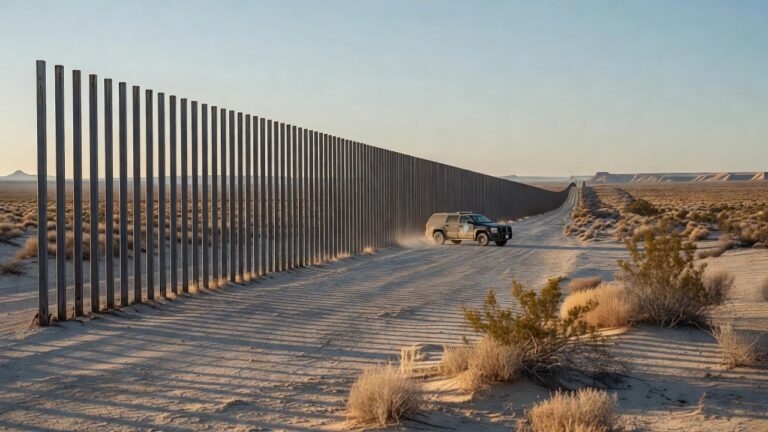
Border security isn’t some abstract policy debate—it’s about protecting the American worker and upholding the Constitution’s promise of a sovereign nation that puts its citizens first. In my years serving this country, I learned that weak leadership at the southern border invites chaos, and that same principle applies to our job markets. Lax enforcement lets millions of unauthorized entrants flood the workforce, displacing citizens in construction, agriculture, and hospitality while driving down wages. Republicans have always said it straight: strong borders safeguard both national safety and the economic stability working families count on.
The direct competition from these open-border failures hits hard. Illegal immigration packs low-skilled sectors with people willing to take cash under the table, undercutting legal pay scales. American workers get pushed aside, especially in communities built on those jobs for real upward mobility. During times of tighter enforcement under Republican leadership, native-born hiring in those fields climbs because employers hire legally. Sanctuary policies in Democrat-run cities only make it worse by shielding violators and propping up an underground economy that dodges taxes and standards. That strains public resources and pulls money away from training programs that could help displaced Americans.
Wage suppression follows right behind. Data shows surges in illegal crossings tie directly to flat or falling pay in fields heavy with lower-education roles. Employers gain the upper hand and hold back raises and benefits, with effects spreading to retail and manufacturing. The smarter path, backed by Republicans, pairs merit-based legal immigration with unbreakable border control so citizens come first. On top of that, the fiscal drain from emergency care, schooling, and policing in border states pulls resources from infrastructure that could create more American jobs. Measures like wall construction and more agents—long favored by the GOP—cut those long-term costs and free up savings for domestic growth.
Republican strategies deliver results. Expanded E-Verify rules and interior enforcement shift opportunities back to legal residents. Legislation focused on technology, barriers, and local cooperation deters unlawful hiring while aligning with fiscal responsibility—lowering the overall burden so taxes can ease and workforce programs can expand for American families. Record crossings lately have lined up with higher unemployment among Black and Hispanic citizens in manual labor. Restoring real deterrence protects those vulnerable groups most hurt when markets get flooded.
The numbers tell the story without spin. Over 8 million illegal immigrants are working here, competing head-on with citizens. States enforcing the law see up to 5 percent higher native employment in key sectors versus sanctuary areas. The yearly taxpayer tab tops $150 billion in education and health costs alone. Stronger border periods under Republican administrations cut illegal claims and boosted legal hiring. Wages in low-skilled jobs drop 3 to 8 percent during high-illegal years, hitting young and minority workers hardest.
Understanding the mechanics of how border policy ripples through labor markets requires looking at specific sectors where the impact concentrates most visibly. Construction stands out as the industry where Americans face the steepest competition. Before stricter enforcement campaigns, illegal workers made up a substantial portion of the construction workforce in major metropolitan areas, often accepting below-market wages that undercut union scales and standard rates. When E-Verify requirements tightened and worksite enforcement increased, contractors shifted to hiring documented workers, which pushed wages back up in those regions. This created genuine advancement opportunities for American citizens who had been priced out of entry-level and mid-level construction positions.
Agriculture presents another compelling case study. While agricultural interests have long lobbied for expanded guest worker programs, the reality on American farms shows that when labor supplies tighten through enforcement, mechanization and better pay become competitive advantages for attracting domestic workers. Young Americans who might have dismissed agricultural work as beneath them suddenly found it worthwhile when wages rose to reflect true labor scarcity. This dynamic challenges the narrative that Americans simply won’t do farm work—they will, at prices that reflect the job’s actual value.
The hospitality sector—hotels, restaurants, housekeeping—similarly demonstrates how enforcement reshapes hiring patterns. Establishments in states with strong employment verification systems report higher turnover initially but then benefit from more stable, documented workforces. Documented workers have stronger incentives to stay longer because they can build legitimate employment histories, pursue promotions, and access benefits. This reduces employer training costs and improves service consistency, offsetting any short-term wage increases.
Beyond individual sectors, the broader economic principle matters: when labor supplies are artificially inflated through unauthorized immigration, it suppresses wages across entire regional economies. This isn’t theoretical—it’s measurable. Communities experiencing sustained illegal immigration see wage growth lag peer communities with tighter borders. Young people and minorities experience the worst outcomes, creating a moral case for enforcement that goes beyond partisan politics. When African American unemployment in construction or hospitality stays elevated while employers freely hire undocumented workers, that’s not market dynamics—that’s a policy choice that harms vulnerable Americans.
The fiscal dimension compounds these labor market effects. Border states bear enormous education and healthcare costs for unauthorized populations. Schools in Texas and Arizona dedicate resources to English language instruction and remedial services that could otherwise fund vocational training, apprenticeships, and job skills programs for American citizens. Emergency rooms in border communities treat patients without capacity to pay, shifting costs through the system in ways that ultimately affect local tax rates and community investment. These hidden costs represent foregone opportunities to build American human capital.
Federal policy tools exist to address this imbalance. Mandatory E-Verify nationwide would eliminate the employment magnet that draws unauthorized migrants northward. Interior enforcement campaigns, when coupled with prosecution of employers knowingly hiring illegally, create real consequences that deter the practice. Visa tracking systems can catch visa overstays, who represent a substantial portion of the unauthorized population. Technology at ports of entry—from biometric systems to advanced scanning—enables faster, more thorough vetting without creating bottlenecks that harm legal commerce.
State-level action matters too. Arizona’s employer sanctions law, despite legal challenges, demonstrated that states can enforce labor standards when federal enforcement lapses. Cities and counties coordinating with federal immigration authorities create an environment where hiring legally becomes the path of least resistance for employers. Conversely, sanctuary policies that obstruct even communication with federal immigration authorities remove all consequences from hiring practices, implicitly subsidizing employers who cut corners on labor standards.
The training and education angle deserves more emphasis in this debate. Resources that flow to emergency services and remedial education in border-saturated communities could instead fund apprenticeships, community college programs, and targeted workforce development for Americans struggling in changing labor markets. Manufacturing towns facing automation could benefit more from federal investment in retraining when that investment doesn’t compete with paying for parallel services for unauthorized populations. This is ultimately about prioritization and resource allocation.
Looking at the evidence holistically, border security and job market health aren’t separate issues—they’re interconnected aspects of economic policy. Strong enforcement creates conditions where American workers compete on a level field, where wages reflect genuine scarcity, and where investment in American human capital makes sense. Weak enforcement tilts the field, depresses wages, and makes employers discount the value of developing domestic talent.
Effective border security is non-negotiable for fair job markets. Backing physical barriers, tech upgrades, and enforcement priorities restores balance, steadies pay, and eases the load on taxpayers. The American people deserve straight talk on this: prioritizing citizens in the labor force builds stronger communities and defends the economic bedrock of opportunity in the United States.
Sources
- Reuters – International news and analysis on politics and economics
- AP News – Breaking news and in-depth reporting on US policy
- Fox News – Conservative perspective on US politics and border policy
- Wall Street Journal – Business and economics coverage including labor markets
- Department of Homeland Security – Official US border security data and reports